
The Riviera Maya packs an extraordinary range of experiences into a narrow strip of Caribbean coastline. The challenge is not finding things to do — it is choosing which ones deserve your limited time. This list focuses on the experiences that define a trip here, with practical details to help you decide what fits your travel style, budget, and timing.
Mayan Ruins on the Coast
The Riviera Maya holds some of the most visually striking archaeological sites in the Maya world, and two stand out above the rest.
Tulum is the signature experience: an 800-year-old walled city perched on 12-metre limestone cliffs above the Caribbean. The site opens at 8 a.m., and arriving early matters — by mid-morning the tour buses arrive and the heat intensifies. Budget around 90 MXN (US$5) for entrance, plus an additional fee if you want to access the beach below the ruins. Plan 2–3 hours to walk the site properly and still have time to swim. The view of El Castillo against the sea is genuinely one of the most photogenic spots on the coast.
Cobá, about 45 minutes inland from Tulum, offers a different experience — a sprawling jungle city where you can still climb the Nohoch Mul pyramid (42 metres, the tallest on the Yucatán Peninsula). Entrance runs around 260 MXN (US$13). Rent a bicycle at the entrance to cover the distances between temple groups. Cobá suits travellers who want the scale of Chichén Itzá without the crowds.
Muyil, just south of Tulum inside the Sian Ka'an Biosphere Reserve, is the quiet option. A small site with a boardwalk through wetlands, it pairs well with a float down the ancient Maya canals. Entrance is about 50 MXN (US$2.50). This is the choice for visitors who prefer birdsong to bus groups.
 Maya ruins at Tulum with palms and beach, Quintana Roo
Swimming With Turtles in Akumal
Akumal means "place of turtles" in Mayan, and the name delivers. The bay's sheltered waters host green and loggerhead sea turtles year-round, feeding on seagrass in water rarely deeper than 8 metres. You do not need to be a strong swimmer — the turtles often drift past waist-deep.
You can snorkel independently by accessing the beach through the Akumal Dive Center or Lol-Ha restaurant (roughly free access if you rent equipment for around US$5, or pay a small day-use fee). Guided snorkel tours run US$35–50 per person and include a boat ride to the outer reef where turtle sightings are more consistent and you may also spot rays and parrotfish.
Go early — 9 a.m. is ideal — for calm water and fewer people. Mondays are typically closed to commercial tours to protect the reef, making it a good day for independent snorkellers seeking solitude. Nesting season runs May through October, and you may spot hatchlings heading to the sea in the early morning between July and December.
GuideBest Beaches Near Akumal: Your Guide to Akumal Bay, Half Moon Bay, Jade Bay, South Akumal & Xpu-HaDiscover the best beaches near Akumal, Mexico, from the turtle-filled waters of Akumal Bay to the tranquil shores of Jade Bay and the pristine sands of Xpu-Ha. This guide covers access, facilities, snorkeling opportunities, and practical tips for each beach.Open
Cenote Swimming and Snorkelling
The Yucatán Peninsula holds an estimated 6,000 cenotes — natural sinkholes where collapsed limestone reveals freshwater pools of startling clarity. The Riviera Maya's cenote circuit is the most accessible place in the world to experience them.
Gran Cenote (near Tulum) is the classic open-air cenote: a partially collapsed cave with crystal-clear water, stalactites, and turtles. Entrance around 500 MXN (US$25). Snorkelling gear available to rent.
Dos Ojos is the best-known cave cenote, with two connected sinkholes and an underwater passage between them. Snorkel entrance is around 300 MXN (US$15); cavern diving costs more and requires certification. The light beams filtering through the cave ceiling in the morning are genuinely remarkable.
Cenote Calavera (Tulum area) is a smaller, less-visited option with a rope swing and three openings in the limestone ceiling. Entrance around 100–150 MXN (US$5–8). Good for families with children who want a less polished, more adventurous feel.
Cenote Azul (between Playa del Carmen and Tulum) is an open, L-shaped cenote with shallow areas suitable for non-swimmers and a 4-metre jumping platform. Entrance around 150 MXN (US$8). The facilities are well-developed — changing rooms, small shop, no alcohol allowed.
Bring biodegradable sunscreen or a rash guard. Regular sunscreen is banned in most cenotes because the chemicals damage the ecosystem and the delicate bacterial mats that give the water its colour.
GuideCenote Cristal and Cenote Escondido Guide: Swimming Near TulumA practical guide to visiting Cenote Cristal and Cenote Escondido south of Tulum, with clear advice on transport, swimming, snorkeling, jumping, timing, safety, and nearby combinations.Open
Whale Shark Season
Every summer, whale sharks — the largest fish on Earth, reaching up to 12 metres — gather in the waters northeast of Cancún and around Isla Mujeres and Holbox to feed on plankton. Swimming alongside a filter-feeding giant that is entirely harmless to humans is one of the most distinctive wildlife experiences in the Caribbean.
Season: mid-May through mid-September, with peak numbers in July and August.
Cost: group tours run US$150–200 per person, including boat, gear, snorkel guide, and light lunch. Private tours cost more.
Logistics: Tours depart from Cancún, Isla Mujeres, or Playa del Carmen. You will be in the water in small groups, snorkelling alongside the shark at a regulated distance. No scuba diving is allowed — whale sharks are sensitive to bubbles.
Who it suits: Anyone comfortable in open water. Children as young as 4 can participate with life jackets. This is not a thrill ride — it is a slow, quiet encounter with an animal the size of a bus.
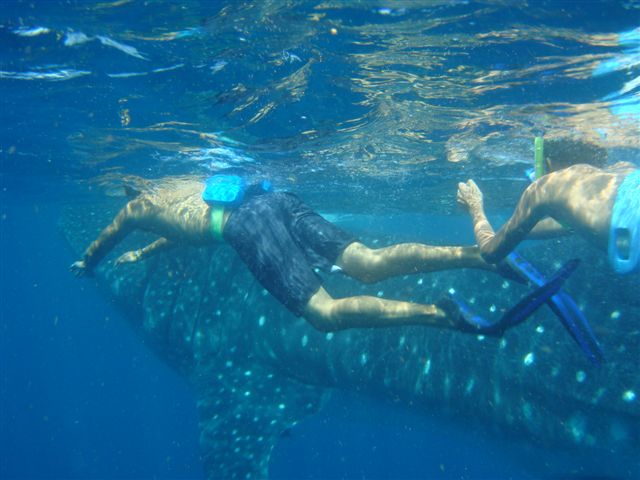 Snorkelling with a whale shark northeast of Cancún
Snorkelling and Diving on the Mesoamerican Reef
The Mesoamerican Barrier Reef — the second largest in the world — runs along the entire Riviera Maya coast. Cozumel is the premier destination for reef diving, with wall dives, drift dives, and visibility regularly exceeding 30 metres. Advanced divers head to the Santa Rosa Wall or Columbia Wall; beginners train at Paradise Reef in shallow, calm water.
On the mainland, Puerto Aventuras (20 minutes north of Tulum) offers accessible shore snorkelling and diving on a protected reef section. Dive shops in town offer two-tank boat dives for around US$80–120.
Cenote diving is a separate discipline entirely. Cenotes like El Pit, Dreamgate, and Taj Maha offer cavern diving (you always stay within sight of open water) with haloclines, stalactites, and light effects you will not find on any ocean reef. A cenote cavern dive with a certified guide costs US$100–170 per person.
Eco-Parks: Xcaret, Xel-Há, and Xplor
The Riviera Maya's eco-parks are large, professionally operated attractions that combine nature, culture, and adventure. They are expensive but deliver full-day experiences.
Xcaret is the most comprehensive: underground rivers to swim through, a butterfly pavilion, aquarium, Maya village re-enactments, and an evening show with 300 performers. Basic adult admission starts around 2,690 MXN (US$138); the Plus tier (3,217 MXN / US$165) adds snorkelling equipment, lockers, and a meal buffet. The park is near Playa del Carmen, about 6 km south of town.
Xel-Há focuses on water activities in a natural inlet — snorkelling, cliff jumps, lazy river through mangroves, and a high-dive zipline. All-inclusive pricing (food, drinks, snorkel gear) starts around 2,000 MXN (US$100) for adults. Best suited to travellers who want to spend the day in and on the water without thinking about add-on costs.
Xplor is the adventure option: 14 ziplines through the jungle, amphibian vehicle trails, and underground rafting. Admission around 3,000 MXN (US$155). Not a nature experience — an adrenaline one.
Practical note: Book online in advance for lower prices. These parks are busy year-round, especially December through March. Arrive at opening (8:30–9 a.m.) to experience the most popular attractions before queues build.
GuideXcaret vs Xel-Há vs Xplor: Which Riviera Maya Park Is Right for You?Compare Xcaret, Xel-Há, and Xplor in the Riviera Maya by activities, atmosphere, family fit, logistics, food, intensity, and value before choosing one park day.Open
Sian Ka'an Biosphere Reserve
South of Tulum, the Sian Ka'an Biosphere Reserve protects over 1,000 square miles of wetlands, mangroves, and coastline. It is a UNESCO World Heritage site and one of the best places in the region for wildlife — over 300 bird species, manatees, crocodiles, and occasionally jaguars.
Most visitors experience Sian Ka'an through a guided tour: a boat trip through mangrove channels, a float down the ancient Maya canals (dug by hand centuries ago), and snorkelling on the barrier reef at the reserve's edge. Tours run US$80–130 per person and typically depart from Tulum. The reserve entrance fee is 50 MXN (US$2.50).
This is the right choice for travellers who want to see the Riviera Maya beyond the resort strip — quiet waterways, birdlife, and a sense of the landscape before tourism arrived.
Isla Mujeres Day Trip
A 20-minute ferry from Cancún's Puerto Juárez terminal (or from Playa del Carmen's dock) brings you to Isla Mujeres, a small island with a relaxed pace and no high-rise hotels. Rent a golf cart (around 500 MXN / US$25 for the day) to circle the island, stop at the southern sculpture park, and swim at Playa Norte — consistently ranked among Mexico's best beaches.
Snorkelling tours to the underwater museum (MUSA) cost around US$40–60. The island is also the departure point for whale shark tours (see above). Ferries run frequently; the last return is typically around 8–9 p.m., giving you a full day on the island.
GuidePlaya Norte, Isla Mujeres: Complete Beach GuidePlan a better Playa Norte day on Isla Mujeres with practical advice on ferries, timing, swimming, beach clubs, crowds, weather, sargassum, and what to combine with the island’s famous north beach.Open
Cozumel: A World Apart
Cozumel, a 45-minute ferry from Playa del Carmen, feels distinct from the mainland. The island's economy revolves around diving and snorkeling, and the Mesoamerican Reef is the main attraction. Palancar Reef and Columbia Wall are world-class dive sites; beginners can snorkel at Chankanaab Beach Park.
The island town (San Miguel) is walkable and less developed than the mainland coast. Rent a scooter or jeep to explore the eastern beaches — wilder, windier, and far less visited than the west-facing hotel zone. Ferry crossings cost around US$15–20 each way.
Practical Planning Notes
How many days? A week gives you time for two or three major experiences plus beach days. Three to four days means picking one or two priorities.
Do you need a car? A rental car makes cenote-hopping, Cobá, and Sian Ka'an significantly easier to reach. Colectivos connect the main towns and some cenotes along Highway 307, but tours fill the gaps for harder-to-reach spots.
Cash or card? Parks, tours, and most restaurants accept cards. Cenotes, colectivos, and small beach vendors are cash-only. Carry pesos.
Best time to visit: November through April offers the most comfortable temperatures and lowest humidity. Whale shark season (May–September) overlaps with hotter weather and higher sargassum risk on beaches. Sargassum — seaweed that washes ashore — varies year to year and beach by beach; check current forecasts before committing to beach days.
Tipping: 10–15% at restaurants. Guides and boat crews expect 100–200 MXN per person for a half-day tour.
The Riviera Maya rewards travellers who choose a few experiences and do them well rather than trying to tick every box. Pick the activities that match your pace — the ruins at dawn, a cenote swim in the heat of the day, a slow evening in a coastal town — and the trip will feel richer for the restraint.


