Printable guide
Cenote Chikin-Ha Guide: Swimming, Snorkeling and Planning Your Visit
Updated
A practical guide to Cenote Chikin-Ha near Playa del Carmen, including the connected cenotes, swimming and snorkeling, access, safety, what to bring, and how to plan the visit.
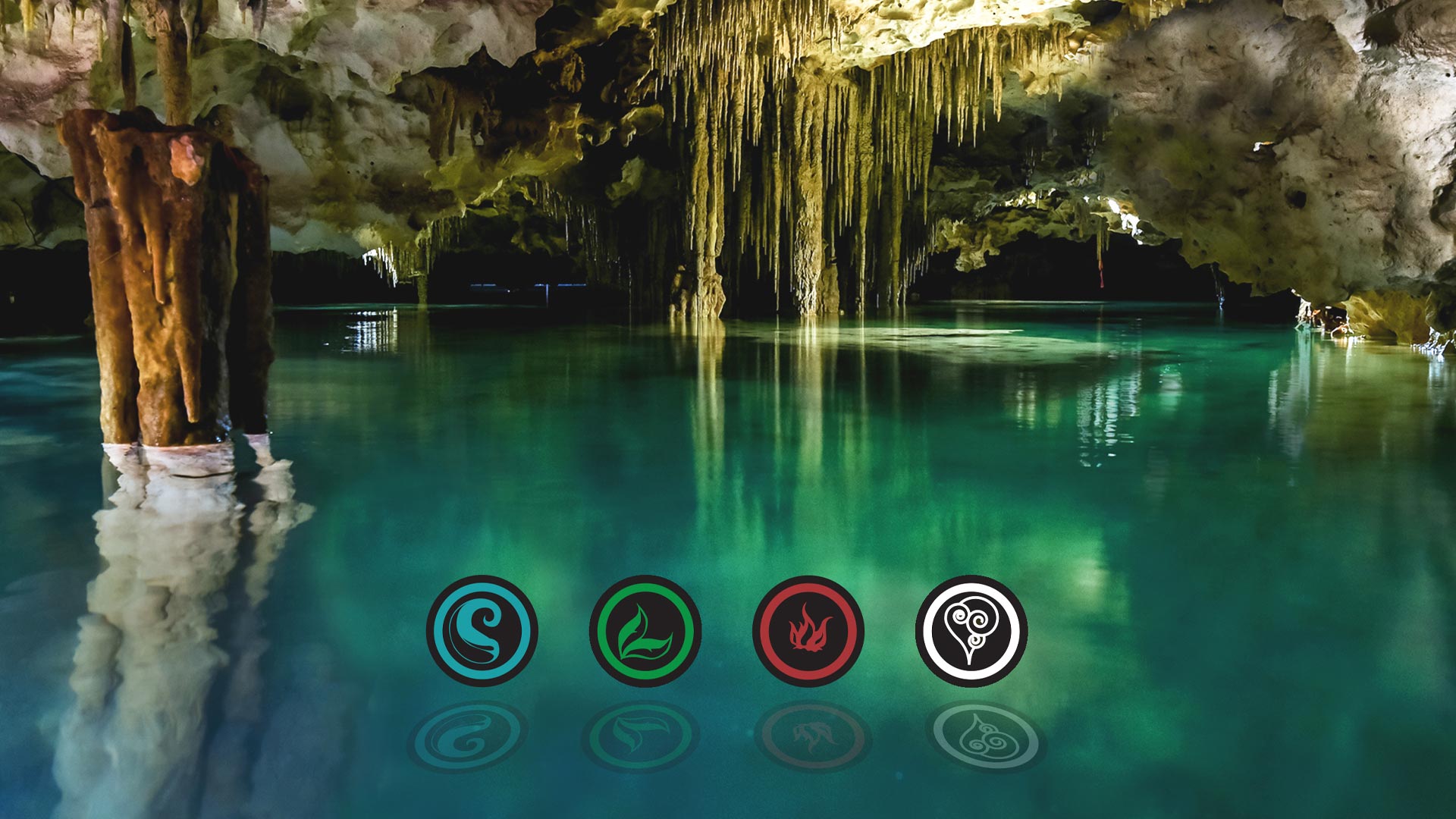
Cenote Chikin-Ha is a useful choice when you want a Riviera Maya cenote day that combines swimming, snorkeling, jungle scenery, and a little more structure than a completely undeveloped swimming hole. The site is in the corridor south of Playa del Carmen, near the highway and within reach of Puerto Aventuras and Akumal. It is not a town-centre attraction, so you will need a car, taxi, colectivo, or organized excursion, but the location makes it much easier to add to a wider Riviera Maya itinerary than a distant inland cenote.
The name is also used for a small cenote complex rather than only one round pool. The visitor experience is associated with Chikin-Ha, X’tabay, and Ta’ak Bil-Ha. The first two are the swimming and water-focused parts of the visit; Ta’ak Bil-Ha is treated as a ceremonial and viewing area rather than a place for casual swimming. That distinction matters when planning. Chikin-Ha can work for a family or mixed-ability group, while the connected cave environment also attracts snorkelers, divers, and travelers interested in Maya traditions.
Cenote Chikin-Ha eco-park experience in the Riviera Maya
Quick answer: is Cenote Chikin-Ha worth visiting?
Cenote Chikin-Ha is worth considering if you want a managed cenote park with more than one type of water environment and the option to add cultural or adventure activities. It is a particularly practical half-day or relaxed day outing from Playa del Carmen, Puerto Aventuras, or resorts along the central Riviera Maya highway.
It is less suitable if your ideal cenote is a single quiet pool with almost no facilities, or if you want to walk from a hotel in Playa del Carmen or Tulum. The entrance is outside the towns, and the return journey needs planning. It is also not the best place to improvise a technical cave dive. Any underwater cave or cavern activity should be arranged with an appropriate professional operator and qualification level.
| Question | Practical answer |
|---|---|
| Where is it? | In the central Riviera Maya corridor of Quintana Roo, south of Playa del Carmen and north of Tulum. |
| What is there? | A cenote complex associated with Chikin-Ha, X’tabay, and Ta’ak Bil-Ha. |
| Best for | Swimming, snorkeling, families, mixed groups, nature, and travelers who want optional activities. |
| How long should you allow? | At least a few hours; allow longer if you add activities or combine it with another nearby stop. |
| Best transport | Rental car, pre-arranged taxi, private transfer, or an organized tour. |
| Can you use a colectivo? | Highway transport may be possible, but confirm the drop-off and return plan before relying on it. |
| Should you swim at every cenote? | No. Ta’ak Bil-Ha is generally presented as a ceremonial and viewing cenote rather than a swimming stop. |
| Are prices and hours fixed? | No. Confirm current admission, schedules, equipment, and activity availability directly before visiting. |
What is Cenote Chikin-Ha?
A cenote is an opening into the limestone and groundwater system beneath the Yucatán Peninsula. Rainwater filters through porous limestone, travels through underground passages, and collects in the water table. When a cavern roof collapses or an opening becomes exposed, people can reach that freshwater from the surface. The result may be an open pool, a partially covered cavern, or a dark cave reached through a small entrance.
Chikin-Ha is part of this larger karst landscape. The site is not simply a decorative swimming pool with a few rocks around it. Its water, passages, vegetation, and formations are connected to the geology that defines much of Quintana Roo. The managed visitor area makes the landscape easier to experience, but it does not remove the need to treat the water and rock formations carefully.
The official Chikin-Ha site describes the cenote as a freshwater formation in Quintana Roo and highlights snorkeling, diving, zip lines, bicycle activities, and ceremonial experiences among the possible activities. Availability can change by season, weather, staffing, or booking schedule, so think of those as possible parts of the park rather than a promise that every option will operate every day.
The meaning of the name is rendered differently in visitor materials. You may see Chikin-Ha explained as “water from the west” or “western water,” while other references use a different translation. The stable point for a visitor is the place itself: a cenote complex in the Riviera Maya, with Maya-language names and a setting that deserves more respect than a generic attraction label suggests.
Cenotes also have deep cultural importance for Maya communities. They supplied water and were associated with ritual and sacred landscapes. You do not need to turn a visit into a history lecture, but it is worth understanding why local rules matter. Do not throw coins into the water, touch formations, use lotions before entering, or treat a ceremonial area as a photo prop.
The three parts of the Chikin-Ha visit
Chikin-Ha cenote
Chikin-Ha is the main water-focused part of the complex. It is associated with clear freshwater, natural limestone, and access to an environment that can feel more enclosed and atmospheric than a completely open cenote. Depending on the exact route and current rules, visitors may swim or snorkel in permitted areas, while divers use separate arrangements and safety procedures.
The light changes as the sun moves across the opening and surrounding trees. On a bright day, the contrast between vegetation, pale limestone, and blue-green water can be striking. On a cloudy day, the experience is quieter and more subdued. Do not plan the visit around a promise of a particular beam of sunlight; plan it around comfort, crowd levels, and safe water access.
X’tabay cenote
X’tabay is another part of the complex and is commonly associated with swimming, snorkeling, and cavern or cave-diving experiences. It has a different character from the main Chikin-Ha area, which is one reason the complex can be more satisfying than a quick stop at a single pool. Your group can spend time comparing the open and more enclosed water environments without driving between several unrelated attractions.
The spelling varies: X’tabay, X-Tabay, and similar versions appear in visitor material. Use the signposted name at the park when asking staff for directions. The name is connected with a Maya story and should not be reduced to a spooky marketing label. If a guide offers cultural context, listen respectfully and avoid turning a sacred or traditional story into a joke.
Ta’ak Bil-Ha
Ta’ak Bil-Ha is the part most likely to cause confusion because it resembles the name of Taak Bi Ha, a different cenote in the Tulum and Dos Ojos area. They are not the same place. Ta’ak Bil-Ha belongs to the Chikin-Ha complex and is commonly described as a ceremonial cenote that can be visited from the path but is not intended for ordinary swimming.
The short walk and the viewing area can add an important change of pace. Roots, vegetation, rock, and clear water create a more contemplative setting than the active swimming zones. Follow the local instructions about where to stand, whether photography is acceptable, and which areas are reserved for ceremonies. A respectful visit may be brief; it does not need to involve entering the water.
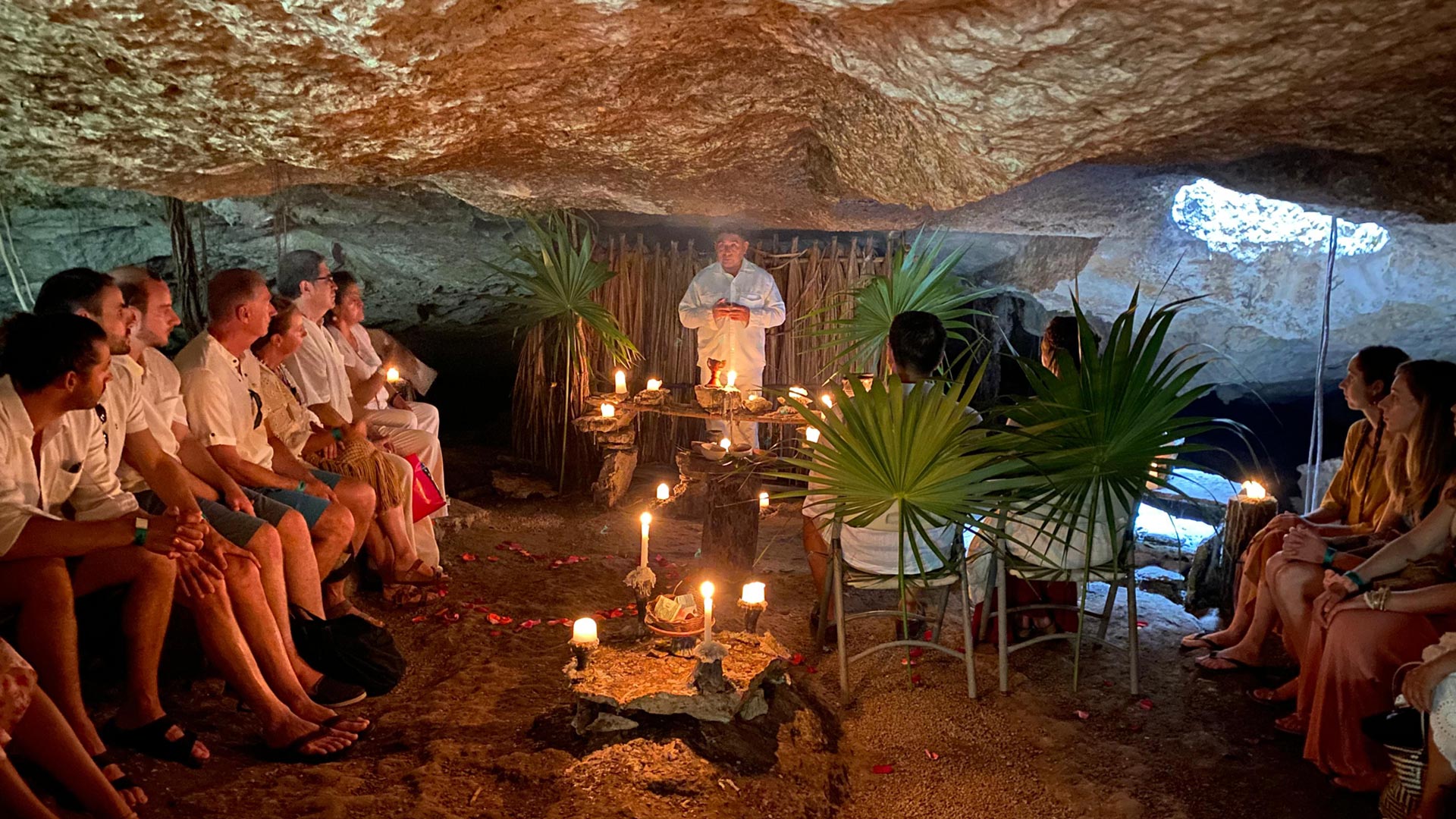 Ceremonial activity at the Chikin-Ha cenote complex in Quintana Roo
Swimming and snorkeling
Most casual visitors will spend their time in the permitted swimming areas. The freshwater is naturally cool compared with the Caribbean Sea, although the difference may feel welcome in Riviera Maya heat. Limestone edges can be uneven, and some entrances involve steps, platforms, or paths rather than a simple shallow beach. Wear footwear for walking, then follow the site’s rules about when it must be removed.
Snorkeling is a good fit for travelers who want to see below the surface without committing to a dive. Bring a mask that fits, or use equipment supplied or rented by the park if that is what the current operation provides. A poor mask seal can turn an otherwise easy swim into a frustrating one, so test it before moving away from the entry point.
Do not chase fish, touch roots, stand on rock formations, or swim into a restricted passage. Underwater visibility can make a cenote look deceptively simple. The visible pool may connect to deeper or narrower areas, and divers may be sharing the environment. Stay inside the permitted zone, listen to lifeguards or guides, and keep children close enough to supervise rather than relying on flotation equipment alone.
If anyone in your group is not a confident swimmer, say so before entering the water. Ask which areas are shallowest, whether life jackets are available or required, and where the safest exit is. A cenote is a natural environment, not a hotel pool with a uniform depth and an obvious edge everywhere.
What about diving?
Chikin-Ha is known in diving circles for cavern and cave environments. That does not mean every visitor should attempt an underwater cave experience. Open-water certification, cavern training, cave certification, recent experience, a qualified guide, and the correct equipment are separate considerations. Ask a reputable dive operator to match the route to your actual qualification and comfort level.
Do not follow a diver’s line, enter a passage, or swim beyond a light zone because the entrance looks close. Cavern diving has strict limits designed to keep divers within daylight and under trained supervision. Cave diving goes farther and requires specialist training. If your holiday group includes divers and non-divers, the cenote can still work: some people can swim or snorkel while certified participants join a separately arranged dive.
The water is not a place for experimentation with breath-holding, freediving, or underwater photography in restricted passages. If you have a medical condition, recent injury, ear problem, or concern about cold freshwater, get appropriate advice before booking a dive rather than making the decision at the water’s edge.
How to get to Cenote Chikin-Ha
From Playa del Carmen
Playa del Carmen is one of the most convenient bases for visiting Chikin-Ha. Travel south along Federal Highway 307 and use a current map application to identify the entrance. The drive is straightforward in broad geographic terms, but highway entries and exits require attention. Do not brake sharply at the last moment or turn across traffic because a map application announces the destination late.
A rental car gives you the most flexibility, especially if you want to compare Chikin-Ha with Cenote Azul, Cenote Cristalino, or Cenote Jardín del Edén. It also makes the return easier after swimming, when your group may not want to wait beside the highway. Check the rental agreement, photograph the car before leaving, and avoid leaving valuables visible while parked.
A taxi or private transfer can be comfortable, but arrange the return before you leave Playa del Carmen. Ask the driver whether they will wait, return at a set time, or provide a reliable contact for pickup. Do not assume that a taxi will be waiting outside when you finish. Agree on the fare and basic plan before getting in; current rates vary by origin, vehicle, and negotiation.
Colectivo travel can be economical, but the practical details are less forgiving. A southbound colectivo may be able to drop you near the highway entrance if you clearly tell the driver where you are going. The entrance road may involve a walk, and the same transport may not stop conveniently for the return. Confirm the walking distance, road conditions, and pickup point before committing. Carry water, sun protection, and enough pesos for a taxi fallback if the return becomes uncomfortable.
From Tulum
From Tulum, Chikin-Ha is a northbound trip on Highway 307. It can fit into a day that also includes a beach, another cenote, or a stop in the Puerto Aventuras area, but it is not a walking outing from Tulum town. Traffic, rain, roadworks, and the exact starting point can all change the journey.
A car is useful if Chikin-Ha is one stop in a route. A private transfer or organized tour removes some navigation and return concerns. A taxi is possible when arranged in advance, but the same warning applies: set up the return rather than assuming the driver will remain nearby.
Do not confuse this site with Taak Bi Ha near the Dos Ojos area. The similar names are a real planning hazard. Use the official Chikin-Ha destination and a current map pin, and check that your driver has the right place before leaving Tulum.
From Puerto Aventuras and nearby resorts
Chikin-Ha is practical from Puerto Aventuras and resorts in the central corridor. The distance may be short on a map, but resort entrances and highway access can add time. Ask your accommodation for the safest pickup point rather than telling a driver only the hotel name. If you are staying in a gated resort zone, confirm whether a taxi can enter or whether you need to meet at the main road.
A private transfer makes sense for a family with car seats, a group carrying snorkeling equipment, or travelers combining multiple stops. For one short visit, a taxi may be simpler. The right choice depends less on the nominal distance than on the return plan and how much flexibility you want.
Tickets, opening hours, and what is included
Published prices and schedules for cenote attractions change. Different activity packages may include different equipment, guides, food, ceremonies, or adventure elements. Confirm current admission, opening times, last entry, payment methods, and inclusions through the official Chikin-Ha contact or booking channel before you go.
Do not rely on an old blog post for a current price. A page that gives a figure in pesos may be describing a previous season, a promotional package, or a tour rather than independent admission. Bring pesos in cash as a practical backup, while also checking whether the site currently accepts cards. Do not assume every activity is included in the basic entrance.
Ask these questions before travel:
- Is general access available on the day you want to visit?
- Which cenotes are open for swimming?
- Is snorkeling equipment included, rented, or unavailable?
- Are guided activities scheduled at fixed times?
- Is a reservation required for a ceremony, photo session, or adventure package?
- What are the current last-entry and closing times?
- Is the access road suitable for your vehicle?
- Are children allowed on every activity, or are there height and age rules?
This small check prevents the most common disappointment: arriving with one expectation and discovering that the current ticket covers something different.
How long to spend
For swimming and a relaxed look around, allow at least a few hours. That gives you time to change, shower if required, walk between areas, enter the water without rushing, and pause at Ta’ak Bil-Ha. A quick visit is possible, but it can feel hurried if you are trying to see all three parts.
Allow more time if you add a guided activity, a ceremonial experience, zip line, bicycle route, photo session, or diving. Confirm the order and duration when booking. Some activities may operate at set times, and a late arrival can affect the rest of your day.
A full cenote circuit is possible in the central Riviera Maya, but do not confuse the number of stops with the quality of the day. Swimming, drying off, moving cars, paying admissions, and finding entrances all take time. Two well-chosen cenotes are usually more enjoyable than racing through four. Chikin-Ha can be the main stop, with one nearby open cenote added only if everyone still has energy.
What to bring
Pack lightly, but bring the items that make a freshwater outing easier:
- Swimsuit and a dry change of clothes.
- Towel, unless your tour or accommodation provides one.
- Water shoes or secure sandals for uneven paths.
- Reusable drinking water in a container allowed by the site.
- Cash in pesos as a backup for admission, lockers, or small purchases.
- A mask that fits if you prefer your own snorkeling gear.
- Sun protection for the walk and parking area.
- A waterproof phone pouch if you need your phone near the water.
- Insect repellent for time on shaded jungle paths, applied according to local rules.
- Any medication your group may need during a half-day outing.
Avoid bringing loose valuables. Leave passports, expensive jewelry, and unnecessary electronics secured at your accommodation. Ask about lockers before entering the water rather than leaving a wallet in a bag beside the pool.
Cenote operators commonly require visitors to rinse before swimming and may prohibit conventional sunscreen, oils, makeup, or hair products because they can affect groundwater. Follow the current rule even if a product is marketed as natural. “Biodegradable” is not a universal permission slip; the site’s instructions come first.
Families and mixed-ability groups
Chikin-Ha can suit families because it offers more than one activity and lets adults choose between swimming, viewing, and organized experiences. Still, natural terrain requires closer supervision than a resort pool. Walk slowly on wet limestone, use handrails, keep children away from cavern edges, and follow any life-jacket requirement.
A mixed group should agree in advance on a simple plan. Confident swimmers may want longer snorkeling time, while non-swimmers may prefer the paths and viewing areas. Divers should arrange their own certified program rather than expecting the rest of the group to wait without shade or food. If anyone has mobility limitations, contact the park before booking and ask about the path surface, steps, rest areas, bathrooms, and water access. Do not assume that a jungle attraction is step-free.
Heat is often the bigger family problem than the water. Children can become tired before adults notice it, especially after a sunny walk from transport. Bring water, use shade, and keep the day flexible. If the weather turns stormy, ask staff whether water access or activities are temporarily closed rather than entering on your own.
What to combine with Chikin-Ha
Cenote Azul, Cristalino, or Jardín del Edén
These nearby or broadly neighboring cenote options make the most obvious combination. Cenote Azul is a more open, accessible-style swimming stop; Cristalino offers clear water and open-air sections; Jardín del Edén is known for a larger natural setting. The exact sequence depends on current access, crowd levels, and what your group wants.
Do not assume that one ticket covers all sites. They are separate operations with their own rules and admissions. If you combine them, keep cash, dry clothes, and time for parking and walking between stops.
Xpu-Ha or another beach stop
A beach and cenote combination gives the day more variety. Xpu-Ha is in the same broad central Riviera Maya region, but beach conditions can change with wind, waves, seaweed, access rules, and weather. Check current conditions before promising a swim after the cenote. Rinse and change before getting back into a rental car, and keep wet towels contained.
Puerto Aventuras
Puerto Aventuras can work as a meal or marina-area stop when your route already passes through. Check the current opening status of any restaurant or attraction rather than assuming a previous visit or online listing is current. The benefit is a change from jungle and freshwater to a more built-up coastal setting.
Akumal
Akumal is farther south and can be combined only if your group is comfortable with a longer day. Snorkeling rules, beach access, and turtle-protection procedures are specific to the current operation. Do not treat a cenote and an Akumal turtle experience as interchangeable or assume you can arrive at the beach and enter any water zone without a booking or guide.
Chikin-Ha compared with other Riviera Maya cenotes
Choose Chikin-Ha when you want a managed complex, several environments, and optional cultural or adventure activities.
Choose Cenote Cristalino when you prefer a straightforward swimming and snorkeling stop close to the central highway corridor.
Choose Cenote Jardín del Edén when your priority is a more open natural setting and a spacious swim, subject to current conditions and operating rules.
Choose Cenote Azul when you want an accessible open cenote that can be paired with other nearby water stops.
Choose Cenote Dos Ojos when the dramatic cavern setting and specialist snorkeling or diving experience are more important than a short, simple visit. Dos Ojos is in the Tulum and Dos Ojos corridor, not in the Chikin-Ha complex.
Choose Taak Bi Ha when you are planning a separate cave-oriented cenote outing near Dos Ojos. Do not confuse it with Ta’ak Bil-Ha at Chikin-Ha; the names are close, but the locations and visitor experiences are different.
The “best” choice is mostly about logistics and expectations. A family staying in Playa del Carmen may value Chikin-Ha’s combination of activities. A traveler with one spare morning may prefer a closer, simpler open cenote. A certified diver should choose based on the route, guide, qualification, and safety plan rather than the most attractive photograph.
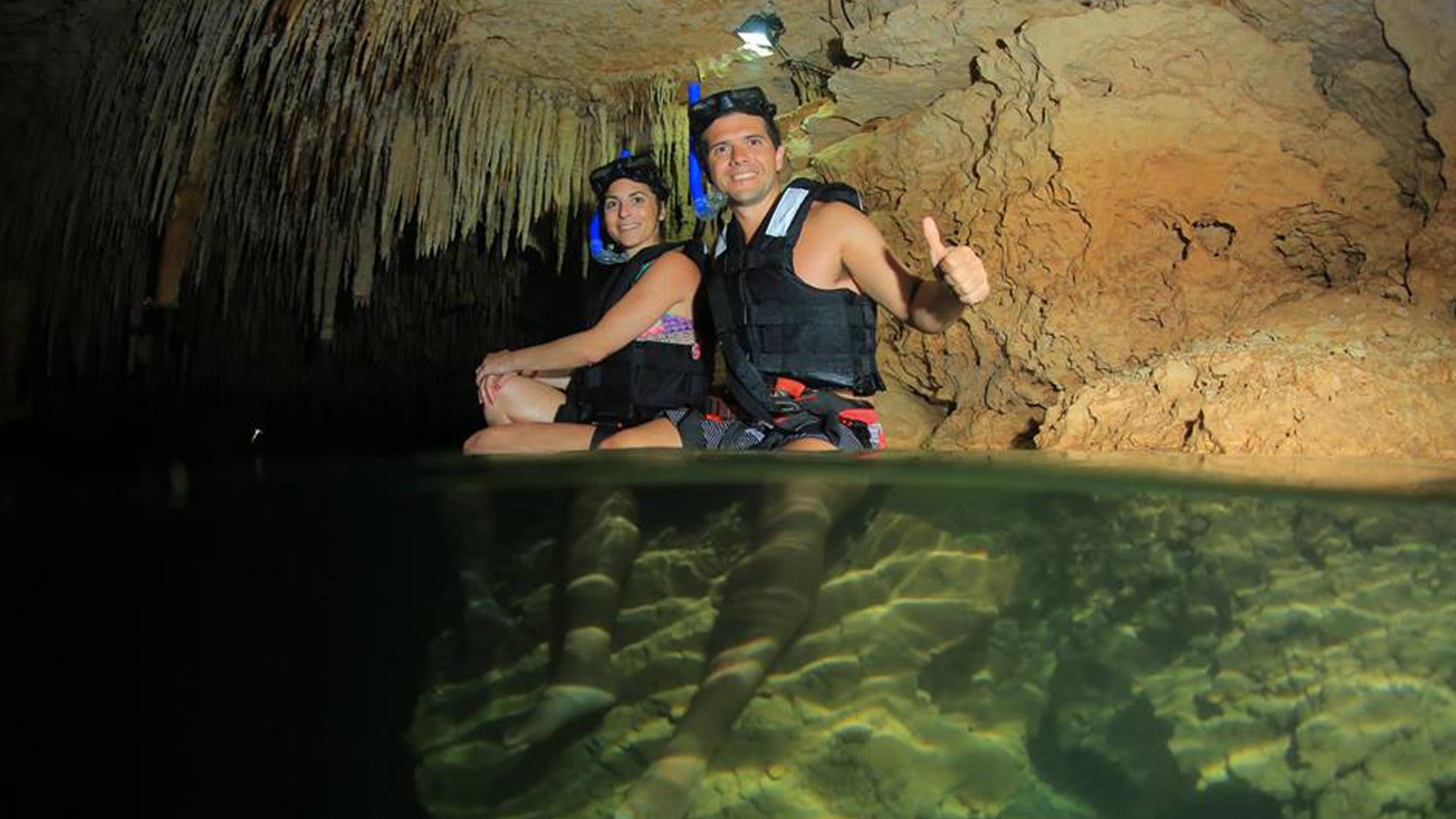 Snorkeling activity at Cenote Chikin-Ha in Quintana Roo

Best time of day and season
Arrive early if you want a calmer experience. Cenotes can become busy as independent visitors and organized tours arrive, and early arrival also gives you more flexibility if your group needs a slower start. Midday light can be attractive for photographs, but quiet water and comfortable temperatures may matter more than perfect sunbeams.
The Riviera Maya is warm year-round. Rain can arrive quickly, and a cloudy sky does not necessarily ruin a cenote visit. Tropical weather can affect access roads, visibility, activity schedules, and safety decisions, so check the forecast and respect temporary closures.
Sargassum affects the Caribbean coast but not the freshwater inside a cenote in the same way. That makes cenotes a useful alternative when the beach is unpleasant, although the walk and outdoor areas can still be hot or wet. Do not assume a cenote will be empty during a beach-sargassum period; other travelers may have the same idea.
During holiday periods and school breaks, book any guided or ceremonial activity early and confirm the schedule. Outside peak periods, direct access may be easier, but operations can still change. The most dependable approach is to verify the details shortly before departure.
Photography and respectful visiting
The contrast between dark cavern spaces and bright forest makes Chikin-Ha photogenic, but it also tempts visitors to spend the entire visit behind a phone. Keep one hand free on slippery steps, do not back toward an edge while framing a shot, and use a waterproof case rather than risking a phone above deep water.
Ask before photographing guides, ceremonies, or other visitors. Never use flash in a way that disturbs divers, wildlife, or a ritual activity. Drones may be restricted or prohibited, and the dense vegetation makes them a poor fit even where technically allowed. Follow the park’s current photography policy.
Most importantly, photograph formations without touching them. Oil from skin can damage delicate surfaces, and even a small piece of rock may have cultural or scientific value. Cenote photography should leave the place looking exactly as you found it.
Safety and environmental care
Use the designated entrances and exits. Do not jump from an unapproved ledge, swim outside marked areas, or enter a cave without a qualified guide. Natural water can hide depth changes, submerged rock, roots, and lines used by divers.
Rinse before entering and keep all products out of the water unless the operator specifically permits them. Take rubbish with you, avoid single-use plastic where practical, and do not feed fish or wildlife. Keep voices low in enclosed areas; sound travels differently through a cavern and can disturb people who are diving or taking a quiet moment.
The limestone environment is fragile. Do not carve names, remove shells or rocks, or use the cenote as a washing place. If you see a rule that seems stricter than expected, remember that the groundwater system is shared and that the site’s operators are responsible for protecting it.
Frequently asked questions
Is Cenote Chikin-Ha near Playa del Carmen?
Yes, it is in the central Riviera Maya corridor south of Playa del Carmen, outside the city centre. It is a road-access attraction, not a walkable Playa del Carmen beach or downtown site.
Can you swim at Chikin-Ha?
Swimming is associated with the permitted water areas of the complex, especially Chikin-Ha and X’tabay. Follow the current staff instructions. Ta’ak Bil-Ha is generally treated as a ceremonial and viewing cenote rather than a casual swimming area.
Is Chikin-Ha suitable for children?
It can suit families, but children need active supervision around water, wet limestone, stairs, and cavern edges. Ask about life jackets, shallow areas, age limits, and the condition of paths before entering.
Do you need a guide?
You may not need a guide for every basic visitor activity, but guided support is appropriate for diving, cave or cavern routes, and any ceremonial experience. Confirm what your ticket includes before arrival.
Can you visit without a car?
Possibly, using a colectivo, taxi, private transfer, or tour, but the return needs careful planning. Highway transport may leave you walking along an access road, and taxis may not be waiting at the entrance.
Is Chikin-Ha the same as Taak Bi Ha?
No. Ta’ak Bil-Ha is associated with the Chikin-Ha complex. Taak Bi Ha is a different cenote in the Dos Ojos area. Check the spelling and map pin carefully when booking or giving directions.
What should you do if prices or hours online disagree?
Use the official Chikin-Ha contact or booking channel and verify the details shortly before visiting. Treat old third-party listings as planning clues, not guarantees.
Final recommendation
Cenote Chikin-Ha is a good middle-ground choice: more varied than a single quick swim, more structured than a remote jungle stop, and close enough to the central Riviera Maya corridor for a practical day plan. Go with realistic expectations, arrange the return transport, confirm the current activity schedule, and leave room to enjoy the water rather than rushing through every option. If your group wants swimming, snorkeling, cultural context, and the flexibility to divide its time between active and quiet experiences, Chikin-Ha deserves a place on the itinerary.
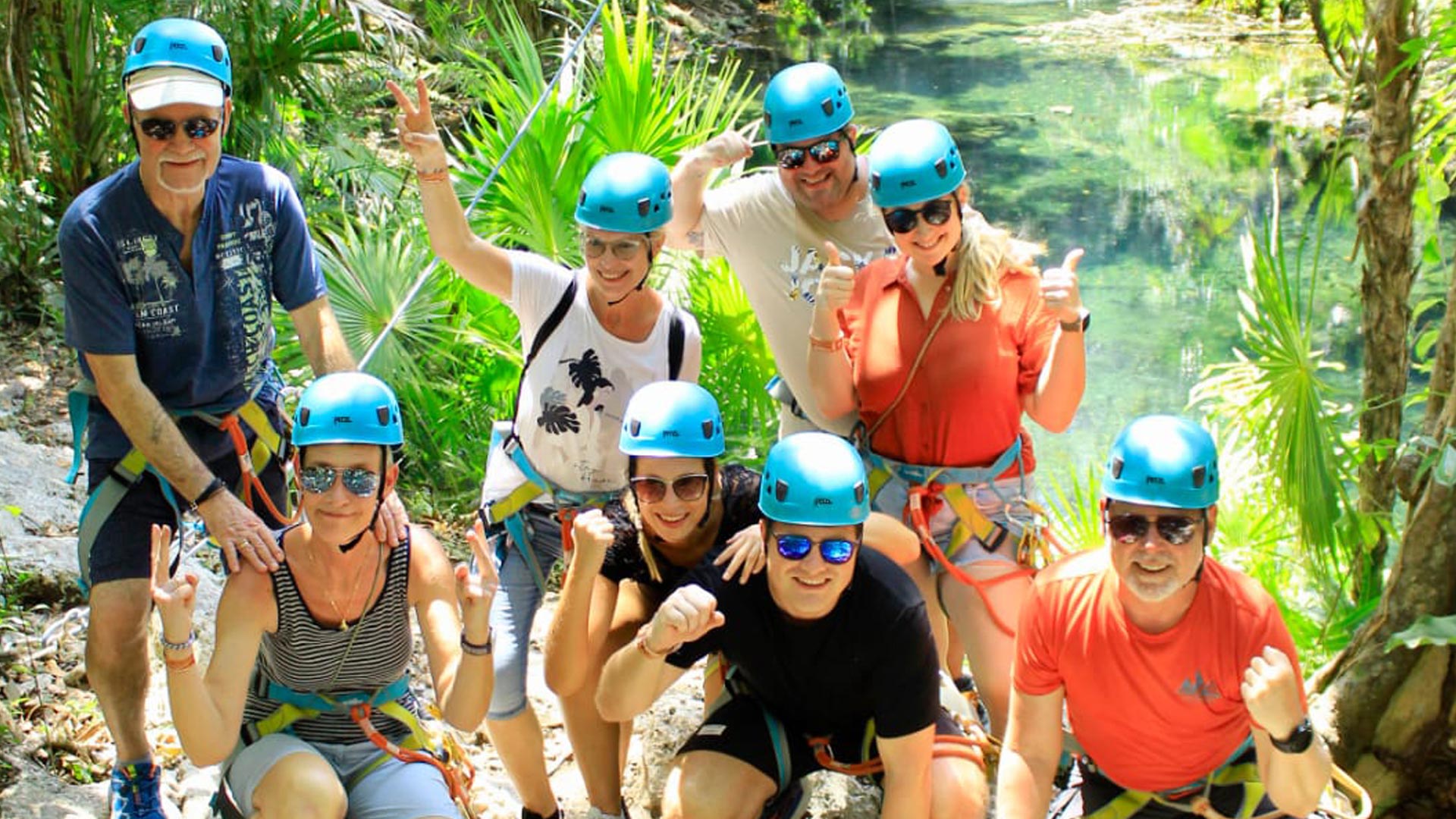 Cenote Chikin-Ha nature and activity area in the Riviera Maya