Printable guide
Cenote Cristalino: Complete Visitor Guide
Updated
Plan a practical visit to Cenote Cristalino near Xpu-Ha, including swimming, snorkeling, transport from Playa del Carmen or Tulum, what to bring, safety, nearby cenotes, and how to choose the right visit.
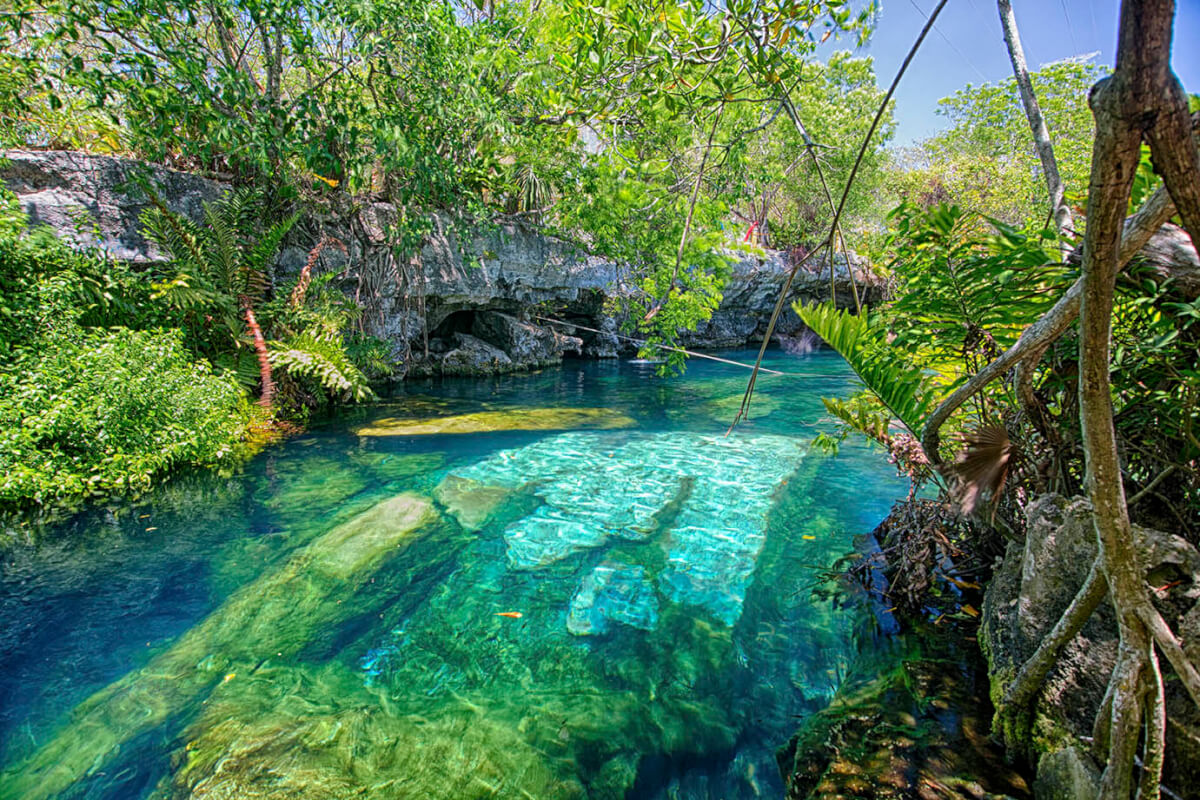
Cenote Cristalino is one of the easier cenotes to add to a Riviera Maya itinerary. It sits on the coastal highway corridor between Playa del Carmen and Tulum, in the Xpu-Ha area of Quintana Roo, and its open, clear-water setting works well for a short swim, a relaxed snorkel, or a first introduction to cenotes. You do not need to build an entire day around it unless you want to combine several nearby stops.
The important distinction is that Cenote Cristalino is not a polished theme park or a deep-cave expedition. Its appeal is simple: freshwater, limestone, jungle vegetation, a convenient location, and enough room for different travelers to enjoy the water at their own pace. Some visitors come for a quick dip between the beach and their hotel. Others stay longer to snorkel, use the jumping platform where permitted, and compare the experience with neighboring cenotes such as Cenote Azul or Jardín del Edén.
This guide explains how to decide whether Cristalino fits your trip, how to reach it from the principal bases, what the experience is like, how to plan around crowds and weather, and what to do nearby. Hours, admission, rental arrangements, and accepted payment methods can change, so use the official site to verify those details immediately before leaving.
Is Cenote Cristalino worth visiting?
For many travelers, yes—especially if you want an accessible open cenote rather than a full guided cave experience. Cristalino is a good match when you value clear water and easy logistics more than elaborate facilities or a dramatic all-day excursion. It is also a sensible choice for a mixed group: confident swimmers can explore, cautious swimmers can stay near the edges or use available flotation equipment, and non-swimmers can enjoy the shaded setting without needing to commit to a demanding activity.
It is less suitable if you are looking for a completely empty natural pool, a serious cavern-diving site, or a destination with a long list of organized attractions. The cenote is popular precisely because it is comparatively straightforward to reach. That means busy periods are possible, particularly on weekends, holidays, and in the middle of the day. A calm visit depends as much on timing as on the cenote itself.
Cristalino also makes sense for travelers who are already moving along the highway. From Playa del Carmen, it is a practical southern outing. From Tulum, it is a northern stop and works better when combined with another nearby activity than when treated as the only reason to travel north. From an all-inclusive resort in the Puerto Aventuras, Xpu-Ha, or Akumal corridor, a taxi or pre-arranged transfer may be simpler than attempting several public-transport connections.
The short version:
| Traveler | How well it fits |
|---|---|
| First-time cenote visitor | Very well, because the setting is open and easy to understand |
| Strong swimmer or snorkeler | Well, subject to current safety rules and water conditions |
| Family with older children | Often well, if children follow the site rules and are comfortable around water |
| Non-swimmer | Possible as a nature stop, but not a water-centered highlight |
| Serious cave diver | Probably not the right primary choice; look for a specialist operation |
| Traveler without a car | Possible by colectivo, taxi, or organized activity, with the return plan arranged first |
| Traveler seeking solitude | Visit at a quieter time or choose a less accessible cenote |
Clear water and a jumping platform at Cenote Cristalino near Playa del Carmen
Where is Cenote Cristalino?
Cenote Cristalino is on the Riviera Maya's main north-south corridor, between Playa del Carmen and Tulum and close to Xpu-Ha. It is not in central Playa del Carmen and it is not in Tulum pueblo. That geographic distinction matters when you are estimating travel time, arranging a taxi, or deciding whether to rely on a colectivo.
The area is characterized by the federal highway, resort entrances, beach roads, and clusters of cenotes. Nearby attractions commonly considered in the same outing include Cenote Azul, Jardín del Edén, Chikin Ha, Kantun-Chi, Xpu-Ha beach, and the Puerto Aventuras area. They are not all the same type of attraction, and they do not necessarily share one ticket or one operator, so confirm each stop separately rather than assuming a multi-cenote pass applies everywhere.
Use the official Cenote Cristalino website and its map or contact information for the current entrance point. Highway conditions and roadside signs can be confusing, especially when traveling south from Playa del Carmen. Have the destination saved before you leave, and do not wait until you are standing beside the highway to work out the return journey.
From Playa del Carmen
Playa del Carmen is the most natural base for a visit. The route heads south along the federal highway toward Tulum. A private car gives you the most control over timing and makes it easier to add a second cenote or Xpu-Ha beach, but you need to drive defensively: the highway carries fast traffic, access lanes can appear suddenly, and resort and attraction entrances are not always intuitive.
A colectivo can be a practical low-cost option. Ask the driver to stop at Cenote Cristalino before boarding, and confirm the direction. The van may leave you near the highway rather than at a private door-to-door entrance. The last walk, the road crossing, shade, and the return pickup point all matter more than the fare itself. For the journey back, stand at the appropriate roadside location and check that the vehicle is traveling toward Playa del Carmen before boarding.
A taxi is more comfortable but the return leg deserves attention. Do not assume a taxi that drops you off will automatically be waiting later. Agree on the return arrangement and fare before entering the cenote, or use a reputable transfer service. If you are traveling with children, snorkeling equipment, or limited mobility, the extra simplicity of a pre-arranged car can be worth it.
From Tulum
From Tulum, Cristalino is a northern excursion along the same federal highway. It can be done independently, but the distance makes a short visit feel less efficient if you travel solely for one swim. Combine it with another confirmed stop in the Xpu-Ha or Puerto Aventuras corridor, and allow flexibility for traffic, weather, and the time you actually want in the water.
Taxis from Tulum can be expensive for a round trip if you do not negotiate and confirm the details in advance. Public transport is possible in principle, but the stop and the return require attention. If you are staying in Tulum beach zone, first get to a practical pickup point and then confirm the direction. A private transfer or a verified small-group activity may be easier for travelers who do not want to manage the highway.
For bookable cenote excursions, compare the current listings on GetYourGuide's Cenote Cristalino page and Viator's Riviera Maya experience inventory. The marketplace page may show a nearby cenote combination rather than a dedicated Cristalino admission, so read the exact itinerary and meeting point before booking.
What the visit is like
Cenote Cristalino is an open cenote: daylight reaches the water and vegetation surrounds the swimming area. That makes it feel more approachable than a cave where the ceiling, darkness, and enclosed passages can make the experience intense. The water is fresh and typically cool compared with the Caribbean, although the sensation depends on the day, your activity level, and how long you have been in the sun.
The visible character of the cenote comes from the contrast between green vegetation, pale limestone, and clear water. Look below the surface rather than expecting a large marine ecosystem. Cenotes are freshwater environments, and what you notice may include small fish, submerged rock, roots, and changing light. Visibility is often best when swimmers avoid stirring the bottom and when the water is not crowded.
A platform or designated jumping area is one of the features associated with Cristalino. Treat it as optional, not as the definition of the cenote. Jump only from the official point, only when staff permit it, and only after confirming that the water is clear of other swimmers. Never climb onto unmarked rock ledges or copy another visitor's jump. A jump that looks small from the surface can still cause an injury if the landing is awkward.
The surrounding facilities are practical rather than luxurious. Expect some combination of changing space, restrooms, life jackets, rental equipment, and places to sit, but confirm what is currently included. Do not plan around a particular locker, chair, restaurant, or rental unless the operator has confirmed it. Bring the essentials you need rather than assuming every comfort will be available.
Swimming and snorkeling at Cristalino
Swimming is the main reason to visit. Enter slowly, let your eyes adjust to the light, and identify the easiest exit before moving farther from the edge. Even confident pool swimmers should remember that an outdoor cenote has uneven rock, slippery surfaces, changing depth, and other guests moving around the water.
Snorkeling can add a great deal to the visit. Bring a well-fitting mask if you have one, or ask whether rental equipment is available. A mask that leaks turns a pleasant swim into a constant distraction. Keep your fins, if used, clear of other swimmers and do not touch the rock, roots, or animals. Avoid standing on submerged surfaces: they may be sharp, unstable, or living habitat.
Do not use sunscreen, insect repellent, body oil, or other lotions before entering unless the current site rules explicitly allow a particular product. Cenote water is part of a connected groundwater system, and residues that seem harmless on a beach can be a problem in a small freshwater environment. Rinse first when a shower is provided. The simplest plan is to apply sun protection after leaving the water, wear a rash guard for the approach and rest periods, and use a hat while you are outside.
Life jackets are a sensible choice for children, uncertain swimmers, and anyone who becomes tired quickly. Whether they are mandatory, included, or rented can change, so follow the rule in force on the day. A life jacket is not a substitute for supervision. Adults should stay close to children, especially near a platform, cave opening, drop-off, or busy entry area.
GuideCenote Carwash Guide: Swimming, Snorkeling and Diving at Aktun HaA practical guide to Cenote Carwash, also called Aktun Ha, near Tulum on the road to Cobá. Learn what swimming, snorkeling, wildlife, cavern diving, transport, safety, and nearby cenote combinations are really like.Open
Safety, etiquette, and conservation
Cenotes reward careful behavior. The visible water may look like a swimming pool, but the underlying environment is geological, connected, and sensitive. Follow staff instructions even when they seem stricter than what you have seen at a beach.
Keep these habits in mind:
- Shower before swimming when a rinse station is provided.
- Leave sunscreen, repellent, oils, and makeup off your skin in the water.
- Use designated stairs, ladders, and platforms rather than scrambling over rock.
- Do not touch stalactites, roots, fish, or underwater formations.
- Keep food, drinks, glass, and disposable packaging away from the water.
- Use a dry bag or waterproof pouch for phones and identification.
- Do not swim beyond a marked boundary or enter a cave section without permission and the required equipment.
- Supervise children continuously rather than from a chair several meters away.
- Respect other swimmers' space, particularly when snorkeling or taking photos.
- Leave the site as you found it and take reusable items with you.
Footwear deserves special attention. Water shoes can help on rough or slippery paths, but they do not make every rock safe. Do not wear shoes that shed dirt into the water, and ask whether the operator requires bare feet in the swimming area. Bring a towel, a dry change of clothes, drinking water for before and after swimming, and a small amount of cash as a backup if the current payment options are not clear.
Weather affects the quality of a cenote visit. Rain does not always cancel a swim, but storms, lightning, flooding on access roads, or poor visibility can change the plan. Ask about same-day conditions if the forecast is unsettled. In the heat, a freshwater swim feels restorative, but the approach, parking area, and return walk can still be hot. Hydrate before entering the water and again when you leave.
When should you go?
The best time depends on whether you prioritize light, warmth, convenience, or fewer people. Morning often gives you a calmer start, cooler air, and more time to adjust before the day becomes hot. It is a strong choice for families and for travelers who want photos without a crowded foreground.
A late-afternoon visit can also work, but do not arrive close to closing and expect a full experience. You need time to park, pay, change, rinse, swim, dry off, and leave safely. Confirm the day's closing time rather than relying on an old blog post. Weekday patterns are not guaranteed, and school holidays or Mexican public holidays can change the atmosphere.
Midday can be practical if you are fitting Cristalino between other plans. It is also when heat and visitor numbers may be more noticeable. If that is your only available window, make the visit shorter, keep expectations realistic, and have a backup plan for a busy water area.
The water itself is not controlled like a hotel pool. Freshwater temperature, recent rain, sunlight, and the number of people in the cenote all influence how it feels. Pack a light layer for the journey back if you tend to get cold after swimming.
Prices, opening hours, and what to verify
Online information for Cenote Cristalino has varied over time, including different published admission figures and different schedules. That is common for independently operated natural attractions, where fees, child policies, rental charges, holiday hours, and payment methods may change. Do not build a precise budget from a third-party article written for a previous year.
Before leaving, check the official Cenote Cristalino hours page, official prices page, and the operator's current contact channels. Confirm:
- Opening hours for your day, especially a weekend or holiday.
- Adult and child admission and the age range used for child pricing.
- Whether the price includes a life jacket, locker, parking, or any equipment.
- Whether card payment is accepted or pesos are required.
- Whether cameras, tripods, drones, or professional equipment have restrictions.
- The current rules for sunscreen, footwear, flotation, and jumping.
- Whether rain or water conditions can affect operations.
- The actual entrance point and the safest place to wait for transport.
The operator's own information should take priority over an old map listing, social post, or travel blog. Keep a little flexibility in your day rather than trying to arrive at a precise minute based on information that may already have changed.
How long should you stay?
For a focused swim and snorkel, allow roughly one to two hours at the cenote itself, plus transport and changing time. The exact duration depends on crowds, whether you rent equipment, and how long you want to sit in the surrounding area. This is enough for travelers who want to experience Cristalino without making it the sole event of the day.
Allow longer if you are traveling with children, if you need a slow change after swimming, or if you are combining the visit with another nearby cenote. Avoid planning three attractions with fixed arrival times. Cenotes involve changing clothes, rinsing equipment, walking between entrances and water, and occasionally waiting for transport. A schedule that looks efficient on a map can become stressful in the heat.
A good half-day shape is one cenote early, a meal or rest break, and one nearby attraction only if everyone still has energy. You can also pair a morning swim with Xpu-Ha beach, but check beach access and sea conditions separately. A cenote is freshwater; it is not a substitute for a Caribbean shoreline day if swimming in the sea is your priority.
Nearby cenotes and attractions
Cristalino is part of a cluster, which is useful but also easy to mishandle. Nearby attractions are separate businesses and may have different rules, fees, hours, and levels of development.
Cenote Azul
Cenote Azul is another well-known open-water option in the same general corridor. It is often considered when travelers want to compare two open cenotes in one outing. Do not assume the water, entry, shade, platforms, or crowd level will feel identical. If you visit both, leave enough time for changing and transport rather than treating them as adjacent pools.
Jardín del Edén
Jardín del Edén is another open cenote commonly paired with Cristalino. Its layout and atmosphere differ, and the best choice depends on whether you want a more expansive open setting, a particular jumping area, or a quieter period. Confirm current access before adding it to a same-day plan.
Chikin Ha and Kantun-Chi
Chikin Ha and Kantun-Chi offer a different kind of cenote day, with combinations of open water, cave environments, and guided or structured access depending on the product selected. They are better for travelers who want more than a short independent swim. Some marketplace excursions combine cenotes with transportation and a guide; read the actual inclusions carefully.
You can compare current Xpu-Ha and Riviera Maya cenote activities on GetYourGuide or browse comparable Riviera Maya tours on Viator. A category page is a starting point, not proof that every displayed activity visits Cristalino.
Xpu-Ha beach
Xpu-Ha is a coastal beach destination south of Playa del Carmen. Combining a freshwater swim with the beach gives you two very different environments in one day, but access may be through a private property or a managed entrance. Check the current beach-access arrangement, conditions, and transport before relying on it as your second stop.
 Cenote Xcacelito, a separate Quintana Roo freshwater stop, illustrating the region's open-cenote landscape
Puerto Aventuras and Akumal
Puerto Aventuras can work as a meal or marina-area stop, while Akumal is farther south and known for marine wildlife experiences. Do not combine too many water activities without considering the physical effort of swimming, snorkeling, sun exposure, and changing clothes. A family may enjoy one cenote and one gentle coastal stop more than a rushed list of four attractions.
Choosing a tour versus visiting independently
Independent access is attractive when you are staying in Playa del Carmen, have a car, or are comfortable using colectivos and taxis. You choose your arrival time, stay as long as you like, and can change the plan if the cenote is busy. The trade-off is that you manage navigation, payment, equipment, and the return trip.
A guided activity is useful when your group wants transport, a bilingual guide, a second cenote, lunch, or a more structured day. It can also be the better safety choice for visitors who are unfamiliar with the highway or uncomfortable waiting at a roadside stop. The trade-off is less flexibility and the need to follow the operator's schedule.
The GetYourGuide listing specifically shows activities connected with Cenote Cristalino and the nearby Xpu-Ha corridor, including a private guided cave-and-open-cenote experience. The exact activity, meeting point, duration, and inclusions must be checked for your date. Viator's broader Riviera Maya inventory is useful for comparison, but do not assume a generic “cenote tour” includes Cristalino. Ask before paying if the named destination matters to you.
For transfers, compare available GetYourGuide transfer and activity options and check Viator's Riviera Maya tours and transfers. A private driver arranged locally may be more suitable for a group, but verify the provider, pickup time, waiting arrangement, and total cost in writing.
Where to stay for a Cristalino visit
You do not need to stay beside the cenote. Playa del Carmen gives you restaurants, transport connections, and a broad choice of accommodation, while the Xpu-Ha and Puerto Aventuras corridor reduces the distance to the cenote. Tulum works if Cristalino is part of a northbound day, but it is not the most efficient base for a quick spontaneous visit.
Choose Playa del Carmen if you want to combine cenotes with Fifth Avenue, city restaurants, ferry connections, and an independent travel style. Choose a resort corridor if you want a short transfer and most of your time at one property. Choose Tulum if the cenote is one small part of a wider Tulum itinerary rather than the central activity.
For a practical overnight search, check current Playa del Carmen and Riviera Maya rates on Booking.com and compare nearby stays on Trip.com. For Tulum-based plans, check Tulum availability on Booking.com and compare Tulum hotels on Trip.com. Availability, resort access, and transport costs change, so compare the whole trip rather than selecting a property only because it appears close on a map.
If you name a specific resort in your own itinerary, check its actual location before booking. “Riviera Maya” can describe a long coastal area, and a resort that sounds close may still require a highway transfer. Also confirm whether a hotel shuttle can take you to an independent cenote; many properties do not provide that service.
What to pack
Pack lightly, but pack for the transition between water and highway travel:
- Swimsuit and a dry change of clothes.
- Towel, unless your accommodation or tour confirms one is supplied.
- Water shoes or secure sandals if permitted by the operator.
- Your own mask if you prefer a reliable fit.
- Rash guard, hat, and dry cover-up.
- Reusable water bottle for before and after the swim.
- Waterproof pouch for phone, cards, and identification.
- Small pesos reserve, even if you expect to pay by card.
- Biodegradable toiletries for the shower, while remembering that “biodegradable” does not automatically mean permitted in the water.
- A light layer for the ride home.
Leave drones, large speakers, glass containers, and unnecessary valuables behind. A cenote is not the place to manage a complicated camera kit while climbing wet stairs. If photography matters, use a simple waterproof phone case or confirm camera rules before arrival.
Accessibility and family considerations
Access varies by path, steps, railings, changing rooms, and the distance from parking to water. Do not assume that an open cenote is step-free. Ask the operator about the current route if anyone in your group has reduced mobility, balance concerns, or difficulty changing on a wet surface.
Families should decide in advance who will supervise in the water. Children may be excited by the platform and clear visibility, but the combination of slippery rock, deep water, and other swimmers requires close attention. A flotation aid helps only when correctly fitted and permitted. If a child is nervous, start at the edge and allow them to watch before entering.
Older travelers can still enjoy the setting without swimming, provided the access route and seating are suitable. The experience is most rewarding when the group does not pressure every person to jump or snorkel. A calm visit, a shaded break, and a short look at the water can be enough.
Common mistakes to avoid
The first mistake is treating every online detail as current. Published prices, hours, and transport advice conflict across websites. Use the official operator information for the final check.
The second is arriving without a return plan. A colectivo may drop you at the attraction, but the reverse journey is not always as obvious. Know which direction you need, where to wait, and what you will do if the next vehicle is full.
The third is trying to visit too many cenotes in one day. Each stop looks close on a map, but private entrances, changing time, parking, and traffic add up. One good swim is better than four rushed check-ins.
The fourth is assuming the jumping platform is mandatory. It is an optional feature. Skip it if you are unsure, and never jump outside the designated area.
The fifth is wearing sunscreen into the water. Put it on after the swim, use shade and protective clothing, and respect the site's rinse and no-lotion rules.
The sixth is confusing Cristalino with Cenote Cristal. The names are similar, but they are separate destinations. Save the exact location and check that a driver or tour is taking you to the place you selected.
The seventh is labeling nearby images, attractions, or cenotes as Cristalino. The region has many visually similar sites. When planning with photos or social media, confirm the actual location rather than assuming every turquoise pool is the same cenote.
A simple half-day plan
Start by checking the official hours and weather. Leave your accommodation with swimwear under light clothing, dry clothes, water, pesos, and no sunscreen or lotion on the skin. If using public transport, confirm the correct direction and identify your return point before entering.
Arrive with enough time to walk in, change, rinse, and listen to the safety briefing. Begin with a slow swim around the easiest section. If you are snorkeling, stay out of the jumping lane and give other swimmers space. Use the platform only if it is open, permitted, and appropriate for your ability.
After the swim, rinse thoroughly, dry off, and apply sunscreen before traveling onward. Decide whether the group has energy for one nearby attraction. If not, return to Playa del Carmen, your resort, or Tulum for a meal and a less structured afternoon. If you are adding Xpu-Ha beach or another cenote, confirm its access and closing time independently.
This plan works because it leaves room for reality. The cenote may be busier than expected, a child may need a longer break, or the highway may move slowly. Building in space protects the best part of the day.
Cenote Cristalino compared with a cave cenote
Cristalino is a good introduction if you want daylight, an open view, and a lower-pressure swim. A cave cenote gives you a more enclosed atmosphere, darker water, geological formations, and sometimes a guided route. Neither is automatically better.
Choose Cristalino when your group has different swimming abilities, you want an independent visit, or you are combining the stop with the coast. Choose a cave-focused experience when you want interpretation, controlled access, snorkeling through formations, or a specialist guide. For diving, use a properly certified operator and select a site appropriate to your training; a recreational swim and a technical cavern dive are not the same activity.
Travelers who want a more managed underground experience can research Río Secreto's guide and activity options separately. That is a different attraction and should not be presented as part of a Cristalino visit. Likewise, Cenote Dos Ojos is in the broader Tulum-area cenote corridor, not in the Cristalino entrance area.
 Cenote Tajma-Ha, a separate cave and cenote attraction in the Riviera Maya
Final recommendation
Cenote Cristalino is a worthwhile, flexible freshwater stop for travelers based around Playa del Carmen, Xpu-Ha, Puerto Aventuras, or the northern Akumal corridor. Visit it for the clear open water and straightforward experience, not because you expect a private wilderness pool or a full-day expedition. Check the operator's current hours, price, rules, and payment method, arrive with a return plan, protect the water by leaving lotions off your skin, and keep the rest of the day deliberately light. That approach gives Cristalino room to be what it does best: an easy, refreshing cenote visit in the middle of a Riviera Maya itinerary.
FAQ
Can you visit Cenote Cristalino without a tour?
Yes, many travelers visit independently by car, taxi, or colectivo. The practical challenge is not reaching the general corridor but confirming the exact entrance and planning the return. A tour is more useful when you want transport, a guide, lunch, or several activities in one booking.
Is Cenote Cristalino suitable for children?
It can be, provided children are comfortable around water and adults supervise them closely. Follow the current life-jacket and platform rules. Ask about access steps and changing facilities if your child has mobility needs.
Do you need to be a strong swimmer?
No, but you should be honest about your ability. Use permitted flotation equipment, stay in the supervised area, and do not enter a deep or restricted section because the water looks calm. Non-swimmers may prefer to enjoy the surroundings without entering.
Can you wear sunscreen at the cenote?
Plan on removing sunscreen, repellent, oils, and lotions before entering. Follow the operator's current rinse and conservation rules. A rash guard, hat, and shade are better ways to manage sun exposure during the visit.
Is Cenote Cristalino the same as Cenote Cristal?
No. The names are similar, but they refer to different destinations. Check the exact name and map pin when booking transport or saving directions.
What else can you do nearby?
Depending on current access and your transport, you can consider Cenote Azul, Jardín del Edén, Chikin Ha, Kantun-Chi, Xpu-Ha beach, or Puerto Aventuras. Treat every site as separate and verify its current hours, fees, and rules before adding it to the day.
Should you visit from Tulum or Playa del Carmen?
Playa del Carmen is generally the more convenient base for a focused Cristalino outing. Tulum works when the cenote is part of a northbound day or a broader corridor itinerary. From either base, traffic and return logistics matter, so do not plan an overly tight schedule.
How much time do you need?
Plan roughly one to two hours at the cenote for a focused swim and snorkel, plus transport and changing time. Allow more for children, equipment rental, or a second attraction. Confirm the current closing time and leave enough margin to exit comfortably.
If you want the simplest successful visit, go with a little time in hand, swim within the marked area, and let the cenote be one well-paced stop rather than an excuse to rush across the entire coast.