Printable guide
Cenote Jardín del Edén Guide: Swimming, Snorkeling and Planning Tips
Updated
A practical guide to Cenote Jardín del Edén, also called Cenote Ponderosa, between Playa del Carmen and Tulum. Learn what to expect, how to get there, what to bring, and whether it suits your trip.
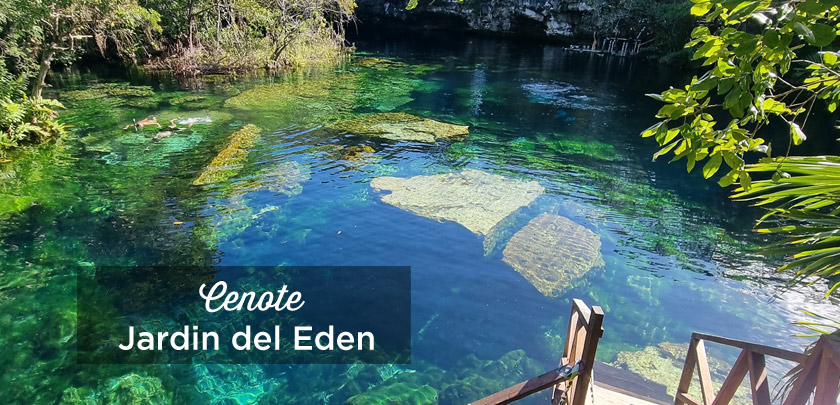
Cenote Jardín del Edén is one of the easier cenotes to add to a Riviera Maya itinerary. It sits along Federal Highway 307 between Playa del Carmen and Tulum, close to Puerto Aventuras, and feels more like a broad natural swimming pool than an enclosed cave. The water is clear, the surrounding vegetation is thick, and there is enough space for swimming, snorkeling, resting, and supervised jumps without turning the visit into an all-day expedition.
It is also known as Cenote Ponderosa or simply Cenote Edén. Those names matter when asking a driver or colectivo operator for directions, because different maps and local recommendations may use different versions.
The short answer is simple: Jardín del Edén is a good choice for travelers who want an open cenote with clear freshwater, easy surface activities, and a location that works as a half-day outing from Playa del Carmen or Tulum. It is less suitable if you want a quiet, enclosed cave, a polished theme-park experience, or guaranteed solitude. Conditions, operating days, prices, and included facilities can change, so verify the latest details locally before setting out.
Quick answer: is Cenote Jardín del Edén worth visiting?
For many travelers, yes. The cenote combines several things that are difficult to find in one place: a natural setting, accessible swimming, good snorkeling, a jumping platform, and proximity to other cenotes and the coast. You can spend two or three relaxed hours there, or make it the centerpiece of a longer day around Puerto Aventuras, Xpu-Ha, Cenote Azul, or Cenote Cristalino.
The most important decision is not whether the water is attractive. It is whether the open, active layout matches your travel style.
| If you want… | Jardín del Edén is… |
|---|---|
| An open-air cenote with plenty of daylight | A strong match |
| A natural freshwater swim rather than a beach swim | A strong match |
| Snorkeling without committing to a guided tour | A good match |
| A short jump into deep water | A possible match, if you are confident and follow the rules |
| Serious cavern or cave diving | Worth arranging with a qualified dive operator in advance |
| A guaranteed quiet experience | Not guaranteed; arrive early and avoid the busiest periods |
| Wheelchair-friendly, level access throughout | Something to confirm before visiting; rocks, stairs, and uneven paths are part of the setting |
| A place completely free of facilities or visitors | Not the right expectation |
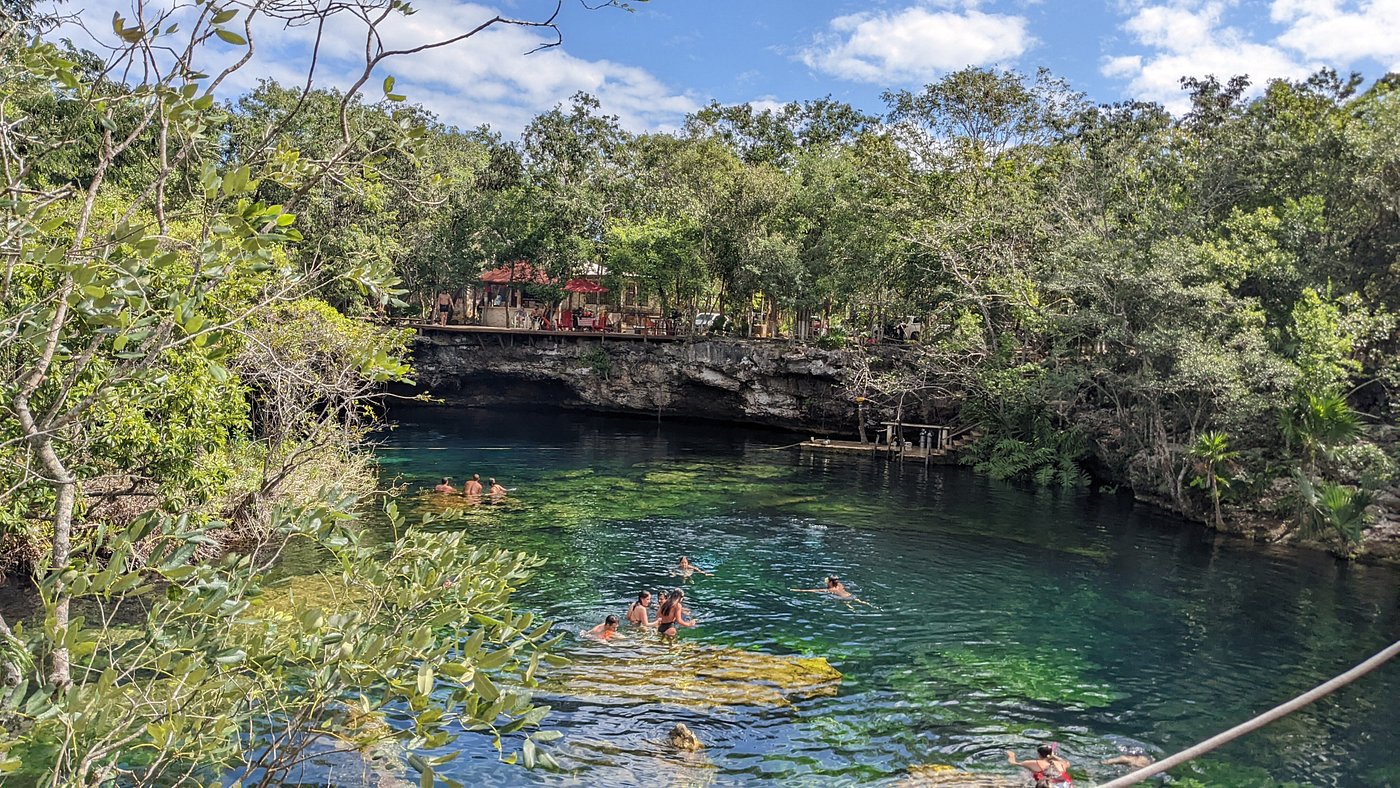 Cenote Jardín del Edén near Playa del Carmen, an open freshwater cenote surrounded by tropical vegetation
What makes Jardín del Edén different?
Many visitors first encounter cenotes through photographs of dark chambers, stalactites, and shafts of sunlight. Jardín del Edén offers a different experience. It is predominantly open to the sky, with trees and jungle vegetation framing a large water-filled sinkhole. From the edge, the water can look like a green-blue lagoon. From inside, the impression is closer to swimming in a natural pool beneath a canopy.
That open design makes the cenote approachable for people who are nervous about enclosed spaces. You can see the sky, the surrounding deck or rocks, and other swimmers. It also makes the experience more flexible: one person can snorkel while another sits in the shade, takes photographs, or stays dry.
The trade-off is that it can feel busier and less mysterious than a cave cenote. The site is known and convenient, and its position beside Highway 307 makes it a realistic stop for day-trippers. If you arrive when several groups are already there, the natural atmosphere remains, but the quiet is reduced.
The water is freshwater from the regional aquifer. Fish and aquatic plants are part of the underwater scene, and the clear visibility is one reason the cenote is popular with snorkelers and divers. The bottom is not a uniform tiled pool: rocks, ledges, roots, and changing depth are part of the environment. Water shoes are useful around the access points, especially for anyone who dislikes walking on uneven limestone.
Where is Cenote Jardín del Edén?
Jardín del Edén is in Solidaridad municipality in Quintana Roo, on the corridor between Playa del Carmen and Tulum. It is near Puerto Aventuras and close to other well-known cenotes on the same stretch of the highway. The exact driving time depends on where you start, traffic, roadworks, and your destination within each town.
From central Playa del Carmen, it is generally a straightforward southbound trip. From Tulum, travel north on Highway 307. From Puerto Aventuras, the cenote is one of the more convenient nearby nature stops. From Akumal, it can work as part of a northbound or southbound cenote day, although you should allow time for transport and the highway crossing.
Do not treat the highway as a slow local road. Vehicles move quickly, and the access arrangement may require crossing or walking near the highway depending on your transport. Use the designated access point, listen to staff, and do not cross casually with children or luggage.
A map pin can be useful, but do not rely on a single online listing for opening days, entrance prices, or the condition of the access road. The names Cenote Jardín del Edén, Cenote Edén, and Cenote Ponderosa are all worth trying when searching or asking for directions.
How to get there from Playa del Carmen
By rental car
A car is the easiest option if you want to combine Jardín del Edén with nearby stops. Drive south from Playa del Carmen on Highway 307 and follow the signs for the cenote. The process may involve stopping at a ticket office near the highway before continuing along the internal access road. Follow the current instructions on arrival rather than assuming that every online guide describes the present layout.
The practical advantage of driving is not only speed. You can carry dry clothes, snorkeling equipment, drinking water, and a small towel without worrying about how to manage them in a shared van. You can also visit a second cenote or the coast afterward. The disadvantage is that the driver must remain alert on the highway, and everyone should agree in advance about who will stay sober and responsible for the vehicle.
By colectivo
Shared vans run along the Playa del Carmen–Tulum corridor. From Playa del Carmen, ask for a southbound colectivo and tell the driver you need to get off at Cenote Edén, Cenote Ponderosa, or the nearby Barceló area. Confirm the stop before boarding. Because the cenote is beside a high-speed highway, ask the driver where to wait for the return trip and follow staff guidance for crossing.
A colectivo is often the most economical way to reach the corridor, but it is not a door-to-door service. You may need to walk from the drop-off point to the ticket area and then along the internal path. That walk is manageable for many travelers, but it is less convenient in the midday heat, with small children, or after swimming when you are carrying wet gear.
Do not assume the next van will arrive immediately or have space for a large group. Keep your belongings compact and avoid leaving valuables visible while you swim. If you are traveling with a stroller, check the current path and access conditions before choosing this option.
By taxi or private transfer
A taxi or prearranged private transfer is easier for families, groups, and travelers who do not want to negotiate the highway-side stop. Agree on the fare and the return plan before leaving. Mobile coverage, driver availability, and taxi pricing can vary, so do not assume that finding a ride back will be as easy as finding one to the cenote.
For a group, a private transfer can become more practical when you add Cenote Azul, Cenote Cristalino, a beach stop, or lunch. For a solo traveler, the cost may be less attractive than a colectivo or shared tour. A concierge or trusted local transport provider can help arrange a round trip if your accommodation is outside central Playa del Carmen or Tulum.
From Tulum
From Tulum, take a northbound colectivo or arrange a car, taxi, or tour. The distance is longer than from Playa del Carmen, but Jardín del Edén can still work as a half-day outing if you leave early. It is not the most logical choice if your only Tulum day is already packed with the ruins, beach, and a distant cenote. In that case, choose a site closer to your route or allow a full morning for the cenote rather than trying to squeeze it into a rushed schedule.
What to do at the cenote
Swim in the open pool
Swimming is the main reason most people come. The open layout lets daylight reach much of the water, and the setting feels natural without requiring a long hike or a cave tour. Some areas are deeper than they appear from the edge. If you are not a strong swimmer, use a life jacket when available and stay within the zone indicated by staff.
The water may feel cool when you first enter, especially after walking in the heat. That is part of the appeal. Take a moment to acclimatize rather than jumping in hurriedly. Keep your movements controlled near rocks, ladders, and other swimmers.
A cenote is not a chlorinated pool. Avoid treating the water like a place for sunscreen, lotions, or food. Shower before entering as required, and follow any additional rules posted at the site. These small habits protect the aquifer and help keep the water clear for everyone.
Snorkel along the edges
Jardín del Edén is well suited to relaxed snorkeling. You may see small freshwater fish, underwater plants, rock formations, and roots along the edges. Visibility is often the highlight, but it is not a marine reef: do not expect tropical saltwater fish, coral gardens, or the same experience as snorkeling in Akumal Bay or offshore from Cozumel.
Bring a mask and snorkel if you already have equipment you trust. Rental gear may be available, but availability and prices can change. A properly fitting mask matters more than having expensive equipment. Test it in shallow water, keep the snorkel clear, and avoid standing on submerged plants or rocks.
Snorkeling is best when you can move slowly. Look beneath platforms and around rock edges without chasing fish. If the site has a marked swimming or snorkeling boundary, stay inside it. The open water can appear calm while depth and underwater ledges change quickly.
Try the jumping platform only if it suits you
A jumping platform is one of the cenote’s recognizable features. It adds a small element of adventure, but it is optional. You do not need to jump to enjoy the cenote, and nobody should feel pressured by a line of waiting visitors.
Only jump from the designated platform or area currently approved by staff. Check that the landing zone is clear, follow the instructions, and do not jump if you are unsure of the depth or your ability. Never jump while wearing loose equipment, holding a camera, or while another swimmer is below. Children should be supervised closely, and a life jacket is not a substitute for understanding the landing area.
Online descriptions may disagree about the exact height or which edges are permitted. Treat current on-site signage and staff direction as the authority. Rules can change after maintenance, incidents, water-level changes, or safety reviews.
Explore the shoreline and vegetation
The surroundings are part of the experience. Take time to look at the trees, exposed limestone, roots, and small wildlife rather than spending the entire visit in the water. Iguanas and birds may appear, but wildlife sightings are never guaranteed. Keep a respectful distance and do not feed animals.
The vegetation also creates shade, although not every position will be shaded throughout the day. If shade is important for a baby, older traveler, or anyone sensitive to heat, arrive early and choose a resting place carefully. The tropical sun becomes intense even when the water feels comfortable.
Dive with the right qualifications and operator
Jardín del Edén is associated with cavern and cave diving, but surface swimming and scuba diving are not the same activity. A certified diver should arrange a dive through a qualified local operator before arriving. Ask exactly what qualification the planned route requires. A basic open-water certification may apply to an open-water portion, while true cave routes require appropriate cave-diving training and equipment.
Do not decide to enter an overhead environment casually because the water looks clear from the surface. Cave diving requires specialized gas management, lights, line procedures, navigation, and training. A reputable operator will explain the route, conditions, equipment, and limits before the dive. If you are not qualified for the planned route, enjoy the open cenote as a swimmer or snorkeler instead.
For comparison, Casa Cenote offers a narrower, mangrove-lined water environment closer to the coast. It is a different experience from Jardín del Edén’s broad open pool, but useful to consider if your group prefers a channel-like swim and coastal scenery.
 Mangrove-lined water at Casa Cenote near Tulum
Facilities and what to expect on site
Jardín del Edén has more visitor infrastructure than a completely undeveloped sinkhole, but it is still an outdoor natural attraction. Depending on the current operation, facilities may include toilets, showers, changing space, lockers, access stairs, platforms, rest areas, food or snacks, and equipment rental.
Treat online facility lists as a starting point rather than a guarantee. Bring the essentials you need instead of assuming that every service will be open. If lockers are available, use them for passports, spare cash, and electronics rather than leaving valuables under a towel. If lockers are not available, designate one person to stay with the bags or leave unnecessary valuables at your accommodation.
The required shower is not just a formality. Sunscreen, oils, insect repellent, and body products can affect the water and the organisms that live in the cenote. Use the shower provided and do not reapply conventional sunscreen before entering. If you need sun protection for the walk or your time on land, use clothing, a hat, and shade. Ask locally about any permitted biodegradable product, because “reef-safe” labels are not a universal guarantee for freshwater systems.
Food and drink rules may be stricter in the swimming area than in the rest of the property. Carry drinking water in a closed container and follow staff instructions about where it may be consumed. Alcohol and glass are inappropriate for a swimming site and may be prohibited. A small snack or meal may be available, but do not plan a complicated picnic unless the current rules allow it.
Opening days, hours, and entrance fees
Published information about Jardín del Edén is inconsistent. Several travel sources report a schedule that excludes Saturday, while other listings show different hours or daily availability. Entrance fees and equipment-rental prices also change over time. For that reason, verify the current opening schedule and price directly or through your accommodation before making the trip, especially if Saturday is your only available day.
Bring Mexican pesos in cash. Even where a card terminal exists, connectivity, power, or local policy can affect payment. Carry enough for the entrance, optional rental equipment, transport, food, and a small reserve, but do not carry more valuables than necessary.
A practical way to plan is to treat the cenote as a morning activity rather than building an exact minute-by-minute schedule around an unconfirmed opening time. Arriving early generally gives you a better chance of quieter water and easier parking. Leave enough flexibility for the highway, ticket process, changing, and the walk from the entrance.
The best time to visit
Early morning is usually the safest recommendation for comfort and crowd management. The air is cooler, the light can be attractive on the water, and you have a better chance of enjoying the open pool before later groups arrive. This matters most during winter high season, school holidays, and weekends, although a quiet morning is never guaranteed.
Late afternoon can also be pleasant if the current closing time leaves enough time to swim. Do not arrive close to last entry and expect a full experience. Changing, showering, and returning to the highway all take time, and operating hours can change.
Weather affects the day in less obvious ways. Rain may not ruin a cenote visit, but wet paths and slippery rocks require more care. Heavy rain can change visibility and the feel of the access road. Strong heat makes the shaded areas more valuable and increases the importance of drinking water. Tropical weather can shift quickly, so check the forecast but remain prepared for local conditions.
Sargassum does not affect the freshwater cenote in the same way it affects the Caribbean beach. If seaweed is making a beach day unpleasant, Jardín del Edén can be a useful alternative. It is not a guarantee that every nearby attraction is clear or open, but the cenote itself is inland from the shoreline and offers a different type of swim.
What to bring
Pack lightly but deliberately:
- Swimsuit and a dry change of clothes
- Water shoes or secure sandals for uneven rock and wet paths
- Towel, if your accommodation or operator does not provide one
- Refillable drinking water in a closed bottle
- Cash in Mexican pesos
- Mask and snorkel if you prefer your own equipment
- Waterproof phone pouch or a camera with a secure strap
- Hat and lightweight cover-up for time outside the water
- A small bag for wet clothing
- Any personal medication you may need during a half-day outing
Do not bring loose jewelry, large speakers, glass containers, or anything you cannot keep secure. A cenote is a poor place to discover that a phone is not actually waterproof. Use a tested case and keep the device attached to you rather than placing it on a slippery ledge.
If you are traveling with children, add a change of clothes for each child, dry snacks for after swimming, and a flotation aid that the child already knows how to use. Do not assume that a rental life jacket will fit perfectly or be available in every size.
Safety and etiquette
The most important safety issues are simple: water confidence, slippery surfaces, highway traffic, and jumping. Walk slowly near the water. Use stairs and handrails where provided. Do not climb unmarked rocks. Stay close to children even if they are wearing flotation equipment. Watch where you put your feet, because the water can hide ledges and changes in depth.
Do not swim beyond your ability to return to the access point. If you become tired, stop and rest rather than relying on another swimmer to assist you. A life jacket is sensible for weak swimmers and anyone who wants to float without effort.
Follow the no-sunscreen and shower rules. Do not touch formations, disturb plants, chase fish, or feed wildlife. Keep noise reasonable. Other visitors may have come for a quiet connection with the forest, while divers may need to concentrate on safety procedures.
Cenotes are culturally and environmentally significant. The Maya have long understood these water sources as important parts of the landscape, and the modern tourism economy depends on keeping them healthy. Do not leave trash, use soap in the water, or treat the site as an ordinary swimming pool.
How long should you spend there?
Allow two to four hours for a comfortable visit, depending on whether you swim, snorkel, eat, wait for a jump, or arrange a dive. A quick visit can work in about ninety minutes, but that leaves less margin for transport delays and changing.
A half-day plan from Playa del Carmen might look like this:
- Leave early and travel south toward the cenote.
- Complete the entrance process, shower, and change.
- Swim and snorkel while the morning is cooler.
- Take a break in the shade and have water or a snack.
- Leave before the hottest part of the afternoon.
- Continue to a nearby beach, return to Playa del Carmen, or visit another attraction only if everyone still has energy.
A longer day can combine Jardín del Edén with Cenote Azul and Cenote Cristalino because the sites are in the same general corridor. The danger is trying to collect too many stops. Three cenotes in one day may sound efficient, but each visit includes transport, tickets, showers, changing, and walking. Two well-chosen stops usually feel better than a rushed checklist.
You can also combine the cenote with Puerto Aventuras or Xpu-Ha, but check the route and opening conditions before promising a specific order. Beach access, weather, sea conditions, and crowd levels can all change the rhythm of the day.
Jardín del Edén compared with nearby cenotes
Cenote Azul
Cenote Azul is another open cenote on the Playa del Carmen–Tulum corridor and is often included in the same day plans. It may suit travelers who want multiple open-water areas and a different shoreline layout. Jardín del Edén is generally chosen for its spacious natural pool, vegetation, snorkeling, and jumping possibilities. Compare current prices, hours, and crowd conditions on the day rather than assuming one site is always quieter or cheaper.
Cenote Cristalino
Cenote Cristalino is close enough to be a practical pairing. It offers another freshwater setting and can help if one site is busy. The two should not be treated as identical attractions: access, water layout, facilities, and rules can differ. If your group includes people with different interests, splitting the morning between two sites may work well, but remember that every extra stop adds time.
Cenote Dos Ojos
Dos Ojos is farther along the corridor toward Tulum and is associated with dramatic water and cave environments. It is a better fit for travelers who specifically want a larger cenote complex or guided cavern experience. It is not simply a substitute for Jardín del Edén, and the journey and costs may be different. Do not describe Dos Ojos as being in Akumal town; it is in the Tulum-area corridor.
Casa Cenote
Casa Cenote is a different type of experience, with a waterway closer to the coast and an open-air setting that can feel more like a mangrove-lined channel. It is especially relevant for travelers interested in snorkeling and observing how freshwater and coastal environments meet. Jardín del Edén feels more like a broad inland pool, so choose based on whether you prefer swimming space or a narrower water landscape.
Is it good for families?
It can be, particularly for families whose children are comfortable in natural water and can follow instructions. The open-air design is easier for many children to understand than a dark cave, and the combination of swimming, fish, shade, and an optional jump gives different ages something to do.
It is not a risk-free playground. Depth changes, slippery rocks, stairs, and other swimmers require close supervision. A parent should remain within arm’s reach of a young or inexperienced swimmer, not watch from a distant chair. Check whether the current site provides child-sized flotation equipment, and bring a familiar aid if needed.
Families should also think about the transport choice. A private transfer or rental car may be worth the extra cost if you have car seats, dry clothes, or a toddler who will not manage a walk beside the highway. A colectivo can work for older children and light luggage, but it requires more flexibility.
Is it good for non-swimmers?
Yes, but with a qualification. Non-swimmers can enjoy the vegetation, photography, and atmosphere, and they can sit beside the water while others swim. However, the cenote is primarily a water-based attraction. If half your group does not want to get wet, combine it with a nearby beach, town, or meal rather than spending the entire day there.
A non-swimmer may still enjoy floating in a correctly fitted life jacket under supervision. Do not pressure anyone to jump, snorkel, or enter deep water because the cenote looks calm. A relaxed dry visit is better than an anxious one.
A note about photography
The open water and surrounding trees are naturally photogenic, but good photographs require patience. Morning light can create reflections and color in the water. Avoid blocking the access platform or photographing strangers closely. If you use a drone, ask about current permission; do not launch one over swimmers, divers, or protected areas without approval.
Waterproof your phone before leaving the changing area. A dry bag is useful for clothing but is not automatically a protective case for underwater photography. Secure cameras and avoid carrying a long loose strap when jumping or snorkeling.
The most respectful photographs show the place without encouraging unsafe behavior. Do not recreate a jump from an unapproved edge for a social-media shot, and do not stand on fragile formations to get a better angle.
Final recommendation
Choose Cenote Jardín del Edén when you want a flexible freshwater morning between Playa del Carmen and Tulum: open sky, clear water, snorkeling, a natural setting, and enough nearby options to shape the rest of the day. Go early if you can, bring cash and water shoes, shower before swimming, and treat the current rules and opening information as more reliable than an old blog post.
The cenote works best when you leave room for the place to be what it is. Swim slowly, watch the fish, take the jump only if you genuinely want it, and do not turn a beautiful natural water source into a rushed photo stop. With that approach, Jardín del Edén is an easy and rewarding addition to a Riviera Maya itinerary.
Frequently asked questions
Is Cenote Jardín del Edén the same as Cenote Ponderosa?
Yes. Jardín del Edén, Cenote Ponderosa, and Cenote Edén are commonly used names for the same open cenote near the Playa del Carmen–Tulum corridor.
Can I visit without a tour?
Yes, independent visits by car, colectivo, taxi, or private transfer are possible. Confirm the current access process, payment method, and opening schedule before traveling.
Do I need to know how to swim?
No, but you should not enter deep water without appropriate supervision and flotation support. Non-swimmers can enjoy the surroundings, and confident swimmers can choose the areas that suit them.
Can I scuba dive there?
Diving is associated with Jardín del Edén, but you should arrange it with a qualified operator in advance. Confirm the certification requirements for the exact route; true cave diving requires specialized training.
Is the cenote affected by sargassum?
Sargassum is a Caribbean beach issue. Jardín del Edén is a freshwater cenote inland from the beach, so it offers a different swimming option when coastal seaweed affects the shoreline.
What should I do if the cenote is closed?
Do not force the plan. Ask locally about current alternatives such as Cenote Azul or Cenote Cristalino, or choose another nearby activity. Conditions, maintenance, private events, and opening days can change.
 Freshwater swimming area at Cenote Cristal in Quintana Roo
Is Jardín del Edén suitable for a short visit from Playa del Carmen?
Yes. It is one of the more practical cenote outings from Playa del Carmen, especially if you leave early and plan a half-day rather than trying to combine too many distant attractions. Allow extra time for transport, the entrance process, changing, and the return journey.
Should I bring sunscreen?
Bring sun protection for the journey and time on land, but do not apply conventional sunscreen before entering the water. Shower first and follow the site’s current environmental rules. Clothing, shade, and a hat are useful alternatives while you are beside the cenote.
Is Saturday a good day to go?
Check before you leave. Multiple published guides report that Jardín del Edén closes on Saturday, while other listings show different schedules. Because the information conflicts, Saturday visitors should verify directly rather than assume the cenote is open.
Can I bring food?
Rules vary by area and may prohibit food or drinks near the water. Bring closed drinking water and ask where food may be consumed. If an on-site snack service is unavailable, eat before or after the visit rather than assuming a picnic is permitted.
Is it better than a beach day?
That depends on what you want. Choose Jardín del Edén for clear freshwater, shade, snorkeling, and a contained natural setting. Choose the beach for a broad horizon, saltwater, sand, and the possibility of walking along the coast. Many Riviera Maya itineraries can include both, but do not expect the cenote to replace every part of a beach experience.
What is the biggest mistake visitors make?
The most common planning mistakes are relying on outdated hours, arriving without cash, wearing unsuitable footwear, and trying to cross or walk beside Highway 307 without care. Verify the basics, slow down near the water, and keep the day flexible.
Is the water cold?
Cenote water is generally cooler than the Caribbean air, which many visitors find refreshing. Individual comfort varies, and the sensation can be stronger after sitting in the shade or entering slowly. A light rash guard can help if you chill easily.
Can I visit with a stroller?
Ask about current access before going. Natural cenotes commonly have uneven paths, stairs, rocks, and wet surfaces that make a stroller difficult. A carrier may be more practical for a young child, but confirm conditions and plan around heat.
Are there fish in the cenote?
Small freshwater fish and aquatic life may be visible in the clear water. Wildlife sightings vary, and visitors should observe without touching, feeding, or chasing animals.
How should I plan the return trip?
If you use a colectivo, ask where to wait and allow time for a vehicle with space to stop. If you take a taxi, arrange a pickup or agree on waiting terms before entering. If you drive, keep the return route and fuel plan simple. Do not assume that a late-afternoon ride will appear immediately beside the access road.
What is the best way to use this guide?
Use it to decide whether the cenote fits your day, then verify the current operational details shortly before visiting. The character of the place is relatively stable: an open freshwater cenote with swimming, snorkeling, vegetation, and optional jumping. The details that travelers most need for a smooth arrival—hours, price, accepted payment, available rentals, and access rules—are the details most likely to change.
That combination of realistic expectations and current local confirmation is the best way to enjoy Jardín del Edén without overplanning it.