Printable guide
Cenote Nicte-Ha Guide: Water Lilies, Swimming and Practical Planning
Updated
Cenote Nicte-Ha is a small, clear, open cenote in the Dos Ojos area between Tulum and Akumal. This practical guide explains the water-lily setting, swimming and snorkeling, cavern diving, transport, facilities, timing, conservation, and how to combine the visit with nearby cenotes.
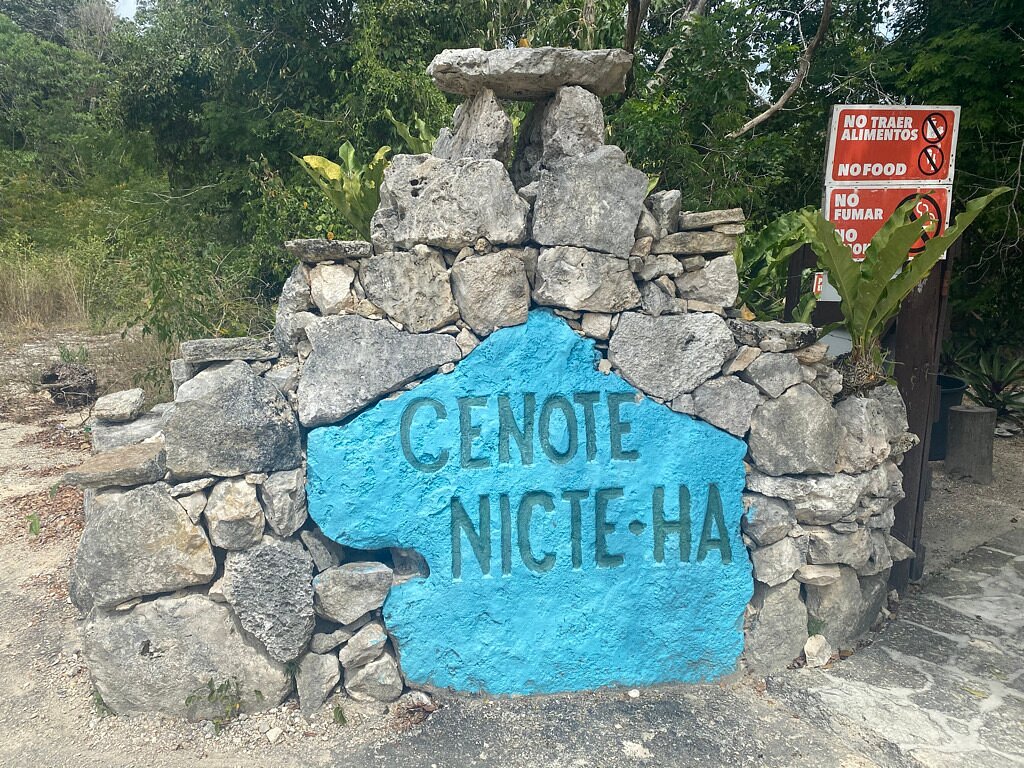
Cenote Nicte-Ha is a small open cenote in the Dos Ojos area of the Riviera Maya, on the jungle corridor between Tulum and Akumal. Its name is commonly translated as “water flower,” and the setting explains why: clear freshwater, floating lilies, low limestone edges, and dense green vegetation give it more of a natural garden feeling than the cavern drama of nearby Dos Ojos.
It is a good choice if you want a calm swim, simple snorkeling, surface photography, or a quieter cenote stop that does not require a full day. It is less suitable if you are looking for a large park with many activities, a dramatic underground expedition, or a place you can reach casually on foot from a town center. Nicte-Ha is a dedicated jungle outing, and the practical details at the entrance can change.
This guide focuses on how to decide whether it belongs in your itinerary, what the water and access are like, how to plan transport from Tulum, Akumal, Playa del Carmen, or Cancún, and how to visit without damaging the lilies and cave environment that make the cenote special.
Quick answer
| Question | Practical answer |
|---|---|
| Where is Cenote Nicte-Ha? | In the Dos Ojos cenote area along Highway 307 between Tulum and Playa del Carmen, closer to the Akumal/Tulum corridor than to either town center. |
| What is it like? | A small, open or semi-open freshwater cenote with clear water, lilies, jungle vegetation, and a more intimate atmosphere than a large commercial park. |
| Is it good for swimming? | Yes, for visitors comfortable with cool freshwater and local safety rules. The exact access equipment and swimming conditions should be confirmed on arrival. |
| Is it good for children? | It can suit families because the water is relatively accessible, but children need close adult supervision and must follow life-jacket rules if required. |
| Can you snorkel? | Surface snorkeling is one of the most natural ways to experience it. Bring or confirm equipment availability rather than assuming a full rental shop. |
| Can you dive? | Guided cavern or cave diving is associated with the cenote, but recreational visitors should not enter overhead environments without the correct training, equipment, and guide. |
| Do you need a car? | A rental car, pre-arranged taxi, private transfer, or organized tour is easiest. A colectivo can get you near the highway entrance, but the final jungle section needs a separate plan. |
| How long should you spend? | About one to two hours at the water is enough for many swimmers. Allow much longer for transport, changing, waiting, or a guided dive. |
| What is the main drawback? | It is small, and the quiet experience disappears quickly if several groups arrive at once. Operational details and entrance pricing are also changeable. |
The short version: choose Nicte-Ha for a slow freshwater swim among lilies, not as a substitute for every cenote in the region. If you are already visiting the Dos Ojos corridor, it is an appealing addition. If you are staying in central Tulum for only one day, the travel time and return logistics deserve more thought.
What makes Nicte-Ha different?
Many Riviera Maya cenotes are described with the same handful of words: turquoise, crystal clear, jungle, and ancient. Those descriptions are not wrong, but they can make very different places sound interchangeable. Nicte-Ha feels different because its character is botanical and intimate rather than monumental.
The open water area is surrounded by vegetation and is known for water lilies floating on the surface. Sunlight can reach the pool directly, while nearby overhangs and darker sections create a contrast between bright water and shadow. The effect changes with the weather and time of day. A sunny visit may bring reflections and light shafts; a cloudy visit can make the water look deeper and the jungle more subdued.
The cenote is not enormous. That is part of its appeal and part of its limitation. You can understand the layout quickly, spend time looking below the surface, and leave without needing a complicated route through a large park. The same size means that a busy arrival affects the whole atmosphere. Nicte-Ha works best when visitors move gently, keep voices low, and give other swimmers room around the lily beds.
Under the open water, the limestone landscape continues into submerged passages and cavern areas. Dive operators describe shallow cavern routes with formations, narrower sections, possible flow, and fine sediment that can be disturbed by poor buoyancy. Those descriptions are relevant to divers, but they should not lead a casual swimmer to treat the cenote as an adventure cave. The open swimming area and the overhead diving environment are different experiences with different safety requirements.
Water lilies and clear freshwater at Cenote Nicte-Ha in the Dos Ojos area
The lilies are not decoration to swim through. Give the plants a wide berth, keep fins and feet away from stems, and follow any marked swimming route.
Nicte-Ha also differs from Cenote Dos Ojos in the way a small garden pond differs from a famous cave attraction. Dos Ojos is known for two connected-looking eyes of water, cavern scenery, snorkeling, and diving infrastructure. Nicte-Ha is more restrained. It rewards observation rather than a long list of activities. You may enjoy it most by swimming a short loop, floating quietly, watching fish and roots, and taking a few careful photographs rather than trying to fill every minute.
Where Cenote Nicte-Ha is located
For travel planning, associate Nicte-Ha with the Dos Ojos area, not with downtown Tulum. The cenote is reached from the federal highway corridor in Quintana Roo, with an inland road leading through the jungle to the park and cenote access points. Some listings describe it as a Tulum cenote because it is marketed from Tulum and lies north of the town; others use Akumal because the entrance is close to the Akumal area and local dive businesses operate from there.
Both descriptions can be useful, but neither means that Nicte-Ha is in the center of Tulum or inside Akumal Pueblo. This distinction matters when estimating a taxi fare, arranging a return journey, or planning a second activity. Map pins and directions can also change as individual operators reorganize access. Use the current instructions from the ticket office or the business that is taking you there.
The final approach is usually slower than the highway distance suggests. After leaving the main road, you may travel on a dirt or uneven jungle road, pass several cenote entrances, and continue to the relevant parking or drop-off point. Conditions vary with rain and maintenance. A driver who knows the area is useful, especially if your reservation includes more than one cenote with similar names.
Do not confuse Nicte-Ha with Dos Ojos, The Pit, Sac Actun, Taak Bi Ha, or the other cenotes in the same broad complex. They can share an access road or ticketing area, but they are not one interchangeable attraction. Ask the driver or guide to confirm “Cenote Nicte-Ha” before leaving the highway, and save the operator’s contact information if you are arranging a pickup.
How to get there
From Tulum
From Tulum, travel north on Highway 307 and follow signs or directions for the Dos Ojos cenote area. The exact drive time depends on where you are staying, traffic, and the final road, so do not build a tight connection to a restaurant reservation or airport transfer afterward.
A rental car offers the most flexibility. It lets you combine Nicte-Ha with another cenote or a meal in the Akumal area, but only if you are comfortable driving the highway and the unpaved entrance road. Drive slowly in the jungle section and follow signs rather than assuming the first cenote entrance is yours.
A taxi is practical when arranged in advance. Confirm whether the driver will wait, return at a set time, or provide a separate pickup. A one-way drop-off is not enough if you arrive outside the main flow of visitors and cannot easily find a taxi back to Tulum. Ask the cenote or your accommodation for current local transport advice.
An organized private tour is the simplest option for families, groups, and visitors who want to include several stops. The trade-off is less control over how long you stay. A public group tour may also pair Nicte-Ha with a larger cenote or another attraction, so read the itinerary carefully and confirm which site is actually included.
From Akumal
Akumal is a convenient base for the Dos Ojos corridor. From Akumal Pueblo or the hotel zone, you still need road transport, but the journey is generally more direct than coming from Playa del Carmen or Cancún. A local taxi or dive operator can help with the final access road, especially if you are booking a dive rather than a casual swim.
If you are staying at a resort, do not assume the front desk taxi quote includes waiting time or the full jungle road. Ask for the driver’s plan and clarify whether the vehicle can enter the cenote property. For a return trip, set a pickup time with a buffer instead of arranging a vehicle to arrive exactly when you expect to climb out of the water.
Nicte-Ha can combine naturally with Cenote Dos Ojos, Taak Bi Ha, or another nearby site, but the best combination depends on access rules and your energy. Two water stops may sound easy, yet changing, drying, walking, and waiting for groups take time. A relaxed Nicte-Ha visit followed by one carefully chosen nearby cenote is usually more enjoyable than collecting every entrance ticket in one afternoon.
From Playa del Carmen
From Playa del Carmen, Nicte-Ha is a longer outing along Highway 307. A car makes the route manageable, while a private transfer or organized tour avoids the uncertainty of the final jungle section. If using a colectivo, you can ask the driver for the Dos Ojos entrance, but do not treat the highway drop-off as the cenote entrance itself.
The remaining distance may involve walking or arranging another vehicle. That can be uncomfortable in the midday heat, particularly with children, towels, masks, and a change of clothes. If you want to travel independently, contact the cenote or a local taxi service before leaving Playa and confirm the current access arrangement.
From Cancún or the airport
Nicte-Ha is not the sensible first stop for most travelers arriving at Cancún International Airport. The airport journey, luggage, check-in timing, and highway traffic create too many variables for a relaxed swim. It works better after you have reached your base in Playa del Carmen, Akumal, or Tulum.
If you are planning a private transfer from the airport to a southern Riviera Maya hotel, ask whether a cenote stop is feasible with luggage and whether the operator allows it. This is only worthwhile when the transfer company confirms secure luggage storage, shower and changing access, and enough time. Otherwise, visit Nicte-Ha on a separate day.
Swimming and snorkeling
The open-water experience is the main reason most non-divers visit. The water is clear and cool, and the lilies make the surface different from a bare limestone swimming hole. You may see small fish, submerged roots, rock edges, and changes in depth as you move from the open section toward darker areas.
Bring a mask if you have one you trust, but do not assume that a mask rental is always available or that the available equipment will fit well. A badly fitting mask can turn a peaceful swim into a frustrating one. Ask about snorkel equipment before paying if it is central to your plan.
Do not apply sunscreen before entering the water unless local staff specifically tell you a permitted product is acceptable. Even products marketed as reef-safe can introduce substances into a sensitive freshwater environment. Shower first, remove lotions and oils, and follow the site’s instructions. The same rule applies to hair products, insect repellent, and makeup.
The water may feel colder than the Caribbean Sea, especially after you have been walking in the heat. Most swimmers adjust quickly, but children and people who tire easily should have a clear exit plan. If life jackets are required, wear one even if you are a confident swimmer. Cenote rules protect visitors and the environment; they are not optional suggestions for a photograph.
The lilies need space. Swim around the plant beds instead of through them. Keep your mask, camera strap, and fins from catching stems. If a wooden platform, rope, or boundary marks an area, stay on the visitor side. A photograph is not worth breaking a living plant or stirring sediment into the water.
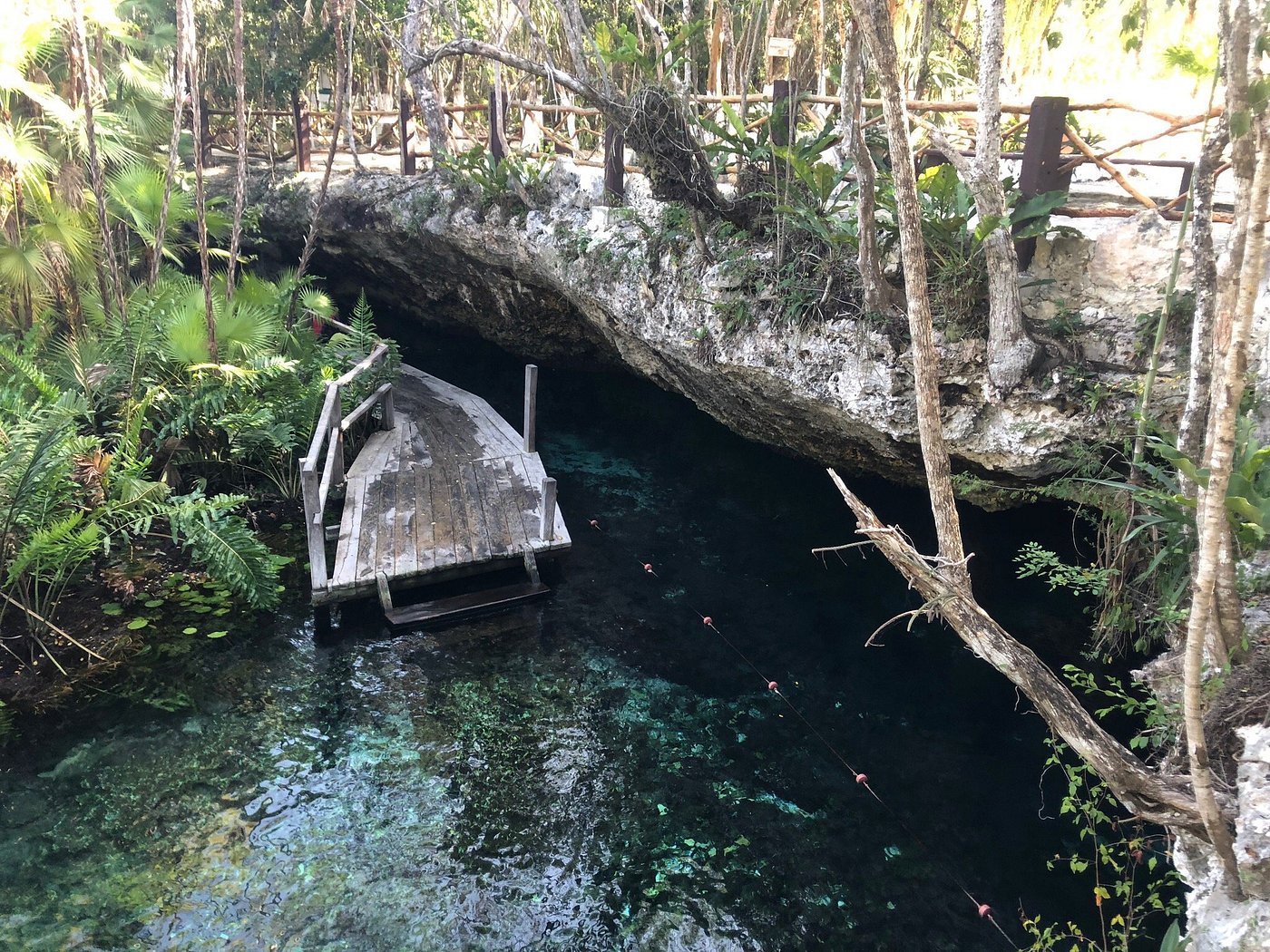 A second view of the lily-filled water at Cenote Nicte-Ha
Nicte-Ha is small enough that careless movement is noticeable. Slow swimming gives you better visibility and protects the plants.
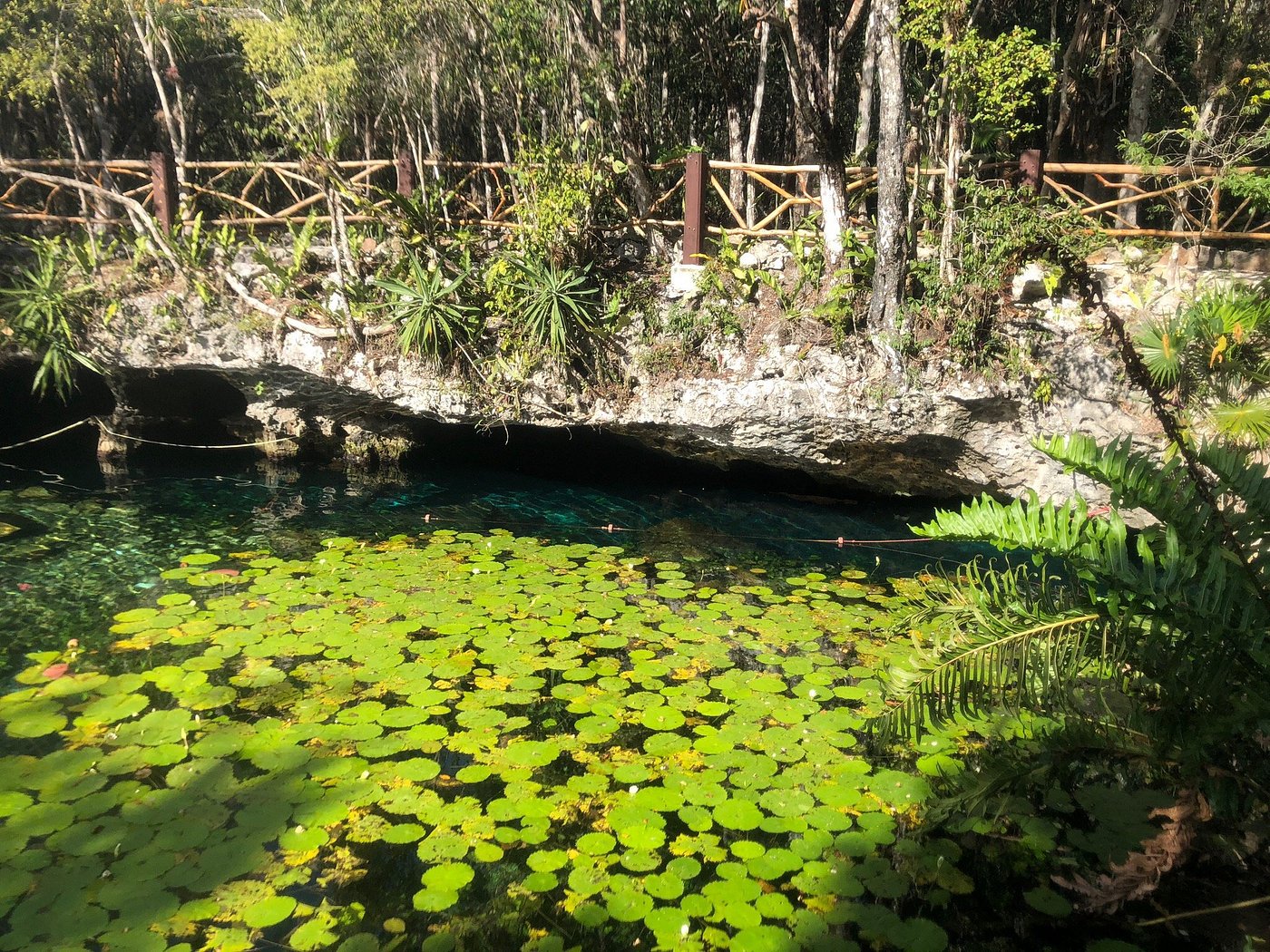 Clear blue water and vegetation around Cenote Nicte-Ha
Look beneath the surface as well as across it: the cenote’s appeal is the combination of clear water, plants, roots, and limestone rather than a single viewpoint.
Surface photography is usually more rewarding than trying to recreate dramatic diving images. Use a waterproof phone case or camera housing that you have tested before the trip. Keep one hand free near steps and platforms, and never let photography distract you from a slippery entry or other swimmers.
Can beginners and families visit?
Nicte-Ha can be a reasonable family cenote when the current access setup is suitable and adults supervise closely. The open setting is less intimidating than a dark cave, and the water area is easy to understand. That does not mean it is a swimming pool. Natural rock, wet steps, depth changes, cool water, and submerged roots all require attention.
Before entering, walk the edge with your children and point out where they may sit, enter, and exit. Ask staff about the deepest section and whether jumping is allowed. Do not assume that a jumping platform shown in an old review is still open. Rules change, and a closed area should stay closed.
Young children and non-swimmers should stay within arm’s reach of an adult. A life jacket provides buoyancy but does not replace supervision. If your child dislikes cool water, darkness, or natural surfaces, a beach or a larger managed water park may be a better use of the day.
Families should also think about the changing facilities. Basic toilets and changing space may be available, but the experience is not designed like a resort pool. Bring a dry bag, a towel for each person, spare clothes, and a simple snack for afterward. Keep food away from the water and take all rubbish back out if bins are limited.
For a group with mixed abilities, Nicte-Ha works when swimmers and non-swimmers can enjoy the edge and jungle setting without pressure to complete a long route. It works less well when one confident swimmer wants a guided cavern experience while a toddler needs shade and constant attention. In that situation, divide the day or choose a facility with more structured options.
Diving at Nicte-Ha
Nicte-Ha is also a recognized cenote dive site, but the diving experience is not the same as swimming in the open pool. Dive descriptions mention shallow cavern routes, limestone formations, possible flow, tighter passages, and fine sediment. These conditions require excellent buoyancy control and an appropriate level of training.
A certified open-water diver should not assume that certification alone qualifies them for an overhead environment. Cavern diving and cave diving have specific procedures, equipment, gas planning, line use, light management, and limits. Book with a reputable local dive center that assesses your experience honestly and provides a qualified guide.
Do not plan a casual swim and decide to follow a line or enter a dark passage because the water looks clear. An overhead environment removes a direct ascent and makes navigation, air management, and contact with the guide essential. Visitors without the correct training should stay in the designated open-water area.
For divers, the attraction is the combination of accessible depth and delicate cave scenery. A shallow profile can provide time to observe formations, light, and submerged plant life, but shallow does not mean risk-free. Sunlight can disappear around a turn, silt can reduce visibility, and another diver’s fin movement can affect the group.
Ask the dive center practical questions before booking: what certification and recent experience are expected, whether equipment is included, where the meeting point is, how much surface time is planned, and which entrance fee or park fee is separate. Confirm whether the dive is at Nicte-Ha itself or at a neighboring site in the same area.
Dive photography needs extra restraint. Photographers are particularly vulnerable to stopping in the wrong place, touching rock for stability, or finning too close to formations. A guide’s conservation instructions take priority over getting the shot. The cave existed long before any photograph and should remain intact for the next group.
GuideCenote Carwash Guide: Swimming, Snorkeling and Diving at Aktun HaA practical guide to Cenote Carwash, also called Aktun Ha, near Tulum on the road to Cobá. Learn what swimming, snorkeling, wildlife, cavern diving, transport, safety, and nearby cenote combinations are really like.Open
Facilities and what to expect on site
Nicte-Ha is more natural and basic than the Riviera Maya’s large commercial parks. Published visitor information commonly mentions toilets, changing facilities, and life jackets, but the exact setup, rental availability, and rules can change. Treat those details as practical items to confirm locally rather than permanent guarantees.
You may find a simple parking area, a short path or boardwalk, stairs or a platform at the water, and a small ticket or supervision point. Do not expect a large restaurant, extensive lockers, a full medical facility, or a wide selection of swim equipment. Come prepared to be self-sufficient.
Bring cash in Mexican pesos. Entrance fees and combination tickets have varied between published sources and over time, and some activities or equipment may carry separate charges. Check the current price at the entrance or with the operator on the day you visit. Avoid relying on a blog post that lists a precise fee without a date.
A dry bag is useful for phones, wallets, car keys, and clothes. If lockers are not available, keep valuables to a minimum and ask staff where personal items may be left. Do not leave passports, large amounts of cash, or irreplaceable electronics in an unattended vehicle.
Wear secure footwear for the path and entry. Water shoes are useful when allowed, but large fins, hard-soled shoes, or loose sandals can be awkward on steps. Bring a towel, a change of clothes, drinking water for after the swim, and a light layer if you are booking a dive and expect a long surface interval.
The best time to visit
Early morning is usually the strongest default for a quiet visit. It gives you a better chance of seeing the cenote before several groups arrive and leaves flexibility if the road, ticket office, or weather slows the plan. Morning light can be beautiful, although the exact appearance depends on clouds and the position of the sun.
Midday can produce bright reflections and stronger contrast in photographs, but it is also the hottest time to travel and may be busier. If your priority is water-lily photography, ask a local operator about the light on the date of your visit rather than assuming one universal “best hour.”
Rain does not necessarily make a cenote visit impossible, but it can affect the road, visibility, and comfort. Heavy weather may lead to temporary closures or changes in safety rules. Check before departing, particularly if you have traveled from far away.
The Riviera Maya is warm year-round. Water temperature feels cool compared with the air, while the walk from the car or highway can be hot and humid. Plan a slower pace, drink water, and do not stack multiple demanding activities without a break.
Sargassum on the coast does not usually affect an inland freshwater cenote in the same way it affects a beach. Nicte-Ha can be a useful alternative on a day when seaweed makes the beach less appealing. It is not, however, a guaranteed weather escape: rain, road conditions, crowds, and local closures still matter.
How to build a day around Nicte-Ha
Nicte-Ha plus Dos Ojos
This is the most obvious combination because both are in the same general corridor. Nicte-Ha gives you a small open-water and lily experience; Dos Ojos offers a more famous cavern and snorkeling setting. Confirm whether a shared park ticket applies and whether you can move between sites under the current rules.
Do not assume that visiting both means you have to rush. Spend an hour or two at Nicte-Ha, take a proper break, then continue only if the second site still fits your energy and transport schedule. If the first cenote is busy, the second may be busy too, so retain the option to stop after one.
Nicte-Ha plus Taak Bi Ha
Taak Bi Ha is a different experience, with a more enclosed cavern atmosphere and stronger appeal for visitors interested in formations or guided cavern diving. The contrast can make a good pair, but it is not an ideal combination for a family that wants two easy open swims.
Explain the difference before booking. “Two cenotes” does not mean two copies of the same pool. Ask how much time is spent at each location, whether snorkeling is included, and whether one stop is primarily for trained divers.
Nicte-Ha plus Akumal
A morning at Nicte-Ha followed by lunch or a beach stop in Akumal can work if you have a car or pre-arranged transport. Akumal’s coastal activities have their own rules, booking requirements, and conservation concerns, particularly around wildlife. Do not try to squeeze a cenote swim and a tightly timed turtle encounter into the same schedule without a generous buffer.
If you are staying in Akumal, this combination is more practical than attempting to visit Nicte-Ha from Cancún and then returning north. Keep the cenote and sea activities separate enough that you can shower, change, and respect the rules at both locations.
Nicte-Ha plus Tulum ruins
The Tulum archaeological zone and Nicte-Ha are geographically related to a Tulum itinerary but are not next door. A ruins visit involves heat, walking, and exposure; a cenote visit involves wet clothing and a separate jungle transfer. If you combine them, visit the ruins early and allow time to cool down before swimming, or place the cenote first if your transport makes that easier.
Never arrive at an archaeological site in wet swimwear, and do not assume cenote changing facilities will make a long transfer comfortable for everyone. A separate day is often better if your trip is not short.
Nicte-Ha compared with nearby cenotes
| Cenote | Main character | Better for | Main planning difference |
|---|---|---|---|
| Nicte-Ha | Open, intimate, lily-filled freshwater pool | Quiet swimming, snorkeling, photography | Small scale and basic facilities; confirm current access and price |
| Dos Ojos | Famous cave cenote with open-water and cavern experiences | First-time cenote visitors, snorkeling, guided diving | More recognized and often busier; confirm which ticket or circuit you are buying |
| Taak Bi Ha | Enclosed cavern with formations | Confident snorkelers and trained cavern divers | Darker, more specialized setting; not a casual substitute for an open cenote |
| The Pit | Deep vertical cenote | Experienced divers with the correct plan | Diving-focused environment; not a normal family swimming stop |
| Casa Cenote | Open coastal cenote with mangroves and a different landscape | Snorkeling, surface wildlife, combining with the coast | Near the Tulum coast rather than in the Dos Ojos corridor |
| Gran Cenote | Larger, well-known Tulum-area cenote with open and cavern sections | Visitors wanting a prominent, organized cenote stop | Often busy and more structured; travel from Nicte-Ha is not a short walk |
The best choice depends on the experience you want, not on a ranking. Nicte-Ha is a good answer to “Where can we swim somewhere pretty and relatively quiet?” It is not the best answer to “Where can I spend a full day with slides, restaurants, and many organized activities?”
Visitors staying in Tulum often compare Nicte-Ha with Gran Cenote because both can be marketed as Tulum cenotes. Gran Cenote is a separate attraction with its own access, facilities, and crowd pattern. Visitors staying near Akumal may compare Nicte-Ha with Dos Ojos, Taak Bi Ha, and the other sites reached from the same corridor. Ask what is actually included before accepting a recommendation.
What to bring
Pack lightly, but bring the things that are difficult to replace in a jungle setting:
- Mexican pesos for entrance fees, rentals, and unexpected small charges.
- A swimsuit, towel, and complete change of clothes.
- A mask and snorkel if you prefer your own equipment.
- Water shoes or secure sandals suitable for wet steps and paths.
- A dry bag or waterproof phone case that has been tested.
- Drinking water for the journey and after swimming.
- Insect repellent for the land portion, applied away from the water and according to local rules.
- A small bag for wet clothing and a separate bag for rubbish.
- A light layer if you are diving or spending a long time in cool water.
- A printed or saved copy of your reservation, driver details, and directions.
Leave unnecessary jewelry, expensive watches, and large electronics at your accommodation. Avoid bringing food into the swimming area unless the site explicitly permits it. Do not use drone equipment without permission; the jungle, other guests, and wildlife all deserve privacy.
Conservation and visitor etiquette
A cenote is not just a scenic swimming hole. It is part of an underground freshwater system that supports ecosystems and communities, and its water can move through connected limestone passages. Small amounts of contamination matter in a fragile environment.
Shower before entering. Do not use sunscreen, oils, makeup, or hair products in the water unless the site gives clear permission for a specific product. Stay on paths and platforms, and do not climb on formations or roots. Never touch stalactites, stalagmites, submerged rock, or wildlife.
Give the water lilies room to grow. Do not pull flowers, move pads for a photograph, or hold onto the plants when you are tired. Use a designated rope or platform if one is provided. If you need a rest, exit the water rather than drifting into the vegetation.
Keep noise low. The cenote’s smaller size makes shouting carry, and a quiet atmosphere is part of what visitors come to enjoy. Follow instructions from staff and guides even if another visitor ignores them. Rules around life jackets, jumping, cameras, and access may be stricter than an old review suggests.
Take rubbish with you. Cigarette smoke, food scraps, disposable packaging, and plastic do not belong in the jungle or water. If you see an item that can be safely removed without entering a restricted area, tell staff rather than reaching into formations or plants yourself.
Common mistakes to avoid
Treating a map pin as a complete transport plan
A map may show a point in the jungle, but it does not tell you whether a taxi can enter, whether the road is passable after rain, or how you will return to the highway. Arrange the full journey.
Assuming the latest price online is still valid
Published prices differ significantly between websites and may refer to different tickets, visitor categories, or dates. Carry pesos and confirm at the current entrance.
Expecting a large rental shop
Some listings mention mask rental or life jackets, while others describe a basic setup. Bring your own mask and ask before you arrive if equipment matters to your plan.
Swimming through the lily beds
The plants are the defining feature, not an obstacle course. Stay clear and move slowly.
Entering a cavern without training
Clear water does not make an overhead environment safe for an untrained swimmer or open-water diver. Stay in the open area unless a qualified guide has arranged an appropriate experience.
Scheduling too many cenotes
A short stop still includes a drive, ticketing, changing, drying, and walking. One or two well-chosen sites are usually better than a checklist of four.
Leaving without confirming the return
Do not wait until you are wet and ready to leave to discover that your driver has gone. Set the pickup plan before entering the water.
Frequently asked questions
Is Cenote Nicte-Ha worth visiting?
Yes, if you like small natural places, clear freshwater, lilies, and quiet snorkeling more than large attractions. It is especially worthwhile when you are already in the Dos Ojos corridor. It may not be worth the dedicated transfer if your trip is very short or you want a full-service water park.
Is Nicte-Ha in Tulum?
It is commonly sold as a Tulum-area cenote, but it is outside Tulum town in the Dos Ojos corridor. Plan it as a drive rather than a walkable Tulum attraction.
Is Nicte-Ha the same as Dos Ojos?
No. They are separate cenotes in the same broad area. Confirm the name of the site and the ticket you are buying.
Can I visit without a tour?
Usually, independent visits are possible with a car or arranged taxi, subject to the current access rules. Without a car, a colectivo may only take you to the highway entrance; organize the final section and return before leaving your hotel.
Is it suitable for non-swimmers?
It can be, if the site provides the relevant safety equipment and an adult supervises closely. Confirm current rules, wear a life jacket when required, and do not treat the cenote as a place for unsupervised floating.
Can I use sunscreen?
Plan to shower and enter without sunscreen, oils, or cosmetics unless local staff specifically approve a product. This protects the freshwater environment.
How much time do I need?
Many visitors can enjoy the water in one to two hours, but your complete outing will take longer once transport, changing, and possible waiting are included. Divers need to follow their guide’s schedule.
Is it better in the morning or afternoon?
Morning is the safer default for quiet conditions and a cooler journey. Afternoon light can be attractive, but crowds, heat, and return traffic may be less comfortable. Ask locally about current visitor patterns and weather.
The best way to plan the visit
Cenote Nicte-Ha rewards a simple plan. Choose it because you want a small, clear, plant-filled freshwater setting. Confirm the current entrance arrangement, bring cash and your own basic swim gear, arrange the complete return journey, and leave enough time to move slowly. If you are staying in Tulum or Playa del Carmen, treat it as a proper half-day outing rather than an effortless detour. If you are based in Akumal or already visiting Dos Ojos, it is an easier addition.
The most memorable part of Nicte-Ha is not a dramatic stunt or a long list of facilities. It is the contrast between the warm jungle and cool clear water, the quiet movement of lilies on the surface, and the feeling of a natural space that has not been turned into a spectacle. Protect that character while you are there, and the cenote can be one of the gentlest and most rewarding water stops on a Riviera Maya itinerary.
Before you leave your accommodation, verify the current access, opening window, entrance price, and transport plan directly with the cenote or your operator. Those details change more often than the water lilies do.