Printable guide
Best Things to Do in Cozumel: Attractions & Experiences
Updated
Plan the best things to do in Cozumel, from reef snorkeling and El Cielo to Punta Sur, San Gervasio, east-coast beaches, Chankanaab, and an easy island day trip.

Cozumel is the Caribbean island to choose when the sea is the main reason for your trip. The island sits off the coast of Playa del Carmen, but it feels distinct from the mainland Riviera Maya: San Miguel is the arrival town, the west coast is the calm, developed side, the southern coast is the heart of the protected reef zone, and the east coast opens onto a wilder, more exposed Caribbean.
The best things to do in Cozumel are not all interchangeable. A morning on a reef boat, a visit to Punta Sur, a walk through San Miguel, and a stop at San Gervasio each reveal a different part of the island. Trying to fit every one of them into a rushed cruise-stop schedule usually makes the day harder rather than better.
If you have one full day, choose one marine experience and pair it with either San Miguel or a small part of the island. If you have two or three days, add Punta Sur, San Gervasio, and an east-coast drive. Divers and snorkelers can easily fill a longer stay; travelers who prefer land-based sightseeing may find that Cozumel works best as a focused island break rather than as a checklist of mainland-style attractions.
Quick answer: what is Cozumel best for?
| Experience | Best for | Time to allow | What to know |
|---|---|---|---|
| Reef snorkeling or scuba diving | Strong swimmers, divers, and ocean lovers | Half day or more | Usually boat-based; weather and sea conditions matter |
| El Cielo | Shallow-water boat trips and families who want a relaxed sea day | Half day | It is reached by boat, not by road |
| Punta Sur | Wildlife, lagoons, beaches, and a scenic full outing | Half day to most of a day | Transport time and park conditions matter |
| San Miguel de Cozumel | First-time orientation, food, shops, and an easy walk | A few hours | The ferry arrives close to downtown |
| San Gervasio | Maya history and a quieter inland visit | Two to three hours | It is an archaeological site, not a beach attraction |
| Chankanaab | A managed day with swimming, gardens, and optional activities | Half day | Admission and activity inclusions vary |
| East-coast beaches | Road-trip scenery and a less urban side of the island | Half day or full day | Open-water conditions can be rough |
| Cozumel food and culture | Travelers who want more than a boat tour | Evening or a full stay | Spend time in San Miguel instead of only visiting the port |
1. Explore San Miguel de Cozumel first
San Miguel de Cozumel is the island's principal town and the natural starting point for most visitors. Passenger ferries from Playa del Carmen arrive near the downtown waterfront, so you can begin exploring on foot before arranging a taxi, rental car, scooter, or boat excursion.
The central area is easy to use as an orientation stop. Walk along the Malecón, look out across the channel toward the mainland, and give yourself time to notice the difference between a cruise-port visit and the everyday town beyond the immediate waterfront. Restaurants, cafés, shops, small galleries, and local services are concentrated around the center. The town is a practical place to buy water, arrange transport, eat before a tour, or return for dinner after a day on the coast.
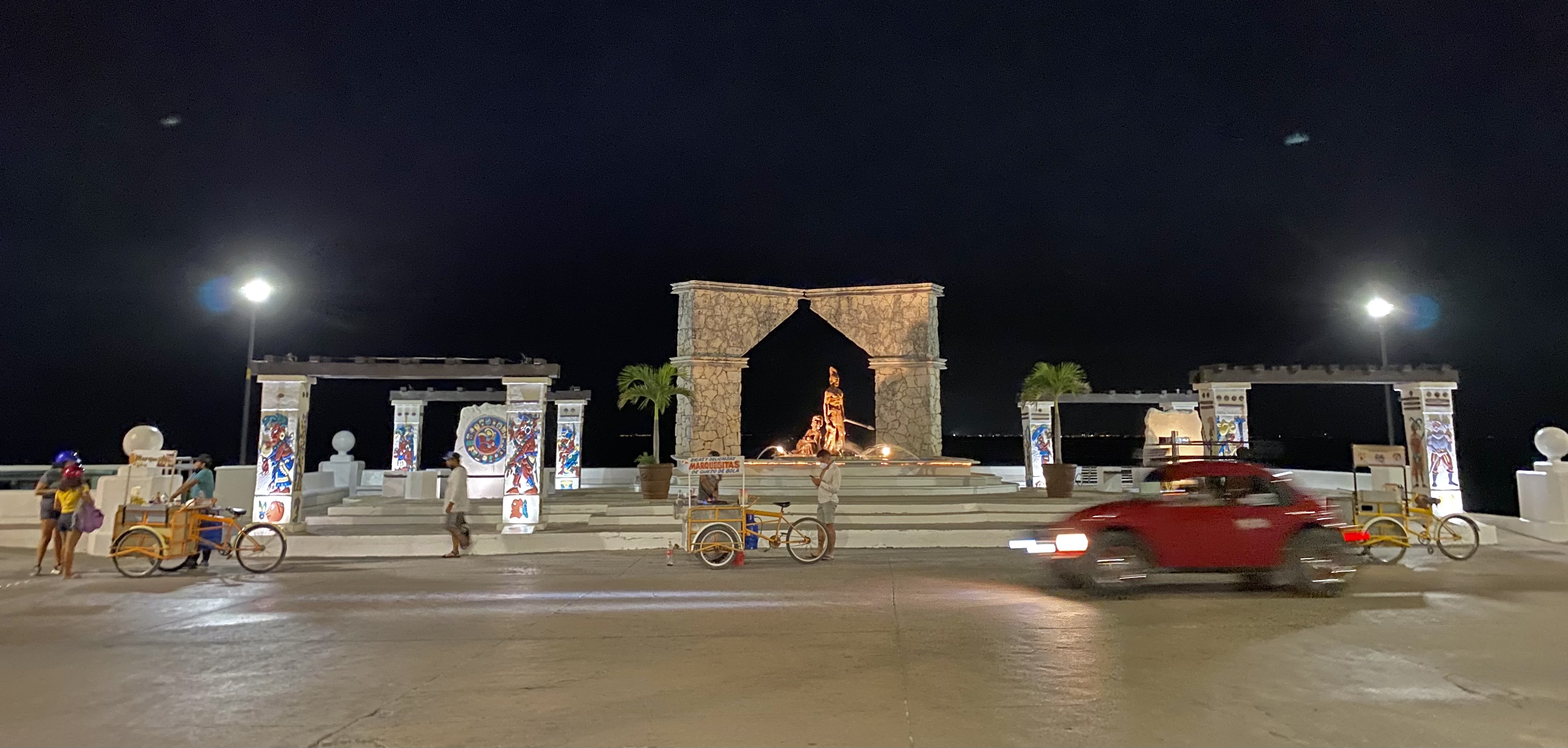 Cozumel’s Malecón waterfront in San Miguel de Cozumel
A useful cultural stop is the Museo de la Isla de Cozumel. Its exhibits introduce the island's natural environment, history, Maya heritage, and contemporary life. It gives context to the reef, mangroves, coastal settlements, and archaeological sites you will see elsewhere. Check the museum's current opening information before building your day around it, particularly if you arrive on a cruise schedule or during a holiday period.
San Miguel is also the best place to slow down. Cozumel is marketed heavily through diving, snorkeling, and beach excursions, but the town is part of the destination rather than a waiting room for a boat. A late afternoon walk, a meal away from the immediate excursion rush, and a conversation with a local shopkeeper can make the island feel much less like a one-day port call.
How long should you spend in San Miguel?
Allow a few hours for a first visit, longer if you enjoy museums, shopping, and food. A ferry day trip can combine San Miguel with one nearby activity, but it is difficult to do the town, Punta Sur, San Gervasio, and a meaningful reef excursion without rushing. If your priority is a relaxed island experience, stay overnight and use your arrival or departure day for the town.
2. Snorkel Cozumel’s protected reefs
Snorkeling is one of the most accessible ways to experience why Cozumel is famous. The island's southern and southwestern marine areas include coral reef habitat protected within the Arrecifes de Cozumel National Park. Snorkeling is generally organized from a boat, with operators taking guests to permitted sites according to conditions and conservation rules.
The quality of a snorkeling day depends on more than the name of the reef. Wind, current, visibility, recent weather, boat traffic, and the operator's judgment all matter. A site that was calm and clear one day may not be the right choice the next. Treat a boat crew's decision to change locations as a safety and conservation measure, not as a failure to deliver a promised postcard view.
Use an authorized operator and listen carefully to the briefing. Do not stand on coral, touch reef animals, chase turtles or rays, feed fish, or take anything from the sea. The national park's guidance includes keeping distance from reefs, avoiding anchors and respecting wildlife. Reef-safe behavior is not an optional extra in Cozumel; it is what allows the sites to remain worth visiting.
Many operators also ask guests not to use sunscreen in the protected marine area. Follow the current instructions given by the crew. A long-sleeved rash guard, hat, shade, and sunscreen applied before the trip are more useful than relying on a product label to solve every environmental concern. If you need sunscreen for the ride or after leaving the water, ask where and when it can be used.
Who should choose snorkeling?
Choose snorkeling if you are comfortable in open water and want to see the reef without committing to a diving course. Ask in advance about flotation equipment, group size, swimming requirements, and the number of water entries. Beginners should be honest about their ability. A good guide can choose a suitable plan, but no excursion can remove current, waves, or the need to remain calm in the sea.
Families should ask whether the trip is appropriate for the youngest swimmer. A beach-based swim at a managed park may be a better first water experience than a boat day for a child who is nervous, cold easily, or dislikes wearing a mask. Travelers who are confident swimmers may prefer a smaller boat and longer time in the water.
3. Go scuba diving in Cozumel
Cozumel is one of the Caribbean's established scuba destinations, and diving deserves more than a paragraph added to a generic island itinerary. The main reef diving area runs along the west and southwest coast, where operators access protected sites from San Miguel and nearby marinas. Divers come for clear tropical water, coral formations, walls, marine life, and the chance to make several dives without spending the day traveling far from the island's developed side.
 Scuba divers exploring a Cozumel reef
Your choice of dive shop matters. Look for clear information about certification requirements, group size, equipment, surface intervals, emergency procedures, and what happens if weather changes. A diver who has not been in the water recently should say so when booking. Refresher options are sensible, especially after a long break or before deeper drift dives.
Cozumel's current can be part of the experience. Many dives are planned as drift dives, where the group moves with the water rather than fighting it. That is comfortable for a relaxed, experienced diver and potentially stressful for someone expecting to hover in one place. Ask how the current is handled, how the group stays together, and what the exit procedure involves.
The protected park is a living environment, not an underwater theme park. Keep your buoyancy under control, do not touch coral, and avoid dragging equipment across the reef. Your dive guide should explain site-specific rules. The famous shipwreck known as the C-53 is among the marine attractions associated with the protected area, but it is a diving site with its own depth and certification considerations, not a substitute for a beginner snorkel.
How many days do divers need?
A single day can work for a traveler who wants to sample Cozumel, but two or three nights create a much better rhythm. You can dive on consecutive days, leave room for weather changes, and still have time for San Miguel or San Gervasio. Remember standard post-dive flying guidance and ask your instructor or dive operator how to plan the final dive before your flight.
4. Take a boat trip to El Cielo
El Cielo is a shallow marine area known for its bright water and starfish habitat. The important practical detail is that El Cielo is reached by boat. It is not an independent beach you can drive to, and a visit normally forms part of a wider snorkeling or sightseeing excursion along Cozumel's southern coast.
The shallow setting can appeal to travelers who want a gentler water day than a series of reef dives. It can also be a good choice for families and mixed groups, provided everyone is comfortable boarding a boat and entering the sea. The area is still subject to wind, current, boat traffic, and changing visibility. Shallow water does not mean that every condition is easy or that swimmers can ignore the guide.
Do not stand on or handle starfish. They are living animals, and lifting them from the water can harm them. Follow the operator's instructions about where to swim and how close to wildlife you may go. Avoid tours that encourage touching, holding, feeding, or crowding marine life for photographs.
El Cielo is best treated as one part of a half-day marine itinerary. Ask whether the trip also includes reef snorkeling, how long the boat remains at each stop, whether food and drinks are included, and what equipment is supplied. Exact packages change frequently, so confirm the current inclusions rather than relying on a third-party listing saved months ago.
5. Visit Punta Sur Ecological Park
Punta Sur occupies the southern tip of Cozumel and offers the island's broadest land-and-water nature outing. The ecological park combines beaches, lagoons, mangroves, wildlife habitat, a lighthouse, and the maritime history of the island. It is a better fit for travelers who want a real excursion rather than a quick photo stop.
 Faro Celarain lighthouse at Punta Sur on Cozumel
The Celarain Lighthouse is the park's visual landmark. Climbing or viewing the lighthouse area provides a sense of Cozumel's maritime position and the exposed southern coast. The park also includes a small maritime museum, where the island's lighthouse and seafaring story become easier to understand.
Laguna Colombia adds a different landscape. Mangroves and lagoon habitat support birds and other wildlife, and visitor experiences may include a boat or observation element depending on the current park operation and conditions. Crocodile areas require distance and attention; do not approach wildlife for a closer photograph.
Punta Sur also includes the small Maya structure known as El Caracol. It is important to describe it accurately: this is a compact archaeological feature within a much larger ecological visit, not an expansive ruin complex like San Gervasio or Tulum. The combination of coast, lighthouse, lagoon, and history is what makes Punta Sur worthwhile.
Planning Punta Sur
Check the park's current opening days, admission, transport options, and included activities before going. Offerings and access can change with weather or maintenance. Bring water, sun protection that complies with current park guidance, and footwear suitable for walking on varied surfaces. If you are driving, allow enough daylight and fuel for the return journey.
Punta Sur can occupy most of a day once transport and stops are included. It pairs naturally with an east-coast drive, but that combination may be too much for a cruise passenger with a strict return time. Overnight visitors have more flexibility and can choose either Punta Sur or a marine excursion without forcing both into the same afternoon.
6. Spend time at Chankanaab
Chankanaab is a managed nature and activity park south of San Miguel. It is useful for travelers who want several options in one place: swimming or beach time, gardens, snorkeling, diving access, underwater sculptures, and optional family-oriented activities. It is not the same kind of experience as a quiet public beach or a boat trip to El Cielo. You are paying for access to a structured visitor facility with its own rules and add-on activities.
 Tropical landscape at Chankanaab National Park, Cozumel
Read the current ticket conditions carefully. A basic admission may not include every activity, meal, equipment rental, or animal-related program advertised through the wider park ecosystem. Families should decide which parts of the park they actually want before purchasing extras. A traveler who only wants two quiet hours near the water may be happier elsewhere; a group with different interests may find Chankanaab convenient.
The park's lagoon, gardens, and coastal setting make it a practical alternative when some members of a group want water activities and others prefer to remain on land. It can also be a useful first stop for visitors who are not ready for an open-water boat excursion. Still, sea conditions and swimming ability remain relevant, and parents should supervise children closely around water and rocks.
Reach Chankanaab by taxi, rental vehicle, or an excursion transfer from San Miguel. Confirm current admission rules, transport arrangements, and the closing time before leaving town. Build in return time if you have a ferry, flight, or cruise departure.
7. Walk through San Gervasio, Cozumel’s main Maya site
San Gervasio is Cozumel's principal Maya archaeological site and the island's most important inland historical visit. INAH describes it as a Maya city with residential and religious complexes, trading connections, and a long history extending roughly seventeen centuries. Its location and scale are different from the dramatic coastal ruins on the mainland, but that is part of its value: San Gervasio shows that Cozumel's history was not limited to the beach or the modern port.
The site is associated with pilgrimage to Ixchel in visitor accounts, while the archaeological complex itself reflects broader religious, political, residential, and commercial life. Follow the official interpretation and allow time to look beyond a single famous story. The shade of the forest, the relationship between structures, and the island setting all matter.
San Gervasio is inland, several kilometers from downtown, so plan a taxi, rental car, or tour rather than expecting to walk from the ferry. It is a sensible stop on an island driving day. Wear shoes for uneven paths, carry water, and protect yourself from heat and insects. Respect restrictions on food, smoking, pets, and climbing; archaeological sites are protected places, not playgrounds for photographs.
Check current INAH visitor information for hours, admission, last entry, and temporary closures. This is particularly important for cruise visitors. A missed return to the port is a more serious problem than skipping one inland stop.
San Gervasio or mainland ruins?
Choose San Gervasio if you are already staying on Cozumel and want the island's own history. Choose Tulum, Cobá, or another mainland site if your main goal is a large, iconic ruin landscape and you have mainland time available. Trying to visit a mainland ruin and Cozumel in the same day is usually an unnecessarily complicated plan because it combines ferry timing, land transport, and separate admission schedules.
8. Drive the east coast
Cozumel's east coast provides the island's clearest change of atmosphere. The west and southwest hold San Miguel, many hotels, excursion infrastructure, and calmer, more sheltered views. The east faces the open Caribbean and is less urbanized, with long stretches of coast, surf, roadside stops, and wide horizons.
 Waves along Cozumel’s east coast beach
Stops such as Chen Río, Punta Morena, Mezcalitos, and El Mirador are often included in an east-coast road day. Chen Río is known for its public beach setting, coastal rocks, and naturally sheltered pools in some areas. Conditions vary, and no beach should be treated as guaranteed calm simply because a photograph shows still water. Read signs, watch the surf, and ask local staff before swimming.
The east coast is better for scenery, a meal, and a change of pace than for ticking off a chain of identical swimming stops. On rough days, enjoy the view from a safe distance instead of entering the water. Strong surf, currents, wind, and seasonal seaweed can affect the experience.
If you rent a car or scooter, plan conservatively. Carry enough water, confirm fuel availability, check the vehicle before leaving, and return before dark unless you know the route and conditions well. A scooter can be enjoyable for experienced riders but leaves less protection from sun, rain, wind, and road hazards. Travelers carrying snorkeling gear, children, or luggage may find a car or taxi arrangement more comfortable.
9. Choose a Cozumel beach carefully
Cozumel beaches vary by coast, access, and purpose. Some are attached to managed facilities or beach clubs; others are public coastal stops with limited services. The west side is generally the practical choice when you want calmer water, easier access, and proximity to San Miguel. The east side is the scenic choice when you want open sea and a road-trip atmosphere.
Do not choose a beach only from a social-media image. Ask whether the water is suitable for swimming that day, whether admission or minimum spending applies, whether loungers and shade are included, and how you will return. Facilities, prices, and access rules can change, so confirm directly before traveling.
For a half-day beach plan, decide whether you want a managed day or a simple coast stop. Chankanaab and beach clubs offer structure, facilities, and optional activities. A public east-coast stop offers more independence but may have fewer services and rougher water. Both can be good; they suit different expectations.
Sargassum can affect any Caribbean destination, including Cozumel, although conditions vary around the island and from day to day. Check recent local reports and keep a flexible plan. A reef boat, museum, San Gervasio, or a town day can save an itinerary when a beach is not in good condition.
10. Eat and drink in San Miguel
Food is one of the easiest ways to make Cozumel more than a shore excursion. San Miguel has the widest range of restaurants, from casual local meals to seafood and international menus. Look beyond the first row of port-facing businesses when time allows, and choose somewhere that matches the pace you want rather than chasing a single supposedly essential dish.
Seafood is an obvious choice, but do not assume every menu or catch is local. Ask what is fresh and what the restaurant recommends that day. Mexican staples, tacos, fruit drinks, coffee, and pastries are practical choices between excursions. If you are diving, remember that alcohol and dehydration are poor companions to a full day in the water.
Cozumel's food planning is also about timing. Cruise arrivals can make the waterfront busy, while an evening in town after day visitors leave may feel calmer. If you have dietary restrictions, carry a clear Spanish explanation and confirm ingredients rather than relying on a translated menu alone.
A relaxed dinner in San Miguel is a good final activity before an overnight ferry trip or a full island day. It is less sensible for cruise passengers who must travel back to a ship at a fixed time, especially if rain or traffic could slow the return.
GuideBest Restaurants in Playa del Carmen: Where to Eat in 2026From street-side tacos al pastor to Michelin-starred tasting menus, here are the best restaurants in Playa del Carmen — organised by budget, style, and neighbourhood.Open
11. See Cozumel as a wildlife and conservation destination
Cozumel's appeal rests on connected habitats: coral reefs, shallow marine areas, mangroves, beaches, lagoons, and forest. Wildlife viewing should therefore be approached as observation, not interaction. The best encounter is one where the animal continues its normal behavior and the visitor leaves no trace.
In the water, keep your distance from turtles, rays, starfish, and reef fish. Do not touch or block an animal's path. On land, remain on paths at archaeological and ecological sites, avoid feeding wildlife, and do not take shells, coral, plants, or rocks as souvenirs. A photograph is enough.
Choose operators that explain conservation rules before departure and are willing to adjust a trip for safety or environmental reasons. Smaller groups are not automatically better, but a crew that can answer questions clearly and controls guest behavior is a positive sign. If a tour advertises touching wildlife as its main attraction, choose another tour.
The national park protects a shared resource. Sunscreen rules, no-anchor policies, distance requirements, and site restrictions may feel inconvenient when you are planning a holiday, but they protect the reef that makes Cozumel worth the journey. Bring a rash guard, reusable water bottle where permitted, and a willingness to follow the day's instructions.
A realistic one-day Cozumel itinerary
A one-day trip from Playa del Carmen can work, but it should have a clear priority. The ferry crossing, boarding time, local transport, and return buffer consume part of the day before you begin sightseeing.
Option A: reef-first day
- Take an early passenger ferry after checking the current operator schedule.
- Join a pre-booked snorkeling or diving trip with a clear meeting point.
- Return to San Miguel for a late meal and a short waterfront walk.
- Leave a generous buffer for the ferry back to Playa del Carmen.
This is the best choice for first-time visitors whose main reason for coming is the water. Do not add Punta Sur or San Gervasio unless the marine operator's schedule and your return plan leave genuine time.
Option B: town and history day
- Arrive in San Miguel and walk the central area.
- Visit the island museum if its current schedule fits.
- Travel inland to San Gervasio.
- Return for an early meal and ferry departure.
This works better for travelers who do not want a boat trip or who are uncomfortable in open water. It is still important to verify site access and allow transport time.
Option C: managed nature day
- Arrive and transfer to Chankanaab or another confirmed facility.
- Spend the main part of the day swimming, walking, or using selected activities.
- Return to San Miguel only if your ferry buffer remains comfortable.
A Punta Sur day is usually easier with an overnight stay or a private transfer plan because the park lies far from the ferry area and offers more than one stop.
A better two- or three-day Cozumel itinerary
With two nights, divide the island by experience instead of zigzagging between unrelated stops.
Day one: arrive and settle in. Walk San Miguel, visit the museum if open, eat in town, and confirm the next day's operator or vehicle. This also gives you a chance to adapt if the ferry or flight arrives later than planned.
Day two: water day. Snorkel the reefs, dive, or take an El Cielo boat trip. Pick one main marine format. Some travelers can combine reef snorkeling and El Cielo in one excursion, but do not book overlapping trips or assume the sea will make every advertised stop possible.
Day three: land day. Choose Punta Sur and part of the east coast, or San Gervasio combined with a coastal drive. If you have an afternoon departure, choose only the stops that leave a comfortable return buffer.
For a longer stay, alternate demanding water days with land-based days. The island is hot, and repeated early departures, boat transfers, and sun exposure can reduce the enjoyment of a trip that looks perfect on paper.
How to get to Cozumel
The most common mainland connection is the passenger ferry from Playa del Carmen to downtown San Miguel. Check the current departure times, ticket conditions, and weather notices with the operator before you travel. Schedules can change, and you should not plan a flight or cruise connection around the last possible ferry.
From Cancún International Airport or a mainland Riviera Maya hotel, you first need land transport to Playa del Carmen for the passenger ferry. There is not a normal direct Cancun-to-Cozumel passenger ferry that lets you bypass Playa del Carmen. A private transfer can simplify luggage and timing; bus, taxi, and other land options may suit travelers who are comfortable making their own connection.
Cozumel also has an international airport. Direct flights and seasonal routes change, so check current airline and airport information rather than assuming a route will operate on your dates. Flying directly can be convenient for an island-focused trip, while the ferry is practical when Cozumel is one stop in a mainland itinerary.
Vehicles use a separate vehicle or cargo ferry arrangement, not the regular passenger ferry. If you are considering taking a mainland rental car across, confirm the current process, insurance, vehicle restrictions, and sailing schedule before booking. For many visitors, renting on the island or using taxis and an organized excursion is simpler.
Where to stay for the best Cozumel experiences
Stay in or near San Miguel if you want walkable food, ferry access, museums, shops, and easy connections to tour operators. This is the most flexible base for a first visit and the best choice for travelers without a vehicle.
Stay along the developed west coast if your priority is resort downtime, beach access, diving, or a quieter hotel setting. Confirm how you will reach town and whether the property can arrange taxis or excursions. A beautiful coastal location can be less convenient if you plan to eat in San Miguel every night.
Stay farther south or near a beach facility if you want to reduce daily transport for a specific activity. This works best when you have already decided what the trip is about. It is less convenient for travelers who want to improvise between museums, restaurants, archaeological sites, and east-coast stops.
Cozumel is not a place where one location is best for every traveler. Decide whether you value walkability, reef access, quiet, family facilities, or road-trip flexibility, then choose the base that supports that priority.
Practical tips that make Cozumel easier
- Build around the sea, not against it. Boat trips depend on wind, current, and visibility. Keep one land-based alternative available.
- Protect your return connection. Ferry queues, weather, road transport, and port procedures can all take longer than expected. Cruise passengers need a particularly conservative buffer.
- Use pesos for small purchases. Carry enough cash for tips and local stops while keeping valuables secure. Confirm whether a facility accepts cards before relying on one payment method.
- Bring water and sun protection. Heat is tiring, especially on boats, archaeological paths, and exposed east-coast roads.
- Ask what a ticket includes. Park admission, equipment, meals, animal programs, and boat transfers may be separate.
- Do not assume every beach is swimmable. Read flags and signs and ask locally when surf or current is strong.
- Choose footwear carefully. Reef entries, rocky shorelines, lighthouse paths, and archaeological trails are easier with secure shoes.
- Book the right transport for the day. A taxi is fine for a single attraction; a confirmed rental car or private driver may make a multi-stop island day more practical.
- Expect changed schedules. Check official park, museum, INAH, airport, ferry, and tour information close to the date of travel.
- Leave reef-safe habits at home only if you mean to. Keep coral and wildlife untouched, and follow marine-park rules even when another visitor ignores them.
Is Cozumel worth visiting?
Cozumel is worth visiting if you want a destination organized around reef, water, and island scale. It is especially rewarding for divers, snorkelers, families who prefer a structured marine day, and travelers who enjoy combining nature with a small town and a little history.
It is less suitable for someone who wants a nonstop mainland itinerary of ruins, cenotes, nightlife, and multiple large attractions within short road distances. Those experiences exist across Quintana Roo, but they are not the reason to cross to Cozumel. The island rewards choosing fewer activities and giving them enough time.
For most first-time visitors, the strongest plan is simple: spend time in San Miguel, choose one well-run marine experience, and add either Punta Sur, San Gervasio, or the east coast if your schedule allows. Stay overnight when possible. That extra margin turns Cozumel from a stressful port-day calculation into what it is at its best: a distinct Caribbean island with excellent water, a living town, and enough protected landscape to keep each visit different.
If you want help connecting Cozumel with Playa del Carmen, Tulum, or the wider Riviera Maya, use the island as a deliberate part of the route rather than squeezing it into a spare afternoon. The right amount of Cozumel is not every attraction. It is enough time to get in the water, look back at the coast from San Miguel, and leave with a real sense of the island beyond the excursion brochure.
Frequently asked questions
Can I visit Cozumel from Playa del Carmen in one day?
Yes. Passenger ferries connect Playa del Carmen with downtown San Miguel, and a day trip can work well when you choose one main activity. Snorkeling, diving, El Cielo, Chankanaab, San Gervasio, and Punta Sur all require different amounts of transport and time. Leave a generous buffer before the return ferry and avoid booking a mainland connection immediately afterward.
Is El Cielo a beach?
El Cielo is a shallow marine area reached by boat. It is normally visited as part of a snorkeling or sightseeing excursion, not as a road-access beach stop.
Is Cozumel good for non-divers?
Yes. Non-divers can snorkel, visit Punta Sur, explore San Miguel, tour San Gervasio, spend time at Chankanaab, drive the east coast, and eat around town. You do not need to scuba dive to enjoy the island, although water-based activities remain a central part of its identity.
Can I swim on Cozumel’s east coast?
Some east-coast areas have calmer rock pools or beach sections under suitable conditions, but the coast is exposed to the open Caribbean. Surf and currents can be strong. Follow signs, flags, and local advice rather than assuming a photographed beach is safe on every day.
Should I rent a car in Cozumel?
A car can be useful for Punta Sur, San Gervasio, and an east-coast drive. It is not essential if you are staying in San Miguel and joining organized boat trips. Compare the vehicle, insurance, fuel, parking, and return arrangements before booking. Scooters suit experienced riders who are comfortable with heat, wind, rain, and road conditions.
How long should I stay in Cozumel?
One day is enough for a focused excursion. Two or three nights are better for combining a marine day, San Miguel, San Gervasio, Punta Sur, and the east coast without rushing. Divers often benefit from a longer stay because weather changes and surface intervals can affect the schedule.
What is the most important Cozumel travel rule?
Respect the reef and wildlife. Do not touch coral or animals, stand on the reef, feed fish, take marine life home, or ignore the instructions of an authorized guide. Cozumel's natural attractions are the reason to visit, and responsible behavior protects them for the next traveler.