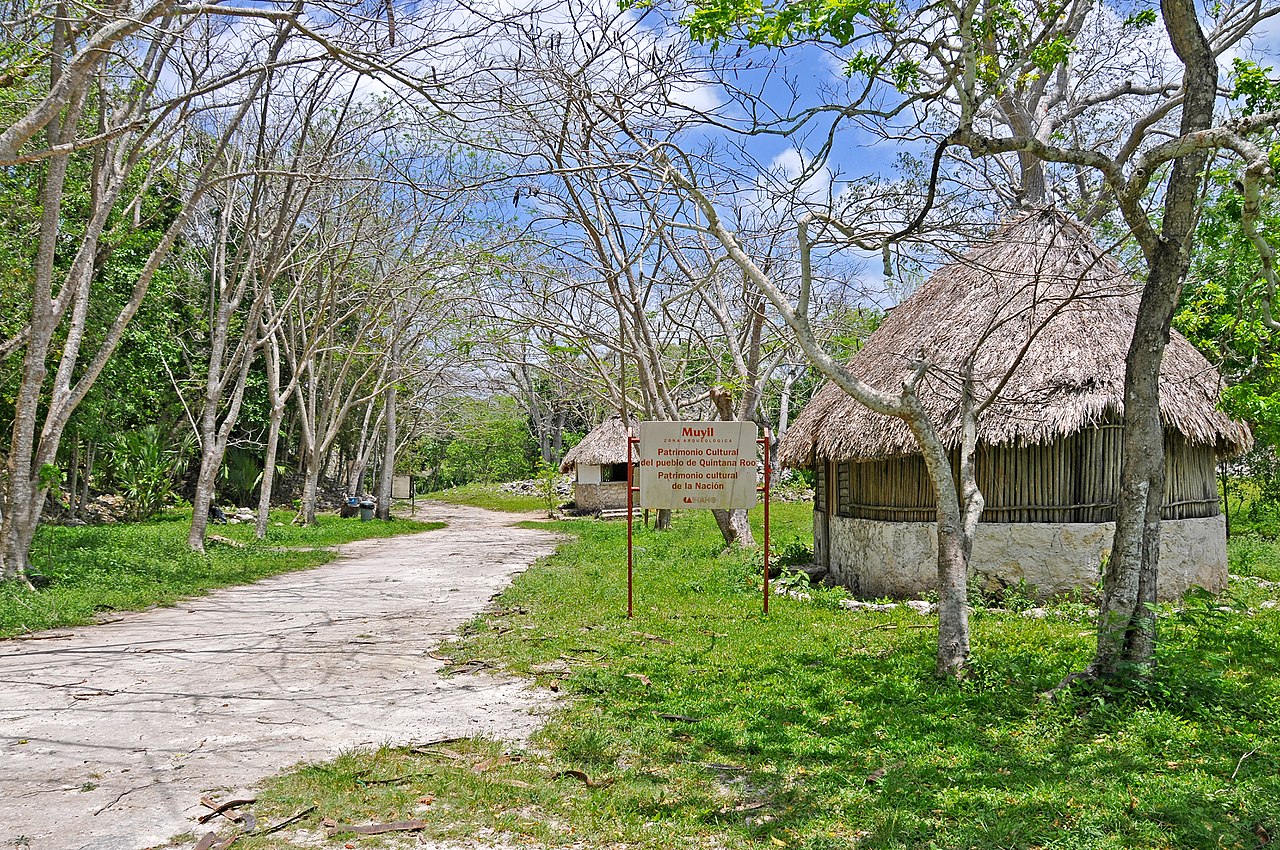

Cobá sits deep in the jungle of Quintana Roo, about 44 kilometres northwest of Tulum. Unlike the compact, cliffside ruins at Tulum or the vast open plazas of Chichén Itzá, Cobá feels like an ancient city that the forest is slowly reclaiming. Temple clusters rise from the undergrowth, connected by raised limestone roads called sacbeob, and the whole site is shaded by dense canopy. It is one of the most atmospheric Maya ruins in the region — and since December 2025, you can once again climb the tallest pyramid on the Yucatán Peninsula here.
This guide covers everything you need to plan a visit: transport from Tulum, Playa del Carmen, and Cancún; what to see inside the site; the rules for climbing Nohoch Mul; and how to combine Cobá with nearby cenotes for a full day inland.
Why Cobá Is Worth the Trip
Three things set Cobá apart from other Maya archaeological sites in Quintana Roo. First, the scale: the city once spread across more than 70 square kilometres and housed up to 50,000 people at its peak between 600 and 900 CE. Only a fraction has been excavated, but the explored area is still large enough that you will walk or cycle several kilometres between temple groups. Second, the jungle setting: most of the site is under forest, giving it a shaded, adventurous feel that contrasts with the exposed stone of Tulum or Ek Balam. Third, the pyramid: Nohoch Mul stands 42 metres tall and — after a six-year closure — is once again open for climbing via a new wooden staircase installed by INAH.
Cobá also sees far fewer visitors than Chichén Itzá. Even in high season you are unlikely to encounter cruise-ship crowds here. The trade-off is that the site has fewer amenities — no large café, no gift shop of note, and limited shade once you are deep in the ruins. Bring water, sun protection, and a hat.
Getting There
Cobá is inland from Tulum on the Nuevo Xcán highway. The drive is straightforward and well paved, passing through small villages with speed bumps (topes) that demand attention.
From Tulum by car: the drive takes about 45 minutes. Head northwest on the Nuevo Xcán road (the main route toward Valladolid). Follow signs for Cobá — the turnoff is clearly marked. Parking at the site costs around 50 MXN.
From Tulum by colectivo: shared minivans leave from the corner of Calle Osiris Norte and Avenida Tulum in downtown Tulum. Look for vans signed "Cobá." They depart when full, roughly every 30–45 minutes. The ride takes about 45–60 minutes and drops you near the site entrance. Confirm with the driver that they are going to the archaeological zone, not just the village.
From Tulum by ADO bus: the main Tulum ADO terminal has buses heading toward Valladolid that stop at the Cobá turnoff. From there it is a short taxi ride or a walk of about 2 kilometres to the entrance. This works but adds time and cost compared to the colectivo.
From Playa del Carmen: the most practical option is to drive (about 1.5 hours) or take an ADO bus to Tulum and transfer there. There is no direct public transport from Playa del Carmen to Cobá.
From Cancún: allow just over two hours by car. Take Highway 307 south to Tulum, then turn inland. By public transport, take an ADO bus to Tulum and continue by colectivo.
Organised tours: many operators in Tulum, Playa del Carmen, and Cancún offer day trips to Cobá that bundle transport, a guide, and sometimes a cenote stop or visit to the Punta Laguna monkey sanctuary. This is a reasonable option if you prefer not to navigate transport yourself, though it will cost significantly more than going independently.
Entry Fees and Hours
The site is open daily from 8:00 AM to 5:00 PM, with last entry around 3:30–4:00 PM. Pyramid climbing has its own cutoff: the last ascent is at 3:30 PM. Arrive early — both to beat the heat and to give yourself time to reach Nohoch Mul before the climbing window closes.
As of 2026, the entry fee for foreign visitors is approximately 210 MXN for the INAH ticket plus a 120 MXN ejido community fee, totalling around 330 MXN (roughly $18–20 USD). Confirm the current rate at the gate, as fees can change. Payment is cash only — Mexican pesos are the reliable option. Card terminals are unreliable due to weak cell signal in the jungle.
On Sundays, Mexican nationals and residents enter free. If you are in the region on a Sunday and hold Mexican residency, you can skip the fee.
Climbing Nohoch Mul
 View from the top of Nohoch Mul pyramid at Cobá, showing jungle canopy in every direction
Nohoch Mul — Maya for "Large Hill" — is 42 metres tall with 120 original stone steps. After being closed to climbers from 2019 through November 2025, it reopened on December 8, 2025, with a wooden staircase built over the original stone to protect the ancient surface. The climb is managed in groups of 14–15 people, with a 15-minute limit at the summit.
Practical rules for climbing:
- Climbing hours: 8:00 AM to 3:30 PM only
- Closed-toe shoes with grip are mandatory — sandals and heels are not permitted
- Climbing is suspended during rain or strong wind
- INAH advises against climbing for visitors with vertigo, cardiovascular conditions, pregnancy, or serious joint problems
- The descent is steeper than it looks — take it slowly
The view from the top is the reward: an unbroken canopy of jungle stretching in every direction, with the pale lines of ancient sacbeob cutting through the green. On a clear day you can sense the scale of the city that once stood here.
Not everyone will want to climb. The wooden staircase is steep, the humidity makes every breath heavier than the last, and the height is imposing when you are standing at the base looking up. If you prefer to stay grounded, the site offers plenty of remarkable things to see without ascending.
GuideCobá Travel Guide: Ruins, Climbing Nohoch Mul & the Jungle CityCobá is the largest ancient Maya city in the Yucatán Peninsula that you can still climb. This guide covers how to get there, what to see, entry fees, and practical tips for visiting the ruins, nearby cenotes, and the town of Cobá.Open
What to See in the Site
Cobá is organised into several temple clusters spread along jungle paths. The main areas to visit:
The Coba Group: closest to the entrance. This central plaza area contains smaller temples, stelae with hieroglyphic inscriptions, and the ball court. It gives you your first sense of the city's layout.
Nohoch Mul Group: the main pyramid and surrounding temples, about 2 kilometres from the entrance. This is the site's centrepiece.
Macanxoc Group: roughly 2 kilometres further along the path from Nohoch Mul. This area has well-preserved stelae and a quieter atmosphere. Bicycle or pedicab recommended.
Conjunto Las Pinturas: a smaller pyramid with traces of original paint and decorated columns. The name refers to the painted surfaces that once covered the structure.
Stelae throughout the site: Cobá is notable for its many carved stone monuments depicting rulers, rituals, and calendrical information. Several are sheltered under thatched roofs to protect the carvings from erosion.
Getting Around the Site
The site covers a large area, and the main pyramid is about 2 kilometres from the entrance. You have three options for getting around:
Bicycle rental (~60–80 MXN): the standard choice. You rent a bike at the entrance and cycle between temple groups at your own pace. The paths are dirt and gravel, mostly flat. This gives you the most flexibility and is the most common way visitors explore the site.
Bicitaxi / Mayan taxi (~120–180 MXN for a round trip seating two): a tricycle with a driver who pedals you through the jungle. This is a good option if you have limited mobility, are travelling with children, or simply want to save your energy. Drivers often point out details you would miss on your own. Prices are posted at the driver station near the entrance.
On foot: possible but tiring in the heat and humidity. If you walk the full circuit to Macanxoc and back, expect to cover 5–6 kilometres on dirt paths. Only choose this if you are comfortable in heat and carry enough water.
Nearby Cenotes
After a morning in the ruins, a swim in a nearby cenote is the classic way to cool down. Three cenotes near Cobá are suitable for swimming:
Cenote Choo-Ha: about 3 kilometres from the ruins entrance. A small, open cenote with clear water and platforms for jumping. Life jackets are available for rent. Good for families.
Cenote Multum-Ha: a short distance further. Slightly larger, with a more secluded feel. The water is shallow near the edge and deeper in the centre.
Cenote Tankach-Ha: the deepest of the three, with stalactites and a more dramatic setting. Better for confident swimmers.
All three are cash-only for entry (typically 50–100 MXN). Bring your own towel and sandals if possible.
How Long to Plan
Allow 2.5 to 3 hours for the ruins alone if you rent a bicycle and climb Nohoch Mul. If you add a cenote stop, plan a full day: early morning at the ruins, lunch in the village of Cobá, then a cenote in the early afternoon.
If you are combining Cobá with Tulum ruins in the same day, start at Cobá when the gates open at 8:00 AM, finish by early afternoon, and head to Tulum for the late afternoon. This works best with a rental car.
Practical Tips
- Arrive early. The site opens at 8:00 AM and the temperature is most manageable in the first two hours. It also gives you the best chance of climbing Nohoch Mul before the 3:30 PM cutoff.
- Bring water. There is almost no food or drink sold inside the archaeological zone. Carry at least 1.5 litres per person.
- Cash is essential. Entry, bike rental, bicitaxi, parking, and cenotes all operate on cash. The nearest ATM is in Tulum.
- Wear closed-toe shoes if you plan to climb. Trainers with decent grip are ideal for both the pyramid and the jungle paths.
- Insect repellent is advisable — the jungle canopy means mosquitoes, especially in the rainy season (June–October).
- Combine with Punta Laguna if you want wildlife. The spider monkey reserve is nearby and can be visited as a half-day add-on.
Who It Suits
Cobá works well for travellers who want a more adventurous, less polished ruin experience than Tulum or Chichén Itzá. It is family-friendly — children can ride in a bicitaxi and enjoy the jungle setting — though the heat demands attention. The climb is physically moderate but manageable for anyone in reasonable health with proper footwear. History enthusiasts will appreciate the stelae and the scale of the ancient city. Photographers get jungle-framed ruins without the crowds.
If you are short on time and can only visit one ruin in the region, Cobá offers the most distinctive combination of climbing, jungle atmosphere, and scale. It is the one that feels most like discovery.