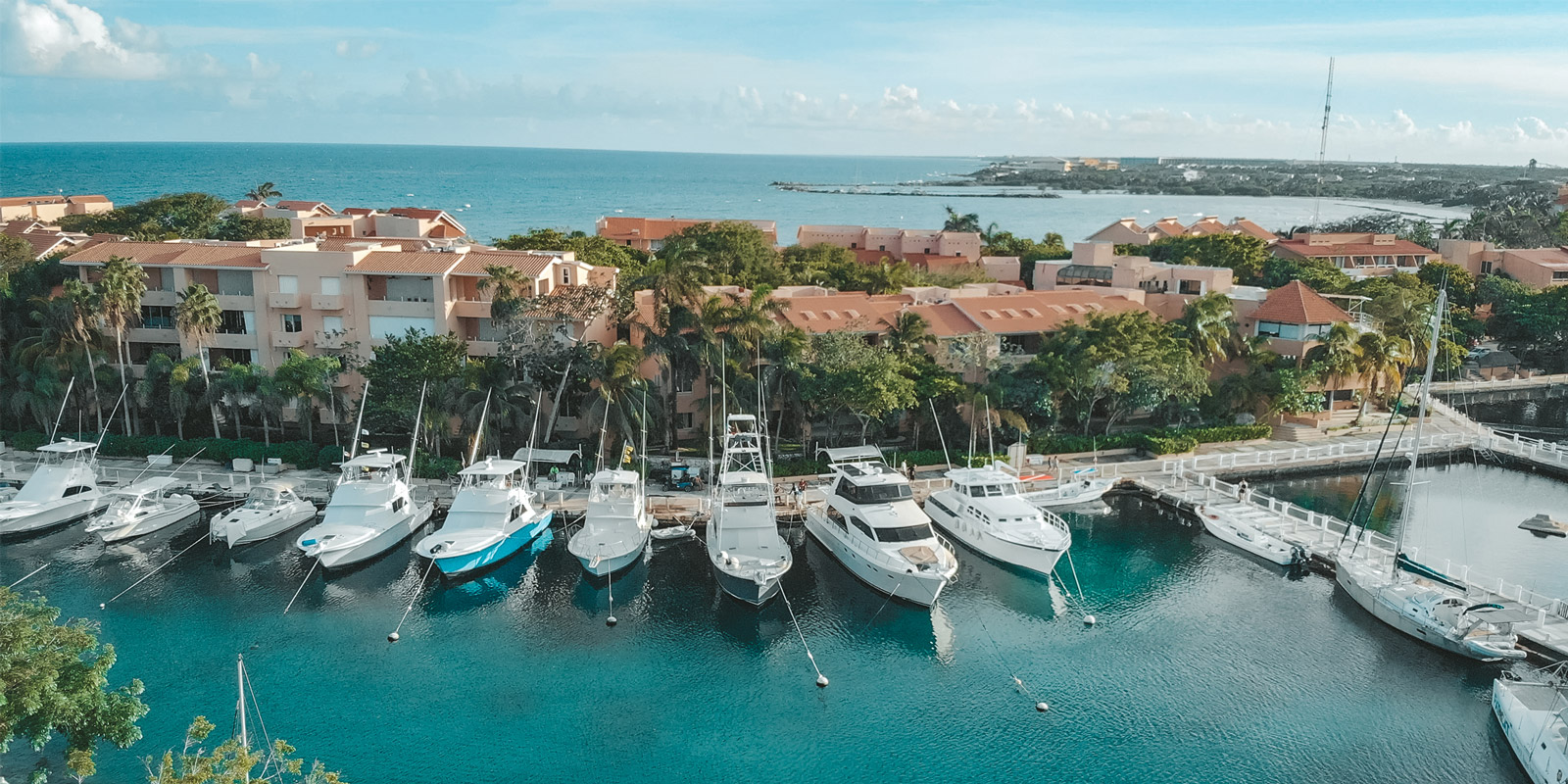

Puerto Morelos is the Riviera Maya town people choose when Cancún feels too large, Playa del Carmen feels too busy, and Tulum feels too complicated.
It sits between Cancún International Airport and Playa del Carmen, close enough to both for straightforward transfers but separate enough to retain its own scale. The coastal centre is compact, the reef lies just offshore, restaurants gather around a small town square, and the inland Ruta de los Cenotes begins on the other side of Highway 307.
That combination makes Puerto Morelos one of the most balanced bases in the northern Riviera Maya.
You can spend the morning snorkeling inside a protected marine park, eat seafood near the pier, swim in a jungle cenote during the afternoon, and return to a town where evening plans rarely require a reservation, dress code, or expensive taxi.
The trade-off is that Puerto Morelos is genuinely small.
It does not offer the restaurant depth, nightlife, shopping, ferries, or transport network of Playa del Carmen. Its beach is vulnerable to sargassum. The coastal town and the inland residential area are separated by mangrove and several kilometres of road. Resorts marketed as being in Puerto Morelos may sit well outside the walkable centre.
Puerto Morelos works best when you understand those distinctions before booking.
 The old leaning lighthouse and newer active lighthouse in Puerto Morelos
Puerto Morelos quick planning guide
| Question | Practical answer |
|---|---|
| Is Puerto Morelos worth visiting? | Yes, particularly for a quieter coastal stay, reef snorkeling, cenotes, and easy airport access |
| Best trip length | Three to five nights |
| Best for | Couples, families, slower trips, snorkelers, divers, and travelers who prefer small towns |
| Less suitable for | Major nightlife, extensive shopping, large restaurant choice, or a car-free sightseeing itinerary |
| Nearest airport | Cancún International Airport |
| Airport transfer time | Usually around 20–35 minutes by road, depending on the exact hotel and traffic |
| Best area for first-time visitors | Coastal Puerto Morelos near the plaza and beach |
| Best area for value | The inland colonia, provided you accept the beach transfer |
| Rental car needed? | No for a town-and-reef stay; useful for cenotes and independent day trips |
| Main attraction | Parque Nacional Arrecife de Puerto Morelos |
| Best inland activity | Ruta de los Cenotes |
| Best weather balance | Late November through March |
| Main seasonal issue | Sargassum during warmer months |
| Is the beach always clear? | No; conditions can change quickly |
| Is Puerto Morelos walkable? | The coastal centre is; the whole municipality is not |
| Best nearby larger town | Playa del Carmen |
| Currency | Mexican peso |
| Time zone | Eastern Standard Time year-round in Quintana Roo |
| Language | Spanish; English is common in tourism businesses |
Table of contents
- Is Puerto Morelos worth visiting?
- Who Puerto Morelos suits
- Understanding the geography
- How many days do you need?
- When to visit
- Sargassum and beach conditions
- How to get to Puerto Morelos
- Getting around
- Beaches
- Snorkeling the Puerto Morelos reef
- Diving and fishing
- Ruta de los Cenotes
- Jardín Botánico Dr. Alfredo Barrera Marín
- Things to do in town
- Where to stay
- Hotels and resorts
- Food and restaurants
- Nightlife
- Puerto Morelos with children
- Accessibility
- Costs and budgeting
- Money, cards, and tipping
- Safety
- Health and travel insurance
- Remote work and longer stays
- Day trips
- Suggested itineraries
- What to pack
- Responsible travel
- Common mistakes
- Frequently asked questions
- The bottom line
Is Puerto Morelos worth visiting?
Puerto Morelos is worth visiting when you want a manageable beach town rather than a large resort city.
Its strongest advantage is balance.
The town is close to Cancún Airport without feeling like an airport suburb. It has enough restaurants and accommodation for an independent stay, but it has not developed the scale of Playa del Carmen. The reef provides a substantial activity directly offshore, while the cenote route gives you an inland alternative when the beach is affected by wind or seaweed.
Puerto Morelos also allows a slower schedule than many Riviera Maya bases.
You do not need to fill every day with a major excursion. A morning reef trip, lunch near the square, a swim, and a walk along the waterfront can be enough. That makes the town particularly suitable for couples, families, and travelers recovering from a long flight or a busy multi-stop itinerary.
The main limitations are equally important.
Puerto Morelos does not have a ferry terminal, major archaeological site, extensive nightlife district, or large pedestrian shopping area. Public transport works along Highway 307, but many attractions lie away from the highway. Resort properties can be isolated. The central beach is attractive in favourable conditions, but it is not consistently free of sargassum.
Puerto Morelos is therefore strongest as:
- a three-to-five-night coastal base;
- a quiet beginning or end to a longer Mexico trip;
- a reef-and-cenote destination;
- an alternative to Cancún for airport convenience;
- or a full-week base for travelers comfortable with a slower pace.
It is less convincing as a base for someone planning daily trips to Tulum, Cozumel, Chichén Itzá, Cancún, and several southern beaches. Playa del Carmen usually offers better transport for that style of itinerary.
Who Puerto Morelos suits
Puerto Morelos works well for
- Travelers who want a small, walkable coastal centre
- Couples seeking evenings that are quiet rather than club-focused
- Families who prefer a town over a large city
- Snorkelers who want quick boat access to the reef
- Divers who want both ocean and cenote options
- Visitors arriving through Cancún International Airport
- Travelers combining beach time with the Ruta de los Cenotes
- People who prefer independent hotels and restaurants
- Longer-stay visitors who want an apartment and ordinary local services
- Anyone looking for a calmer alternative to Playa del Carmen
- Travelers who have already visited the main Riviera Maya attractions
- Visitors who want a flexible base during sargassum season
Puerto Morelos may not suit
- Travelers prioritizing nightlife
- Visitors who want a large pedestrian shopping district
- People expecting a consistently clear, seaweed-free beach
- Travelers who want to reach every attraction by public transport
- Visitors planning frequent ferry trips to Cozumel
- Anyone expecting a completely undeveloped fishing village
- Travelers who want several luxury restaurants within walking distance
- People staying at an isolated resort while expecting to walk into town
- Visitors who become restless without a long list of daily attractions
- Travelers using Puerto Morelos only because a hotel listing describes it as “near Cancún”
The town has changed considerably as the Riviera Maya has grown. It remains smaller and calmer than its neighbours, but it is no longer an undiscovered village. There are condominiums, beach clubs, vacation rentals, resort developments, traffic, and seasonal crowds.
The appeal lies in its scale and practical location, not in pretending tourism has passed it by.
Understanding the geography
Puerto Morelos makes more sense once you stop thinking of it as one continuous beach town.
The municipality contains several distinct zones separated by Highway 307, mangrove, access roads, and resort corridors.
 Map of the Riviera Maya showing towns along Highway 307
Coastal Puerto Morelos
The coastal centre is the area most visitors picture.
It includes:
- the main plaza;
- the leaning lighthouse;
- the active lighthouse;
- the fishing pier;
- central public beach access;
- restaurants;
- dive and snorkel operators;
- small hotels;
- vacation rentals;
- cafes;
- and low-rise residential streets.
This is the best area for a first visit when you want to walk to the beach, meals, coffee, and boat departures.
The waterfront grid is compact. You can cross the central part of town on foot without difficulty, although heat, humidity, uneven surfaces, and strong sun can make midday walking uncomfortable.
The mangrove crossing
Mangrove and wetland separate the coast from Highway 307 and the inland town.
Vehicles use the main access road to move between the two areas. The distance is not enormous by car, but it is too far, hot, and exposed for most visitors to treat as a casual walk.
This is one of the most common sources of accommodation confusion.
A property described as being “in Puerto Morelos” may be:
- beside the beach;
- near the highway;
- in the inland colonia;
- inside a residential development;
- or several kilometres along the resort corridor.
Always open the map before booking.
Joaquín Zetina Gasca and the colonia
The inland side is often called the colonia.
It contains:
- supermarkets;
- pharmacies;
- hardware shops;
- inexpensive restaurants;
- taquerias;
- municipal services;
- residential neighbourhoods;
- bus and colectivo access;
- and ordinary businesses used by residents.
Accommodation can cost less here, and food prices are generally lower than near the waterfront.
The compromise is beach access.
You will normally need a taxi, local shared transport, bicycle, scooter, or car to move between the colonia and coastal town. Travelers staying inland should include those journeys in both the budget and daily schedule.
Resort corridors north and south of town
Large all-inclusive properties use Puerto Morelos in their addresses and marketing even when they sit well outside the centre.
These resorts may be north toward Cancún, south toward Playa del Carmen, or along access roads that do not connect conveniently to the town beach.
A resort can be a good choice when you plan to remain on the property. It is less suitable when you imagine walking into Puerto Morelos each evening.
Before booking, check:
- actual road distance to the plaza;
- estimated taxi fare;
- whether taxis wait at the resort;
- whether the hotel offers a town shuttle;
- beach exposure;
- recent sargassum reports;
- nearby restaurants;
- and whether leaving the property on foot is realistic.
“Puerto Morelos area” does not necessarily mean “Puerto Morelos town.”
How many days do you need?
One day
Puerto Morelos works as a day trip from Cancún or Playa del Carmen.
A realistic one-day visit includes:
- morning reef snorkeling;
- lunch near the plaza;
- a waterfront walk;
- the leaning lighthouse;
- and several hours on the beach.
Alternatively, use Puerto Morelos as the departure point for one cenote and lunch in town.
Trying to combine a reef tour, several cenotes, the botanical garden, a long beach visit, and dinner creates an unnecessarily rushed day.
Two nights
Two nights provide a useful introduction.
You can:
- arrive and settle in;
- spend one morning on the reef;
- enjoy the town and beach;
- then visit one or two cenotes before leaving.
This works well at the beginning or end of a longer Riviera Maya trip.
Three nights
Three nights are enough for most first-time visitors.
A balanced stay includes:
- one reef morning;
- one Ruta de los Cenotes day;
- one flexible beach or town day;
- and relaxed evenings near the plaza.
Three nights also give you some protection against poor marine conditions. If the reef tour is cancelled on the first morning, you may be able to move it to another day.
Five nights
Five nights work well when rest matters as much as sightseeing.
You can add:
- the botanical garden;
- a second cenote day;
- diving;
- a Playa del Carmen visit;
- an unstructured beach day;
- or time at a hotel pool.
This is a good length for families and couples who do not want to change hotels repeatedly.
Seven nights
A week is appropriate for travelers who genuinely prefer a small-town rhythm.
It is also workable when you have a rental car and plan several regional day trips.
Without a car or planned excursions, some visitors may find the town’s limited nightlife and attraction list restrictive after several days. That is not a failure of Puerto Morelos; it is the central character of the place.
When to visit
Puerto Morelos is warm throughout the year, but seasons affect humidity, rain, accommodation prices, sea conditions, mosquitoes, hurricane risk, and sargassum.
Late November to March
This is the easiest period for most visitors.
Expect:
- lower humidity;
- cooler evenings;
- reduced sargassum risk;
- generally comfortable sightseeing weather;
- and strong demand for hotels and tours.
Cold fronts can bring wind, cloud, rain, and rougher water. A sunny winter forecast does not guarantee every reef trip will operate.
Christmas, New Year, February school holidays, and Easter periods require earlier booking.
April and May
These months are hotter and often less crowded than winter.
They can offer a reasonable balance of:
- warm sea temperatures;
- lower accommodation prices;
- bright mornings;
- and fewer peak-season visitors.
Sargassum risk normally begins increasing, although exact conditions vary considerably.
Heat becomes more demanding for inland activities. Start cenote and botanical garden visits early.
June to August
Summer is hot, humid, and increasingly vulnerable to sargassum.
It also brings:
- warm water;
- family travel;
- afternoon storms;
- high UV exposure;
- and active tropical weather.
Do not build a summer itinerary around uninterrupted beach time.
Puerto Morelos remains useful during this period because the cenote route is close. When the beach is poor, you can move inland rather than lose the day.
September and October
These are the least predictable months.
Potential advantages include:
- lower room prices;
- fewer visitors;
- and occasional stretches of good weather.
Potential disadvantages include:
- heavy rain;
- tropical storms;
- hurricanes;
- business closures;
- flooding;
- humidity;
- insects;
- and disrupted marine trips.
Travel insurance and flexible bookings matter more during this period.
November
November is transitional.
Early November can still feel wet and humid. Later in the month normally brings more comfortable conditions, although no date guarantees a clean break between seasons.
Sargassum and beach conditions
Puerto Morelos is not immune to sargassum.
The offshore reef can reduce wave energy and influence how seaweed reaches parts of the coast, but it does not create a permanent shield. Heavy regional arrivals can still cover the beach and nearshore water.
Conditions vary according to:
- wind direction;
- ocean currents;
- storms;
- tides;
- cleanup capacity;
- offshore barriers;
- and the precise section of beach.
A hotel photograph taken during a clear winter morning tells you little about conditions during your particular week in July.
For a fuller seasonal explanation, read our guide to sargassum in the Riviera Maya.
How to plan around sargassum
Check recent conditions rather than relying only on annual averages.
Useful approaches include:
- asking your hotel for a current beach photograph;
- checking local beach reports;
- looking at recent traveler images;
- checking the morning before committing to a beach day;
- and keeping one or two itinerary days flexible.
If conditions are poor, consider:
- the Ruta de los Cenotes;
- the botanical garden;
- a pool day;
- inland food and shopping;
- Playa del Carmen;
- Valladolid;
- or another activity unrelated to the shoreline.
Hotel cleanup does not fix the sea
Some hotels clear the sand daily, use tractors, employ manual crews, or operate offshore barriers.
This can make the beach more pleasant, but it does not guarantee clear swimming water. Floating seaweed may remain in the nearshore zone even when the sand has been cleaned.
Recent beach reports are more useful than general claims such as “our beach is maintained daily.”
Sargassum smell
Decomposing seaweed can produce a strong sulphurous smell.
The problem is most noticeable where large piles remain wet and trapped against the shore. People with respiratory sensitivities may prefer to avoid heavily affected sections.
Move away from dense accumulation rather than sitting beside it for a full day.
How to get to Puerto Morelos
Puerto Morelos lies on the northern Riviera Maya corridor between Cancún and Playa del Carmen.
Highway 307 provides the main road connection.
Exact journey times depend on:
- traffic;
- roadworks;
- weather;
- police or military checkpoints;
- hotel location;
- airport terminal;
- and whether you are traveling directly or making stops.
From Cancún International Airport
Puerto Morelos is one of the easiest Riviera Maya towns to reach from Cancún International Airport.
A direct road transfer commonly takes around 20–35 minutes. Resorts beyond the town may take longer.
Private transfer
A private transfer is usually the simplest option when arriving with:
- children;
- several bags;
- mobility equipment;
- a late flight;
- a large group;
- or accommodation away from central Puerto Morelos.
The driver meets you at an agreed location and takes you directly to the hotel.
Before booking, confirm:
- whether the fare is per person or per vehicle;
- exact hotel zone;
- terminal meeting instructions;
- child-seat availability;
- waiting policy for delayed flights;
- and whether the return journey is included.
Airport transportation changes frequently, so compare current prices rather than relying on an old quoted fare.
Shared shuttle
Shared shuttles can cost less for solo travelers.
The compromise is time.
You may wait for other passengers and stop at several hotels before reaching Puerto Morelos. A town that is geographically close to the airport can still take an hour or more to reach on a multi-stop route.
Airport taxi
Official airport transportation is available but can be expensive.
Agree on the total price before entering the vehicle. Ignore unsolicited approaches that are unclear about the company, fare, or destination.
ADO bus
Airport bus routes and stop patterns change.
Do not assume every ADO departure stops in central Puerto Morelos. Many airport services are designed around Cancún, Playa del Carmen, and Tulum.
When a practical direct service is unavailable, public-transport travelers may need to:
- take an airport bus toward Cancún or Playa del Carmen;
- continue by colectivo or regional bus;
- get off near Puerto Morelos on Highway 307;
- then take local transport to the coast.
This can save money but is inconvenient with luggage.
Confirm the current route on the day of travel.
From Cancún
Puerto Morelos is a practical day trip from Cancún.
Options include:
- rental car;
- private driver;
- regional bus;
- colectivo;
- or organized snorkeling and cenote tours with pickup.
Driving time varies according to your starting point. Downtown Cancún is closer than some parts of the Hotel Zone once lagoon traffic and access roads are included.
A colectivo normally leaves you near Highway 307 rather than beside the beach. You will need onward local transport to the coastal centre.
From Playa del Carmen
Puerto Morelos is north of Playa del Carmen and ordinarily takes around 30–45 minutes by road.
Colectivos are inexpensive and frequent along the highway corridor.
Ask the driver to confirm the Puerto Morelos drop-off. From the highway, continue to the coast by taxi, local van, or other available transport.
A taxi from Playa del Carmen provides door-to-door travel but can cost substantially more. Confirm the fare before departure.
For broader transport advice, see our Riviera Maya colectivo guide.
From Tulum
Puerto Morelos is possible as a day trip from Tulum, but the journey is long enough to question the value.
A direct drive usually requires well over an hour each way and can take longer with traffic.
It makes more sense when:
- changing hotels;
- traveling toward Cancún Airport;
- meeting a specific dive operator;
- or combining Puerto Morelos with an overnight stay.
For reef snorkeling alone, travelers based in Tulum may find a closer marine excursion more efficient.
From Valladolid or Chichén Itzá
Driving from Valladolid normally takes around two hours, depending on route and conditions.
Puerto Morelos can be paired with Valladolid on a wider road trip, but it is not an ideal casual day trip in both directions.
Chichén Itzá requires a longer full-day journey. Start early and avoid planning a fixed evening reef or boat activity after the return.
Tren Maya
Puerto Morelos has a Tren Maya station outside the compact coastal centre.
The train may be useful for selected journeys between stations on the peninsula, but it is not automatically the easiest transport option.
Include:
- travel to the departure station;
- waiting time;
- ticketing;
- the rail journey;
- onward transport from Puerto Morelos station;
- and the final trip to your hotel.
A direct road transfer may still be simpler from Cancún Airport or Playa del Carmen.
Train schedules, fares, station transfers, and luggage rules can change. Check current operations before building a fixed itinerary around the service.
Driving and parking
A rental car is useful for:
- the Ruta de los Cenotes;
- the botanical garden;
- Valladolid;
- Chichén Itzá;
- independent beach stops;
- supermarket runs;
- and resort stays outside town.
Highway 307 is generally straightforward, but use caution around:
- changing speed limits;
- construction;
- poorly lit entrances;
- pedestrians;
- cyclists;
- colectivos stopping suddenly;
- and vehicles entering from side roads.
Central parking becomes more difficult on busy weekends and holidays. Do not block driveways, loading areas, boat access, or signed restrictions.
Remove valuables from view.
Getting around
Walking
Central coastal Puerto Morelos is walkable.
The plaza, pier, restaurants, cafes, small hotels, and several beach entrances sit within a compact area.
Walking becomes less comfortable during:
- midday heat;
- heavy rain;
- flooding;
- humid evenings;
- or when carrying beach equipment.
Sidewalk quality varies. Some streets require walking partly on the road.
Bicycles
A bicycle can work well within the coastal area and for nearby accommodation.
It is less comfortable for the highway connection unless you are experienced with local traffic and road conditions.
At night, use:
- lights;
- reflective clothing;
- and a secure lock.
Do not assume every rental bicycle is mechanically sound. Check brakes, tires, seat adjustment, and lights before leaving.
Taxis
Taxis are commonly used between:
- the coast and colonia;
- resorts and town;
- the highway and beach;
- cenotes;
- and hotels.
Confirm the fare before departure.
Ask the hotel or restaurant for a typical current price when you are uncertain. Prices may be higher from resorts than from ordinary town pickup points.
Availability can tighten during:
- heavy rain;
- holidays;
- late evenings;
- and large events.
Ride-hailing apps
App availability and pickup conditions can change.
Do not make an airport transfer, early tour, or essential connection dependent on obtaining a ride-hailing vehicle at the last minute. Prearranged transport remains more predictable for important journeys.
Colectivos
Colectivos are useful along Highway 307.
They are not a complete door-to-door transport system.
Expect to:
- wait beside the highway;
- confirm direction;
- carry small luggage;
- pay in cash;
- and arrange the final journey from the highway to your destination.
They work best for confident independent travelers rather than families arriving with suitcases.
Rental car
A car is unnecessary when your plan is limited to:
- the coastal town;
- a reef excursion;
- restaurants;
- and a prearranged cenote tour.
It becomes useful when you want control over several inland stops.
Check the rental agreement for:
- mandatory insurance;
- deposit;
- fuel policy;
- mileage;
- roadside support;
- damage inspection;
- and permission to use unpaved access roads.
Photograph the vehicle before leaving.
Beaches
Puerto Morelos has a long, generally low-rise coastline with several public approaches in and around the town.
The beach experience changes from one block to another.
You may find:
- open public sand;
- fishing boats;
- beach clubs;
- hotel frontage;
- narrower eroded sections;
- seaweed collection areas;
- piers;
- swimming zones;
- and channels used by boats.
 The pier and waterfront at Puerto Morelos
Central beach
The central beach near the plaza is the easiest section for day visitors.
It provides access to:
- the lighthouse area;
- boat departures;
- restaurants;
- beach clubs;
- and the town centre.
It can also be the busiest section.
Expect fishing and tour boats near the waterfront. Pay attention to marked channels and operator instructions.
North of the plaza
Walking north generally brings a mixture of:
- small hotels;
- residences;
- vacation rentals;
- beach clubs;
- and quieter stretches.
The precise width and condition of the beach can change after storms.
Some sections feel less commercial than the central waterfront, but public facilities become more limited.
South of the plaza
South of the centre, the coast becomes a mixture of accommodation, residential property, marina-related activity, and quieter approaches.
Do not assume the beach remains continuously easy to walk. Erosion, property boundaries, vegetation, construction, and water conditions may interrupt the route.
Public access
Mexico’s coastal federal zone is public, but reaching it must be done through a legal access point.
Do not:
- cross private hotel property without permission;
- climb gates;
- enter construction sites;
- or follow informal directions through protected vegetation.
Ask locally for the nearest signed public approach.
Shade and facilities
Natural shade is limited on many parts of the beach.
Bring sun protection or use a legitimate beach club, restaurant, or hotel day pass when you need:
- umbrellas;
- loungers;
- bathrooms;
- food;
- showers;
- or secure storage.
Do not assume a public entrance includes facilities.
Swimming conditions
The offshore reef often reduces wave energy, but calm water is not guaranteed.
Conditions can be affected by:
- wind;
- storms;
- boat traffic;
- currents;
- seaweed;
- and marine-park restrictions.
Morning often brings calmer conditions, although this is not a promise.
Families should inspect the exact swimming area rather than assuming the entire coastline is equally shallow or protected.
Beach clubs
Puerto Morelos beach clubs are generally lower-key than those in Tulum or central Playa del Carmen.
Policies vary.
A venue may charge:
- a fixed day fee;
- minimum food and drink consumption;
- lounger rental;
- or no separate fee when you dine.
Confirm what is included before settling in.
Check the bill carefully and ask whether service has already been added.
Snorkeling the Puerto Morelos reef
The Parque Nacional Arrecife de Puerto Morelos is the town’s defining natural feature.
The protected reef forms part of the Mesoamerican Reef system and lies close enough to shore for short boat transfers.
That does not mean visitors should simply swim out independently.
Boat channels, protected zones, currents, distance, changing weather, and park rules make a licensed local excursion the sensible approach for most travelers.
What a typical snorkeling trip involves
A standard outing usually includes:
- registration;
- marine-park briefing;
- life jacket;
- mask and snorkel;
- boat transfer;
- one or more supervised reef entries;
- and return to the town beach.
Exact trip length varies by operator and marine conditions.
Some tours spend relatively little time traveling because the reef is close. Others combine several snorkeling areas or include additional instruction.
Ask for the actual estimated time in the water rather than judging only by the advertised total duration.
What you may see
Possible sightings include:
- coral formations;
- sea fans;
- parrotfish;
- angelfish;
- barracuda;
- rays;
- turtles;
- schools of smaller fish;
- and other reef species.
Wildlife is not guaranteed.
A responsible operator will not promise a turtle, ray, or particular species on every departure.
Choosing an operator
Compare more than price.
Ask about:
- authorization to operate in the marine park;
- group size;
- guide-to-guest ratio;
- flotation requirements;
- equipment condition;
- insurance;
- cancellation policy;
- weather decisions;
- park charges;
- boat shade;
- language;
- and whether photographs are included or sold separately.
Travelers with children, weak swimmers, medical conditions, or anxiety in open water should explain this before booking.
Morning or afternoon?
Morning is usually preferable because it often offers:
- lower wind;
- cooler temperatures;
- less boat traffic;
- and better visibility.
Afternoon departures can still be good, but weather cancellation becomes more likely during stormy periods.
Book the reef earlier in your stay. If the trip is cancelled, you then have time to reschedule.
Can you snorkel from shore?
You can swim and use a mask near the beach where conditions and rules allow, but the main reef experience is reached by boat.
Do not advertise or treat Puerto Morelos as an unrestricted swim-from-shore reef.
The protected reef is not a casual backyard snorkeling area. It contains navigation routes, regulated zones, and fragile habitat.
Marine-park fees
Protected-area charges may be included in the quoted tour price or collected separately.
Ask before paying.
Carry some pesos in case the park contribution, dock charge, or gratuity is not included.
Sunscreen and reef protection
The strongest practical protection is physical:
- rash guard;
- long-sleeved swim shirt;
- hat while on the boat;
- and avoiding excessive midday exposure.
Even products marketed as reef-friendly can enter the water.
Follow operator and park instructions. Do not apply prohibited products immediately before entering the sea.
Do not touch the reef
Never:
- stand on coral;
- hold coral for balance;
- chase wildlife;
- feed fish;
- collect shells;
- remove marine life;
- or follow a guide who encourages contact.
Coral is living habitat and can be damaged quickly.
Weather cancellations
A cancelled reef tour is inconvenient but usually indicates that the captain or park authority considers the conditions unsuitable.
Do not pressure an operator to depart in rough water.
Use the day for:
- cenotes;
- the botanical garden;
- food;
- the pool;
- or Playa del Carmen.
Diving and fishing
Scuba diving
Puerto Morelos supports reef diving for certified divers and training for beginners.
Local dive operators may offer:
- shallow reef dives;
- deeper reef sites;
- wreck diving;
- refresher sessions;
- discovery dives;
- certification courses;
- and cenote cavern trips.
Choose an operator based on:
- current reviews;
- equipment maintenance;
- boat condition;
- emergency oxygen;
- staff qualifications;
- maximum group size;
- and honest assessment of conditions.
Provide accurate information about:
- certification;
- last dive;
- experience;
- medical history;
- equalization problems;
- and comfort in current.
Do not exaggerate your experience to join a more advanced dive.
Cenote diving
Cenote diving requires different skills from ordinary reef diving.
Recreational cavern dives should remain within the clearly defined limits appropriate to your certification and guide.
Technical cave diving is a separate discipline. Never enter an overhead cave environment without the training, equipment, and planning required for it.
Fishing
Puerto Morelos developed around maritime work, and fishing remains part of the town’s identity.
Charters may offer:
- reef fishing;
- trolling;
- seasonal sport fishing;
- half-day trips;
- and private boats.
Before booking, ask about:
- permitted species;
- catch-and-release practices;
- fishing licenses;
- marine-park boundaries;
- equipment;
- weather policy;
- cleaning the catch;
- and whether the captain follows current conservation rules.
Avoid operators who ignore protected zones or encourage illegal catches.
Ruta de los Cenotes
The Ruta de los Cenotes runs inland from Puerto Morelos toward Leona Vicario.
It is not a single attraction.
It is a road corridor containing independently operated cenotes, adventure parks, jungle properties, restaurants, and small communities. Experiences range from a quiet swim in an open pool to a commercial package with zip lines, ATVs, rappelling, lunch, and several water entries.
 A cave cenote in Quintana Roo
Is the Ruta de los Cenotes worth visiting?
Yes.
It is one of the strongest reasons to choose Puerto Morelos over another coastal base.
The route provides:
- open cenotes;
- semi-open caverns;
- enclosed pools;
- snorkeling;
- swimming;
- jumping platforms;
- zip lines;
- picnic areas;
- and guided adventure activities.
The quality, atmosphere, safety systems, and commercialization differ significantly between properties.
Choose according to the experience you want rather than trying to visit the largest number.
Rental car, taxi, or tour?
Rental car
A car offers the most flexibility.
It allows you to:
- arrive early;
- combine two cenotes;
- leave when you choose;
- carry towels and dry clothing;
- stop for food;
- and avoid waiting for return transport.
Check road conditions during heavy rain. Some access tracks are rougher than the main route.
Taxi or private driver
A driver can work well for families and groups.
Agree on:
- total hours;
- waiting time;
- number of stops;
- entrance fees;
- lunch;
- and overtime.
Do not assume a taxi will wait indefinitely or that another vehicle will be easy to find at a remote entrance.
Organized tour
A tour simplifies:
- transport;
- equipment;
- entrances;
- activities;
- and timing.
The compromise is less independence and, in some cases, more time collecting other guests.
Read the itinerary carefully. “Cenote experience” may mean a short swim inside a larger ATV or zip-line package.
Choosing a cenote
Puerto Morelos-area options commonly discussed by travelers include:
- Verde Lucero
- La Noria
- Kin Ha
- Siete Bocas
- Zapote
- Las Mojarras
- Boca del Puma
- Popol Vuh
- and other smaller properties along the route
Names, ownership, prices, opening hours, packages, and access conditions can change.
Confirm directly before making a special journey.
Open cenotes
Open cenotes generally suit:
- families;
- casual swimmers;
- people uncomfortable inside caves;
- and visitors who want daylight and a larger swimming area.
They may also offer jumping platforms and zip lines.
Inspect water depth before jumping and use only approved entry points.
Cave and semi-open cenotes
Enclosed cenotes provide a more dramatic limestone setting.
They may involve:
- stairs;
- ladders;
- low light;
- narrow platforms;
- bats;
- cooler water;
- and limited exit points.
They are not automatically suitable for toddlers, mobility-limited visitors, or anyone with claustrophobia.
Ask for photographs of the access route, not only the water.
How many cenotes in one day?
Two contrasting cenotes are enough for most visitors.
A useful combination is:
- one open swimming cenote;
- and one cave or semi-open cenote.
Trying to visit four or five properties often means spending the day changing clothes, paying entrances, driving, and repeating similar activities.
Choose quality over count.
Cenote prices
Entrance fees range widely.
A simple swim may cost relatively little, while a full adventure park can cost more than a major organized excursion.
Check whether the price includes:
- life jacket;
- locker;
- shower;
- guide;
- equipment;
- zip line;
- food;
- photographs;
- parking;
- and tax.
Carry pesos. Card terminals may be unavailable or affected by poor connectivity.
Cenote rules
Most properties require visitors to shower before swimming.
You may also be asked to:
- remove sunscreen;
- remove insect repellent;
- wear a life jacket;
- use designated stairs;
- avoid food near the water;
- and leave bags in a locker.
These rules protect both visitors and the underground water system.
What to bring
Bring:
- swimsuit;
- towel;
- dry clothing;
- water shoes;
- cash;
- reusable water bottle;
- waterproof pouch;
- simple bag;
- and insect protection for after swimming.
A rash guard is more useful than applying sunscreen immediately before entering.
Safety
Cenotes are natural formations rather than swimming pools.
Risks include:
- depth;
- slippery limestone;
- submerged rock;
- low visibility in caves;
- ladders;
- jumping injuries;
- and panic in enclosed spaces.
Follow the property’s rules and supervise children closely.
Do not dive headfirst unless an approved platform is specifically designed and supervised for it.
Jardín Botánico Dr. Alfredo Barrera Marín
The Dr. Alfredo Barrera Marín Botanical Garden protects a substantial area of native forest near Puerto Morelos.
It provides an important contrast to the coast.
Visitors come for:
- forest trails;
- regional plant life;
- mangrove views;
- interpretation of local ecosystems;
- a traditional chiclero camp display;
- wildlife sightings;
- and a quieter understanding of the landscape behind the beach.
Is the botanical garden worth visiting?
Yes, particularly for:
- nature-focused travelers;
- birders;
- families with older children;
- repeat Riviera Maya visitors;
- and anyone interested in the region beyond marine activities.
It is not a manicured ornamental garden.
Expect a forest walk with:
- roots;
- insects;
- heat;
- humidity;
- mud after rain;
- and wildlife that may or may not appear.
Wildlife
Possible sightings include:
- spider monkeys;
- coatis;
- birds;
- reptiles;
- insects;
- and other forest animals.
Do not feed, touch, call, or follow wildlife.
A quiet visitor often sees more than a loud group.
Practical planning
Confirm current:
- opening days;
- entrance time;
- ticket price;
- guided-tour availability;
- and payment methods.
Arrive early for cooler conditions.
Bring:
- closed or secure footwear;
- water;
- hat;
- lightweight long clothing;
- and insect protection.
Avoid visiting immediately before an airport departure. Tropical rain, mud, and transport delays can make the visit less predictable than a town walk.
Things to do in town
Puerto Morelos is not built around a long attraction checklist.
Its central experiences are simple and location-based.
See the leaning lighthouse
The Faro Inclinado is the best-known landmark in Puerto Morelos.
The former lighthouse began leaning after hurricane damage undermined its foundations in the 1960s. Rather than being removed, it remained beside the waterfront while a newer lighthouse took over navigational work.
 The leaning lighthouse in Puerto Morelos
The lighthouse is a quick stop rather than a major attraction.
Visit during a waterfront walk and avoid climbing or leaning on the structure.
Walk around the plaza
The central plaza connects the town to the beach and pier.
It works best:
- early in the morning;
- around sunset;
- and during the evening when temperatures fall.
Restaurants and small businesses surround the area.
Weekend events, markets, and performances may take place, but schedules change.
Watch the fishing boats
The beach remains an operational departure point for fishing and tourism boats.
Watching the morning activity provides more context than treating the waterfront as a decorative resort scene.
Remain clear of:
- ropes;
- winches;
- fuel;
- equipment;
- loading areas;
- and marked boat channels.
Sunrise
Puerto Morelos faces east.
Sunrise is often the quietest and coolest period on the beach.
It is a good time for:
- walking;
- photography;
- birdwatching;
- and checking sea conditions.
Do not leave a phone or camera unattended while swimming.
Kayaking and paddleboarding
The reef lagoon can suit kayaking and paddleboarding during calm conditions.
Rental availability and permitted zones vary.
Ask about:
- wind;
- marine-park boundaries;
- boat channels;
- flotation equipment;
- and the return route.
Do not paddle toward the reef without understanding current conditions.
Massage, yoga, and wellness
Puerto Morelos has independent massage, yoga, and wellness businesses, particularly around the coastal town.
Compare:
- qualifications;
- hygiene;
- setting;
- cancellation policy;
- and whether the session takes place inside, on the beach, or at your hotel.
Outdoor beach sessions can be affected by heat, wind, insects, and noise.
Shopping
Puerto Morelos has small shops selling:
- clothing;
- beach items;
- jewellery;
- souvenirs;
- art;
- and regional products.
For ordinary groceries, pharmacies, and lower-priced supplies, the inland colonia offers more practical choice.
Do not assume an item is locally made simply because it is sold near the beach. Ask about origin when that matters to you.
GuideThings to Do in Tulum: a Local's 2026 Activity GuideFrom clifftop Mayan ruins and jungle cenotes to biosphere reserves and barefoot beach clubs — the complete guide to Tulum activities, with honest logistics for both the Pueblo and the Zona Hotelera.Open
Where to stay
Location should be the first filter when booking Puerto Morelos accommodation.
A higher-rated property in the wrong zone can create a less convenient trip than a simpler room near the activities you actually want.
Stay near the plaza if you want
- restaurants within walking distance;
- easy reef-tour departures;
- the main public beach;
- a compact evening;
- and minimal dependence on taxis.
This is the strongest location for a first visit.
The disadvantages can include:
- street activity;
- music;
- early boat noise;
- smaller rooms;
- and limited parking.
Stay north of the plaza if you want
- a quieter residential atmosphere;
- beach access;
- an apartment or small hotel;
- and the ability to walk into the centre.
Check the exact distance.
A property described as a short walk may feel much farther in heat or rain.
Stay south of the plaza if you want
- a quieter coastal setting;
- marina access;
- a particular hotel;
- or more distance from the busiest blocks.
Confirm whether the beach remains easy to access and whether restaurants are genuinely walkable.
Stay in the colonia if you want
- lower prices;
- local restaurants;
- supermarkets;
- ordinary services;
- and easier highway access.
Do not choose the colonia while imagining you will step outside directly onto the beach.
Include daily transport in the decision.
Stay at an all-inclusive resort if you want
- pools;
- multiple restaurants;
- organized activities;
- children’s facilities;
- spa services;
- and a trip centred on the property.
This works less well when you plan to eat in Puerto Morelos every evening or take frequent independent trips.
The resort may be geographically associated with Puerto Morelos but operationally separate from the town.
Stay in a vacation rental if you want
- a kitchen;
- more bedrooms;
- longer-stay pricing;
- laundry;
- and residential space.
Check:
- electricity charges;
- water pressure;
- purified drinking water;
- Wi-Fi speed;
- air-conditioning limits;
- construction;
- cleaning fees;
- security;
- and exact road access.
Hotels and resorts
The following examples illustrate the main accommodation styles rather than forming a fixed ranking. Properties change management, renovate, and alter policies. Check current reviews from the same season you plan to visit.
Small beachfront and town hotels
Hacienda Morelos
Hacienda Morelos occupies a central waterfront position.
It suits travelers prioritizing:
- location;
- sea views;
- restaurant access;
- and walking.
As with many older coastal hotels, room condition and noise can vary. Read recent room-specific reviews rather than judging only from the location.
Hotel Ojo de Agua
Ojo de Agua has long been associated with beachfront accommodation and diving in Puerto Morelos.
It may suit:
- divers;
- independent travelers;
- and visitors who want a low-rise hotel rather than a resort compound.
Check current room condition, construction, beach state, and included services.
Amar Inn
Amar Inn is a smaller, more personal accommodation option near the coastal town.
It is better suited to travelers who value:
- local scale;
- breakfast;
- garden atmosphere;
- and access to town.
It is not designed to replicate a full-service resort.
Arrecifes Suites
Arrecifes Suites offers apartment-style and suite accommodation in the beach area.
It can work for:
- families;
- longer stays;
- and travelers wanting additional space.
Confirm the exact building, room layout, stairs, beach access, and whether the unit faces the sea or street.
The Fives Oceanfront
The Fives Oceanfront provides a more contemporary, full-service option near town.
It may appeal to travelers looking for:
- modern rooms;
- rooftop or pool facilities;
- on-property dining;
- and a higher-service stay without moving to an isolated resort corridor.
Compare its price with the amount of time you expect to use the facilities.
Larger resorts
Excellence Riviera Cancun
Excellence Riviera Cancun is an adults-only all-inclusive in the wider Puerto Morelos resort area.
It suits couples who plan to spend most of the trip inside the resort.
It is not a walkable base for evening meals in central Puerto Morelos.
Dreams Riviera Cancun
Dreams Riviera Cancun is a family-oriented all-inclusive option in the broader area.
It is designed around:
- pools;
- restaurants;
- children’s programming;
- and resort activities.
Families should check recent reports on room condition, beach quality, construction, and children’s facilities.
Grand Residences Riviera Cancun
Grand Residences provides a residential resort style with larger units and a quieter atmosphere.
It can suit:
- families;
- multigenerational groups;
- and travelers wanting additional space.
Again, treat it as a resort stay rather than accommodation inside the walkable town centre.
What to check before booking any hotel
Open the map and confirm:
- exact distance to the plaza;
- legal beach access;
- current beach condition;
- pool size;
- room age;
- renovation work;
- road noise;
- nightclub or restaurant noise;
- air conditioning;
- elevator access;
- stairs;
- purified water;
- parking;
- resort fees;
- final taxes;
- and cancellation conditions.
For beachfront hotels during warmer months, search recent reviews for:
- sargassum;
- smell;
- beach cleanup;
- erosion;
- and swimming conditions.
A strong pool becomes more important when the ocean is unpredictable.
Food and restaurants
Puerto Morelos has a better food scene than its size might suggest.
The choice is still limited compared with Playa del Carmen, but visitors can find:
- seafood;
- Mexican cooking;
- Yucatecan dishes;
- tacos;
- breakfast cafes;
- bakeries;
- Italian food;
- grilled meat;
- vegetarian options;
- and international menus.
The coastal centre carries tourism pricing. The colonia generally provides better value and more everyday local food.
Seafood
Seafood is the most obvious focus.
Look for:
- ceviche;
- fish tacos;
- grilled fish;
- whole fried fish;
- shrimp;
- octopus;
- and the catch available that day.
Ask for the price before ordering seafood sold by weight.
Do not assume every waterfront restaurant receives fish directly from the morning boats. Quality depends on sourcing, storage, handling, and kitchen turnover.
Restaurants commonly considered
Businesses can change ownership, hours, and quality. Confirm they are currently operating before making a special journey.
El Merkadito
El Merkadito is known for seafood in a casual waterfront setting.
It suits travelers looking for:
- ceviche;
- fish;
- cold drinks;
- and a beachside lunch.
Expect popularity during busy periods.
La Sirena
La Sirena overlooks the central plaza area and offers a broad menu rather than only seafood.
Its location makes it useful for:
- drinks;
- an easy dinner;
- groups with different food preferences;
- and watching activity around the square.
Punta Corcho
Punta Corcho has been associated with wood-fired cooking and a more contemporary approach to local ingredients.
It is better suited to a planned dinner than a quick inexpensive meal.
Check current reservations and opening days.
Lola y Moya
Lola y Moya is known as a breakfast and cafe option.
It works well for:
- coffee;
- a slower morning;
- breakfast dishes;
- and travelers wanting something beyond a hotel buffet.
Tanino’s
Tanino’s has been a longstanding evening option with a courtyard setting and international influences.
It can suit couples and visitors wanting dinner away from the immediate beachfront.
Eating in the colonia
The inland town is worth visiting for:
- tacos;
- tortas;
- roast chicken;
- regional breakfasts;
- panuchos;
- salbutes;
- cochinita;
- inexpensive seafood;
- fruit;
- and ordinary bakeries.
Many businesses are simple and may not maintain extensive online profiles.
Busy turnover, clear pricing, and visible food handling are more useful than decorative branding.
Breakfast
Puerto Morelos is well suited to breakfast.
Options range from:
- fruit and coffee;
- pastries;
- eggs;
- chilaquiles;
- enchiladas;
- regional dishes;
- and hotel breakfasts.
Early boat departures may begin before cafes open. Confirm whether your hotel can provide breakfast or pack something the evening before.
Reservations
Most meals do not require extensive advance planning.
Reserve ahead for:
- high-demand restaurants;
- Christmas and New Year;
- large groups;
- Valentine’s Day;
- and weekend evenings during peak season.
Leave some nights flexible.
Weather, reef cancellations, and day-trip delays can shift your plans.
Drinking water
Do not drink untreated tap water.
Hotels and restaurants generally provide purified water and ice intended for consumption.
Vacation-rental guests should confirm:
- whether a water dispenser is provided;
- where to replace the bottle;
- and whether the kitchen tap has a maintained purification system.
Nightlife
Puerto Morelos nightlife is social rather than large-scale.
Evenings generally revolve around:
- dinner;
- live music;
- cocktails;
- the plaza;
- beachfront bars;
- and occasional events.
There is no equivalent to central Cancún nightlife or Playa del Carmen’s club district.
This is an advantage for many visitors.
It becomes a limitation when dancing, clubs, and late-night variety are central to the trip.
Live music
Some restaurants and bars offer live music on selected nights.
Schedules are often posted locally or on social media rather than published far in advance.
Ask your hotel or walk around the plaza during the afternoon.
Late transport
Arrange transport before a late evening when staying:
- in the colonia;
- at a resort;
- or outside central town.
Do not assume taxis will be waiting beside every restaurant after closing.
Alcohol safety
Normal precautions apply:
- watch drinks;
- do not accept unknown substances;
- avoid illegal drugs;
- do not walk alone along dark beach sections;
- and use arranged transport when impaired.
Puerto Morelos with children
Puerto Morelos can be a strong family base.
Its advantages include:
- short airport transfer;
- compact coastal centre;
- lower-key evenings;
- beach access;
- reef trips;
- cenotes;
- and family-oriented resorts.
The best plan depends heavily on the children’s ages and swimming confidence.
With babies and toddlers
Prioritize:
- a hotel with reliable air conditioning;
- refrigerator;
- pool;
- shade;
- quiet room;
- and easy meal access.
The beach may be calm, but seaweed, boats, heat, and strong sun still complicate long days.
A stroller works unevenly because of:
- broken pavement;
- sand;
- high curbs;
- and unpaved sections.
A lightweight stroller or carrier may be easier.
Reef trips with children
Ask the operator about:
- minimum age;
- life jackets;
- boat shade;
- toilet access;
- trip length;
- sea conditions;
- and whether a child can remain aboard with an adult.
A child who swims confidently in a pool may still feel anxious in open sea.
Do not pressure children to enter.
Cenotes with children
Choose an open cenote with:
- easy stairs;
- shallow areas;
- changing facilities;
- bathrooms;
- life jackets;
- and clear supervision.
Avoid cave-heavy itineraries when a child dislikes darkness or enclosed spaces.
Heat management
Schedule outdoor activities early.
Use the hottest part of the day for:
- lunch;
- rest;
- the hotel pool;
- or an air-conditioned room.
One substantial activity per day is usually enough for younger children.
Child seats
Request child seats when booking transfers or private drivers.
Do not assume a taxi will carry one.
Confirm:
- seat type;
- child weight;
- installation;
- and whether the same seat is available for the return.
Accessibility
Puerto Morelos is relatively flat but not consistently accessible.
Potential obstacles include:
- uneven sidewalks;
- missing curb cuts;
- sand;
- steps;
- narrow entrances;
- unpaved roads;
- flooding;
- boat boarding;
- and older hotels without lifts.
Choosing accommodation
Ask the hotel directly about:
- step-free entrance;
- lift;
- room-door width;
- accessible shower;
- grab rails;
- toilet height;
- pool access;
- restaurant access;
- and the route from room to beach.
“Ground floor” does not always mean step-free.
Beach access
Sand access is difficult for ordinary wheelchairs.
Ask about:
- beach mats;
- amphibious chairs;
- staff assistance;
- accessible bathrooms;
- and the nearest hard-surface viewpoint.
Do not assume a beachfront hotel has an accessible route to the water.
Boat tours
Reef boats are usually small.
Boarding may involve:
- stepping from the beach or pier;
- uneven movement;
- ladders;
- and lifting equipment.
Explain mobility requirements before paying.
A responsible operator should describe the process honestly.
Cenotes
Many cenotes require stairs or ladders.
Open, developed properties are generally more manageable than enclosed cave cenotes, but accessibility varies.
Request current photographs of:
- parking;
- entrance;
- changing facilities;
- water access;
- and the return route.
Costs and budgeting
Puerto Morelos can cost less than Tulum beach or Cancún’s Hotel Zone, but it is not an inexpensive destination by default.
The coastal centre operates inside a high-demand tourism region.
Accommodation
Prices depend on:
- season;
- beach proximity;
- room condition;
- pool;
- holiday dates;
- and cancellation flexibility.
General categories include:
- simple inland room or apartment;
- small coastal guesthouse;
- mid-range beachfront hotel;
- contemporary full-service hotel;
- vacation rental;
- and premium all-inclusive resort.
Check the final price after:
- taxes;
- cleaning fees;
- resort charges;
- and currency conversion.
Food
A budget-conscious traveler can save by eating in the colonia and using bakeries, taquerias, supermarkets, and simple lunch restaurants.
Waterfront restaurants cost more.
Seafood, cocktails, international dishes, and hotel dining increase the daily budget quickly.
Tours
Reef tours are usually less expensive than major full-day Riviera Maya excursions because travel time is short.
Cenote costs vary from a modest entrance to a high-priced adventure package.
Ask what the advertised price excludes.
Common additions include:
- protected-area fee;
- transport;
- photographs;
- locker;
- equipment;
- food;
- and gratuity.
Transport
Transport can become the largest hidden cost when staying outside town.
A resort room may appear competitive until you add repeated taxi journeys for:
- dinner;
- shopping;
- reef departures;
- and cenotes.
Compare the complete trip cost rather than the nightly room rate alone.
Sample daily budgets
These are broad planning ranges rather than fixed prices.
Budget-oriented independent traveler
Typically includes:
- inland or simple accommodation;
- local food;
- colectivo transport;
- public beach;
- and occasional paid activity.
Mid-range traveler
Typically includes:
- coastal hotel;
- restaurant meals;
- taxis;
- reef snorkeling;
- and one or two cenotes.
Resort traveler
Typically includes:
- all-inclusive accommodation;
- airport transfer;
- premium excursions;
- spa or private transport;
- and limited spending in town.
Currency movements and seasonal demand can change the real cost substantially.
Check current peso prices instead of relying only on old dollar estimates.
Money, cards, and tipping
Pesos or dollars?
Use Mexican pesos for most daily spending.
Some tourism businesses accept US dollars, but the exchange rate may be poor and change is often returned in pesos.
ATMs
Use ATMs attached to established banks when possible.
Decline optional dynamic currency conversion when your home bank provides a better rate.
Avoid repeatedly withdrawing small amounts because foreign transaction and machine fees can accumulate.
Cards
Cards are accepted at many hotels and established restaurants.
Carry cash for:
- taxis;
- colectivos;
- small restaurants;
- markets;
- cenotes;
- tips;
- and occasional connectivity failures.
Tipping
Common practice includes:
- around 10–15% in restaurants when service is not already included;
- a discretionary tip for guides and boat crews;
- hotel housekeeping;
- and drivers who provide good service.
Inspect the bill before adding a tip.
Ask when an unexplained service charge appears.
Safety
Most Puerto Morelos visits pass without serious problems.
The town’s smaller scale does not remove the need for normal precautions.
Beach theft
Do not leave:
- phone;
- wallet;
- camera;
- passport;
- or room key
unattended while swimming.
Take only what you need and use a waterproof pouch or hotel safe.
At night
Remain on lit streets and use transport for isolated accommodation.
Avoid walking alone along dark beach sections after businesses close.
Taxis
Agree on the fare before departure.
Use an established pickup point or ask the hotel or restaurant to call a vehicle.
Driving
The greater daily risk for many visitors is road traffic rather than crime.
Avoid:
- driving after drinking;
- speeding;
- using a phone;
- overtaking without visibility;
- and driving unfamiliar cenote roads quickly after dark.
Illegal drugs
Do not buy or use illegal drugs.
Drug purchasing exposes travelers to criminal networks, unsafe substances, police involvement, extortion, and serious personal risk.
Police encounters
Carry a copy or secure digital record of important documents while leaving the passport protected at the hotel when appropriate.
When driving, keep:
- licence;
- rental agreement;
- and insurance details
accessible.
Remain calm and do not offer unsolicited payments.
Hurricanes and storms
Follow official instructions during tropical weather.
Your hotel may have procedures for:
- evacuation;
- shelter;
- window protection;
- power loss;
- and food service.
Do not approach the sea during a storm to take photographs.
Health and travel insurance
Travel insurance
Insurance should cover:
- medical treatment;
- hospital care;
- evacuation;
- cancellation;
- water activities;
- diving when applicable;
- tropical weather disruption;
- and personal belongings.
Check exclusions for:
- scooters;
- alcohol-related incidents;
- pre-existing conditions;
- diving depth;
- and adventure activities.
Sun and heat
UV exposure is strong even during cloud cover.
Use:
- protective clothing;
- shade;
- hat;
- sunglasses;
- and regular hydration.
Heat illness can begin with headache, nausea, dizziness, or unusual fatigue.
Stop the activity and cool down rather than pushing through.
Mosquitoes
Mosquitoes are more noticeable:
- after rain;
- near mangrove;
- inland;
- at cenotes;
- and around dusk.
Use appropriate repellent after leaving the water and follow current public-health advice.
Food and stomach illness
Reduce risk by:
- drinking purified water;
- choosing busy restaurants;
- washing hands;
- treating buffet food carefully;
- and avoiding seafood that appears poorly chilled.
Seek medical help for:
- severe dehydration;
- persistent high fever;
- blood in stool;
- breathing difficulty;
- or symptoms that worsen rather than improve.
Pharmacies and medical care
Puerto Morelos has pharmacies and basic services.
Serious cases may require transfer toward Cancún or Playa del Carmen.
Do not rely on a pharmacy consultation as a substitute for emergency care.
Remote work and longer stays
Puerto Morelos can work for remote work when the priority is a slower coastal routine rather than a large coworking scene.
Advantages
- Proximity to Cancún Airport
- Walkable coastal centre
- Cafes
- Apartment rentals
- Supermarkets in the colonia
- Beach access
- Manageable town size
Limitations
- Variable internet between properties
- Power interruptions
- Construction noise
- Humidity
- Limited late-night services
- Fewer coworking options than Playa del Carmen
- Dependence on taxis from some residential developments
Before booking a month-long stay
Ask for:
- recent internet speed test;
- router location;
- backup connection;
- desk and chair photographs;
- electricity policy;
- air-conditioning limits;
- water delivery;
- laundry;
- construction nearby;
- mosquito screens;
- and exact walking routes.
Do not assume “high-speed Wi-Fi” is sufficient for video calls.
Colonia or coast?
The coast offers atmosphere and convenience for the beach.
The colonia offers:
- lower everyday costs;
- supermarkets;
- ordinary restaurants;
- and local services.
Longer-stay visitors may value the colonia more than short-term tourists, provided they solve transport to the beach.
Day trips
Puerto Morelos is well positioned for northern Riviera Maya trips, but not every famous destination is equally efficient.
Playa del Carmen
Playa del Carmen is the easiest major-town day trip.
Go for:
- shopping;
- a larger restaurant choice;
- nightlife;
- the Cozumel ferry;
- and city atmosphere.
Read our Playa del Carmen travel guide before planning the day.
Cancún
Cancún works for:
- shopping;
- restaurants;
- museums;
- the Hotel Zone;
- and onward ferries to Isla Mujeres.
Traffic and the city’s scale make it less casual than the distance suggests.
Choose a specific area rather than arriving with no plan.
Isla Mujeres
Puerto Morelos does not have the main passenger ferry to Isla Mujeres.
You normally travel north toward Cancún and depart from Puerto Juárez.
This creates a full day once road transfers and ferry time are included.
Cozumel
To visit Cozumel, travel south to Playa del Carmen and take the passenger ferry.
A day trip is possible, but the total journey includes:
- Puerto Morelos to Playa del Carmen;
- walking to the ferry terminal;
- waiting;
- the crossing;
- and onward island transport.
Leave early.
For a substantial diving trip, staying overnight on Cozumel is often better. See our Cozumel travel guide.
 Cozumel coastline, Quintana Roo
Akumal
Akumal is south of Playa del Carmen and known for regulated turtle snorkeling.
It is possible from Puerto Morelos, but you should understand current access, guide, and swimming-zone rules before traveling.
Read our Akumal beach guide.
Tulum
Tulum is a long but manageable day trip by car, driver, or organized excursion.
An efficient day includes:
- early archaeological-zone entry;
- lunch;
- and either a beach or one cenote.
Do not add Cobá, several cenotes, and a long evening in Puerto Morelos to the same schedule.
See our Tulum travel guide.
 Maya ruins at Tulum with palms and beach, Quintana Roo
Valladolid
Valladolid provides a useful inland contrast.
Go for:
- colonial streets;
- regional food;
- nearby cenotes;
- and a slower town atmosphere.
It works best with a rental car or private driver.
Chichén Itzá
Chichén Itzá is possible as a full-day trip.
Expect an early departure and substantial driving.
A guided tour simplifies logistics but may include:
- hotel pickups;
- shopping stops;
- a fixed buffet;
- and limited independent time.
A private car provides more control but requires confident driving and planning.
Xcaret and other parks
The major Riviera Maya parks lie south toward Playa del Carmen and Tulum.
Puerto Morelos is a workable base, but transfer time must be included.
Compare:
- direct park transport;
- private transfer;
- rental car;
- and packages sold through the hotel.
The parks are expensive. Decide whether the full-day format genuinely suits your group rather than booking only because they are widely advertised.
Suggested itineraries
One-day Puerto Morelos itinerary
This works from Cancún or Playa del Carmen.
Morning
Arrive early and take a pre-booked reef snorkeling trip.
Late morning
Walk around the pier, lighthouse, and plaza.
Lunch
Choose a seafood restaurant or casual town lunch.
Afternoon
Spend time on the central beach if conditions are good.
When sargassum is heavy, replace the beach with one nearby cenote.
Evening
Return to your base or stay for an early dinner before transport becomes less convenient.
Two-day Puerto Morelos itinerary
Day one: reef and town
- Arrive and settle in
- Walk the coastal centre
- Reef snorkeling
- Seafood lunch
- Beach or pool
- Dinner near the plaza
Day two: cenotes
- Early departure along the Ruta de los Cenotes
- One open cenote
- Lunch
- One cave or semi-open cenote
- Return before dark
- Casual dinner
Three-day Puerto Morelos itinerary
Day one: orientation
- Arrival
- Plaza and lighthouse
- Beach walk
- Dinner in town
Day two: reef
- Morning snorkeling or diving
- Lunch
- Rest during the hottest period
- Beach, pool, or cafe
- Evening live music if available
Day three: inland nature
Choose one:
- two cenotes;
- botanical garden and one cenote;
- or private adventure-park excursion.
Keep the evening unstructured.
Five-day Puerto Morelos itinerary
Day one
Arrival and coastal orientation.
Day two
Morning reef tour and relaxed afternoon.
Day three
Ruta de los Cenotes.
Day four
Choose:
- botanical garden;
- Playa del Carmen;
- diving;
- fishing;
- or a full beach day according to conditions.
Day five
Flexible morning for:
- a rescheduled marine tour;
- final swim;
- breakfast;
- shopping;
- or departure.
This flexibility is useful when wind or sargassum changes the original plan.
Seven-day Puerto Morelos itinerary
Day one
Arrival and rest.
Day two
Reef snorkeling.
Day three
Two cenotes.
Day four
Unstructured beach, pool, or town day.
Day five
Playa del Carmen or Cozumel.
Day six
Botanical garden, diving, fishing, or another cenote route.
Day seven
Flexible final day and departure preparation.
A week should not become seven consecutive excursions. Leave time to enjoy the reason you selected a smaller town.
What to pack
Essentials
- Passport and travel documents
- Insurance details
- Payment cards
- Mexican pesos
- Phone charger
- Portable power bank
- Refillable water bottle
- Any prescribed medication
For the beach and reef
- Swimsuit
- Rash guard
- Sun hat
- Sunglasses
- Lightweight towel
- Waterproof pouch
- Secure sandals
- Dry bag
- Simple change of clothing
For cenotes and jungle
- Water shoes
- Towel
- Dry clothing
- Insect repellent for after swimming
- Closed or secure footwear
- Lightweight long trousers
- Small backpack
- Cash
For rain
- Lightweight rain jacket
- Waterproof phone protection
- Quick-drying clothes
- Spare footwear
- Plastic-free waterproof packing bag
Leave at the hotel when not needed
- Passport
- Excess cash
- Expensive jewellery
- Irreplaceable electronics
- Unnecessary cards
Check before bringing into protected areas
- Drones
- Professional camera equipment
- Single-use plastics
- Chemical sunscreen
- Alcohol
- fishing equipment
- speakers
- and food
Rules differ between the marine park, cenotes, botanical garden, and other protected properties.
Responsible travel
Protect the reef
- Use authorized operators
- Do not touch coral
- Do not feed fish
- Do not chase turtles or rays
- Keep fins away from the reef
- Follow flotation rules
- Take all rubbish ashore
Protect cenotes
- Shower before entry
- Follow sunscreen restrictions
- Do not damage formations
- Do not enter closed passages
- Do not leave food or waste
- Respect local staff and safety rules
Respect wildlife
Never:
- feed monkeys;
- handle reptiles;
- approach nests;
- disturb birds;
- touch marine animals;
- or encourage guides to stage wildlife contact.
Respect local communities
Puerto Morelos is a working municipality rather than a visitor set.
Do not:
- block residential entrances;
- photograph people intrusively;
- enter private land;
- treat fishing work as a performance;
- or assume every resident benefits equally from tourism.
Reduce waste
Use:
- refillable water bottles where safe refill stations exist;
- reusable bags;
- and refillable toiletries.
Dispose of waste properly rather than leaving it in beach bins that are already overflowing.
Common mistakes
Booking the wrong side of town
A low-priced apartment may be inland rather than beside the beach.
Open the map before paying.
Assuming every Puerto Morelos resort is near the plaza
Some are several kilometres away.
Check road distance and taxi costs.
Planning a beach-only trip during sargassum season
Keep cenotes, pool time, and inland activities available.
Leaving the reef tour until the final morning
Wind may cancel it.
Book early in the stay.
Trying to swim to the reef independently
Use a licensed operator and follow marine-park rules.
Treating colectivos as door-to-door transport
They mainly serve the highway corridor.
Plan the final transfer.
Visiting too many cenotes in one day
Two contrasting cenotes are usually enough.
Ignoring cash requirements
Taxis, cenotes, tips, and small businesses may require pesos.
Assuming calm water means no risk
Boat channels, currents, depth, and weather still matter.
Choosing a hotel only by star rating
Location, pool, room condition, beach state, and transport are more important.
Paying a taxi without agreeing on the fare
Confirm the price before departure.
Leaving valuables on the beach
Take only what you need.
Expecting Puerto Morelos to be untouched
It is quieter than neighbouring destinations, not frozen in the past.
Overplanning a short stay
Puerto Morelos is most enjoyable when the schedule contains room for weather and rest.
Frequently asked questions
Is Puerto Morelos safe?
Most visitors experience no serious problems.
Use normal precautions, protect valuables, avoid illegal drugs, arrange transport at night, and take road and water safety seriously.
How many days are enough?
Three nights provide a good first visit.
Five nights are better for a slower trip with reef snorkeling, cenotes, the botanical garden, and flexible beach time.
Is Puerto Morelos better than Playa del Carmen?
Puerto Morelos is better for:
- quiet evenings;
- smaller scale;
- quick reef access;
- and proximity to the Ruta de los Cenotes.
Playa del Carmen is better for:
- restaurants;
- nightlife;
- shopping;
- public transport;
- and the Cozumel ferry.

Is Puerto Morelos better than Cancún?
Puerto Morelos is better for a small-town coastal stay.
Cancún is better for:
- major resorts;
- nightlife;
- shopping;
- urban services;
- and direct Isla Mujeres ferry access.
Puerto Morelos is generally calmer and easier to understand, while Cancún offers far more choice.
Is Puerto Morelos better than Tulum?
Puerto Morelos is easier for:
- Cancún Airport;
- reef snorkeling;
- compact town life;
- and lower-key evenings.
Tulum is better for:
- its archaeological site;
- Sian Ka’an;
- a wider cenote region;
- design-led hotels;
- and a larger contemporary restaurant scene.
Tulum is usually more complicated and expensive to move around.
Is Puerto Morelos walkable?
The coastal centre is walkable.
The colonia, highway, train station, resort corridor, and cenote route require transport.
Can you walk from the highway to the beach?
It is physically possible for a fit person, but it is too far, hot, and inconvenient for most visitors, particularly with luggage.
Use local transport.
Do you need a car?
No for a coastal stay with a reef tour and organized cenote excursion.
A car is useful for independent cenote visits, the botanical garden, supermarkets, and regional day trips.
Can you snorkel from shore?
You can use a mask in appropriate nearshore swimming areas, but the main protected reef experience is reached by boat with an authorized operator.
Do not attempt to swim independently to the reef.
Is the reef suitable for beginners?
Many tours accept beginners and provide flotation equipment.
Tell the operator about swimming ability before booking. Open-water anxiety, wind, and boat entry can still make the trip challenging.
Is Puerto Morelos good for diving?
Yes.
The area offers reef diving, training, and access to inland cenote diving through local operators.
Is Puerto Morelos beach free?
Public beach access exists, but facilities such as loungers, umbrellas, toilets, and showers may require a beach-club purchase or hotel day pass.
Use legal access points.
Does Puerto Morelos get sargassum?
Yes.
The reef does not make the town immune. Conditions change according to currents, wind, storms, and cleanup.
When is sargassum season?
Risk generally increases during warmer months, but arrivals can occur outside a fixed season.
Check recent conditions for your actual travel dates.
Is the water calm?
It is often calmer than fully exposed sections of coast because of the offshore reef, but rough days occur.
Follow flags, boat instructions, and local advice.
Is Puerto Morelos good for families?
Yes, particularly with careful hotel selection.
A pool, shade, early activities, simple transport, and one major outing per day make the trip easier.
Is Puerto Morelos good for solo travelers?
It can be.
The coastal town feels manageable and has cafes, tours, and restaurants. It has less hostel-driven social life than Playa del Carmen or Tulum.
Is Puerto Morelos good for couples?
Yes.
It suits couples who prefer:
- quiet dinners;
- beach walks;
- snorkeling;
- cenotes;
- and a slower schedule.
It is less suitable for couples wanting major nightlife every evening.
Is Puerto Morelos good for remote work?
Yes, with the right accommodation.
Confirm actual Wi-Fi speed, backup connection, desk, power reliability, construction, and air conditioning before booking.
Which airport should I use?
Cancún International Airport is the practical gateway for Puerto Morelos.
Tulum Airport is much farther south and normally makes little sense unless the flight schedule or wider itinerary strongly favours it.
Is the Tren Maya useful?
It can be useful for selected longer journeys.
For Cancún Airport, Playa del Carmen, or a hotel transfer, include station access and onward transport before assuming the train is easier than a direct road journey.
Can I use US dollars?
Some businesses accept them, but pesos normally provide a clearer and better exchange rate.
Are there ATMs?
Yes, but use established bank machines when possible and carry enough pesos before heading along the cenote route.
Can you visit Puerto Morelos as a day trip?
Yes.
A reef trip, lunch, lighthouse walk, and beach time make a realistic day from Cancún or Playa del Carmen.
Can you combine Puerto Morelos and cenotes in one day?
Yes.
Choose either a morning reef trip followed by one cenote, or two cenotes followed by an early dinner in town.
Do not try to fit every major attraction into the same day.
Is Puerto Morelos still a fishing village?
Fishing remains part of the town’s history and daily waterfront activity, but Puerto Morelos is also a growing tourism and residential destination.
It should not be presented as an untouched village isolated from Riviera Maya development.
The bottom line
Puerto Morelos is one of the strongest choices in the Riviera Maya for travelers who want a small coastal base without giving up airport convenience, restaurants, snorkeling, or inland excursions.
Its advantages are practical:
- the reef is close;
- Cancún Airport is close;
- the town is compact;
- the cenote route begins nearby;
- and evenings remain quieter than in Cancún, Playa del Carmen, or Tulum.
Its limitations are equally clear:
- the beach is vulnerable to sargassum;
- public transport does not solve every journey;
- resort addresses can be misleading;
- nightlife is limited;
- and the town may feel too quiet for a full week of constant activity.
Three to five nights provide the best balance for most visitors.
Stay near the coastal centre when walkability matters. Stay at a resort when you genuinely want a resort holiday. Use a car or driver for the cenote route. Book the reef early enough to reschedule if weather intervenes.
Most importantly, do not force Puerto Morelos to behave like a smaller Playa del Carmen.
Its value lies in the opposite direction: fewer decisions, shorter distances, quiet mornings, and enough space in the itinerary to let the coast set the pace.
Planning a Puerto Morelos stay as part of a wider trip? Start with our Riviera Maya Travel Guide, review the Riviera Maya map, and check the current sargassum guide before choosing accommodation.
Travelers who want a person to review hotel location, transfer logistics, reef timing, and cenote combinations can use Human Trip Support through Riviera Maya Guide.